


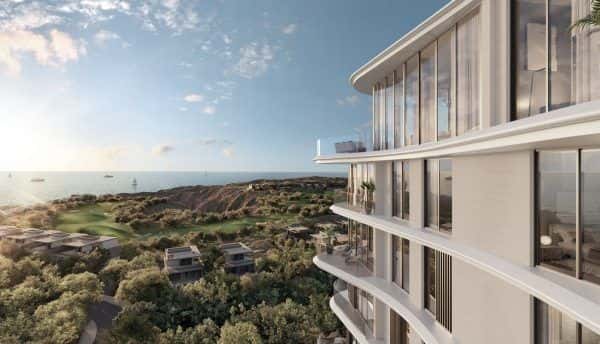
Economy in Oman – stable growth and new opportunities for investors
Oman's economy in 2025 is characterized by stable GDP growth of approximately 3.1%, driven mainly by non-oil sectors, which are growing by over 4% annually. The country is consistently implementing its Vision 2040 strategy, diversifying revenue sources and investing in tourism, logistics, and green energy. Fiscal policy is conservative, with an inflation target of 3-3.5% and a Baa3 (investment grade) rating from Moody's. Oman maintains a fixed exchange rate for the Omani rial (1 OMR = 2.6008 USD) and maintains liberal regulations, allowing, among other things, 100% foreign ownership of companies. The tourism and real estate sectors, particularly Integrated Tourism Complexes (ITC), offer significant growth potential for investors.


Article summary
The most important conclusions from the article in 30 seconds.
Oman's economy in 2025 is characterized by stable GDP growth of approximately 3.1%, driven mainly by non-oil sectors, which are growing by over 4% annually. The country is consistently implementing its Vision 2040 strategy, diversifying revenue sources and investing in tourism, logistics, and green energy. Fiscal policy is conservative, with an inflation target of 3-3.5% and a Baa3 (investment grade) rating from Moody's. Oman maintains a fixed exchange rate for the Omani rial (1 OMR = 2.6008 USD) and maintains liberal regulations, allowing, among other things, 100% foreign ownership of companies. The tourism and real estate sectors, particularly Integrated Tourism Complexes (ITC), offer significant growth potential for investors.
Oman is a country that has increasingly attracted the attention of investors from all over the world in recent years – not only because of its natural beauty and high quality of life, but also thanks to its dynamically developing economy. After a period of intensive fiscal reforms and infrastructure modernization, Oman is entering a new decade as a stable and predictable market, where the importance of non-oil sectors is growing – from tourism and logistics to green energy and real estate.
For those interested in investing in the Middle East, the Omani economy is becoming synonymous with balance and long-term potential. The government in Muscat is consistently implementing the Vision 2040 strategy, which aims to diversify income sources and develop modern industries. As a result, Oman today offers not only stable macroeconomic conditions but also attractive opportunities for capital allocation, including in the real estate sector, which is benefiting from a growing influx of investors and tourists.
Oman: economy in 2025 – key facts and figures
In 2025, Oman is maintaining a course of stable and sustainable development. Despite fluctuations in global energy markets, the country economy is growing at a pace that inspires investor confidence and confirms the effectiveness of government reforms.
Growth rate and economic structure
According to the World Bank, Oman gross domestic product (GDP) in 2025 will grow by approximately 3.1%. This growth is driven by the development of non-oil industries, which are becoming increasingly important to the entire economy every year.
In the GDP structure:
- The oil sector accounts for approx. 30–32%,
- The non-oil sector (services, industry, tourism, logistics) is growing by over 4% y/y,
- Gas production has increased by approx. 5.4%, and oil revenues remain at a stable level.
This is a clear signal that Oman is successfully implementing a strategy of independence from raw material exports and is investing in the development of a diversified economy.
State budget and public finances
The Omani government pursues a conservative, responsible fiscal policy. Key data for 2025:
- Oil price in the budget: 60 USD per barrel,
- Average production: approx. 1 million barrels per day,
- Budget deficit: approx. 0.62 billion OMR (below 2% of GDP),
- Non-oil revenues: approx. 32% of budget receipts.
Since 2021, a VAT tax (5%) has been in effect in the country, and the introduction of an income tax for high earners is planned for 2028. The goal is further diversification of revenue sources and making state finances independent of oil prices.
Macroeconomic stability and investment rating
Oman economic stability is based on several pillars:
- Fixed Omani Rial exchange rate: 1 OMR = 2.6008 USD (unchanged since 1986),
- Inflation: around 3–3.5%, which is in line with the central bank new inflation target,
- Foreign exchange reserves and low debt ensure financial security,
- Moody’s rating: upgraded in 2025 to Baa3 (investment grade) – for the first time in several years.
This rating upgrade is a clear signal to foreign investors that Oman is a stable and credible market, ready for long-term investments.
What does this mean for investors?
Macroeconomic data show that in 2025, Oman is entering a phase of sustainable growth, where financial stability goes hand in hand with the development of new economic sectors.
For investors – especially in the real estate, tourism, and logistics industries – this means attractive conditions for capital allocation in a country that combines predictability with growth potential.
Economic reforms and Vision 2040 – the path to diversification
For several years, Oman has been consistently implementing a comprehensive economic transformation plan designed to make the country independent of oil revenues and transform it into a modern, diversified economy. A key element of this strategy is Vision 2040 – a long-term development program that includes both financial reforms and actions supporting the private sector, innovation, and foreign investment.
Vision 2040 – the plan for a modern Oman
Oman Vision 2040 is a strategic document adopted by the government that sets the direction for the countrydevelopment for the coming decades. The program goal is to create an economy based on knowledge, technology, and sustainable development.
Main assumptions of Vision 2040:
- Economic diversification – increasing the share of non-oil sectors (logistics, tourism, mining, industry, renewable energy).
- Increasing the role of the private sector – tax incentives and simplifications for foreign investors.
- Human capital development – supporting education, innovation, and local entrepreneurship.
- Environmental sustainability – investments in renewable energy and a low-carbon economy.
Thanks to Vision 2040, Oman is gradually transforming from a traditional raw-material-based economy into a regional investment and logistics hub.
Key economic reforms
The financial and regulatory reforms implemented by the government in recent years provide a solid foundation for economic development and increasing its resilience to raw material price fluctuations.
Key changes:
- Introduction of VAT (5%) in 2021 – expanding the state revenue base,
- Planned income tax for high earners – effective from 2028,
- Public finance reform – better management of the deficit and public debt,
- Support for private investment – simplified procedures, economic zones, and tax incentives,
- Development of public-private partnerships (PPP) – including in infrastructure, housing, and energy.
These actions allow for maintaining fiscal balance while attracting foreign capital and supporting the development of local businesses.
Investors and state funds – the engine of transformation
A key role in the implementation of the Vision 2040 strategy is played by the Oman Investment Authority (OIA) – a state investment fund that oversees national assets and invests in strategic sectors.
Areas where OIA invests most intensively:
- energy and green hydrogen,
- infrastructure and logistics (ports, industrial zones),
- industry and technology,
- tourism and real estate,
- food security.
Thanks to this, Oman is gradually becoming an attractive destination for international investors, and the influx of capital supports the development of the real estate market, which is one of the main beneficiaries of the economic transformation.
What does Vision 2040 mean for the real estate market?
Vision 2040 is not just a macroeconomic plan, but also an impulse for the real estate sector in Oman. Economic growth, the development of tourism, and infrastructure attract both institutional and individual investors.
Oman is focusing on the development of Integrated Tourism Complexes (ITC), where foreigners can own property. This opens up entirely new investment opportunities – especially in regions such as Muscat, Duqm, or Salalah, which are currently at the center of government development plans.
Financial stability and openness to foreign investors
One of Oman greatest assets – especially in the eyes of investors – is its macroeconomic stability and predictable financial policy. In the Persian Gulf region, where economies still largely depend on oil prices, Oman stands out for its cautious approach to public spending and responsible budget management.
For years, Oman has maintained a fixed exchange rate for the Omani Rial pegged to the US dollar at a ratio of 1 OMR = 2.6008 USD. This allows foreign investors to plan their activities based on a stable currency system, without the risk of sudden exchange rate fluctuations. Such a model provides a sense of security similar to what investors know from developed markets.
Safe financial system and moderate inflation
Since the beginning of 2025, the Central Bank of Oman has introduced an inflation target of 3%, keeping prices at a stable level. In practice, this means that the costs of living and doing business remain predictable, which favors long-term investment planning – including in real estate or tourism projects.
Oman banking system is well-capitalized and subject to strict supervision. The financial sector includes both local banks and international institutions that offer a wide range of services for investors – from mortgage loans to financing for development and infrastructure projects.
Liberal regulations for investors
In recent years, the government in Muscat has opened the economy to foreign capital. Registration procedures have been simplified, the possibility of full ownership of companies in many sectors has been introduced, and free trade zones and special economic zones (including Sohar, Duqm, Salalah) have been created.
These areas offer investors, among other things:
- multi-year tax exemptions,
- simplified permit processes,
- access to modern port and industrial infrastructure,
- preferential export conditions.
In this way, Oman is becoming a regional logistics hub – an excellent point connecting Europe, Africa, and Asia.
Trust of international institutions
Oman also benefits from its good reputation among financial institutions. In 2025, the Moody’s agency upgraded the country credit rating to investment grade (Baa3), pointing to effective debt management and the economy growing resilience to raw material price fluctuations.
This is an important signal for foreign investors looking for stable but promising markets – those where capital can be safely placed over a long horizon.
Stability that attracts capital
Oman proves that a modern economy does not have to rely solely on raw materials. The combination of a stable financial system, predictable monetary policy, and openness to foreign capital makes this country an increasingly frequent choice for investors seeking a balance between security and growth.
For those investing in real estate, this means one thing – Oman is a market that provides a sense of stability, but at the same time still offers great growth potential.
Tourism and real estate – sectors with the greatest potential
For several years, Oman has consistently focused on the development of tourism, treating it as one of the main pillars of the non-oil economy. This is a direction that naturally connects with the development of the real estate market – because where the number of tourists and infrastructure investments grows, so does the demand for hotels, apartments, and modern living spaces.
Dynamic development of tourism
According to the Oman Vision 2040 plan, the government aims to increase the number of tourists to 11–12 million annually by 2040. This is an ambitious goal, but data show that the country is on the right track to achieve it. In recent years, airports, roads, and tourism infrastructure have been expanded, which has translated into Oman growing popularity among travelers from Europe and Asia.
Tourism in Oman is not just luxury resorts on the Indian Ocean. So-called sustainable tourism – ecotourism, cultural travel, and nature expeditions – is playing an increasingly important role. This trend attracts a new group of guests: conscious, demanding, and ready to invest in high-quality services and accommodation.
Impact of tourism on the real estate market
Growing tourist traffic directly drives the development of the real estate market. New hotels, apartment buildings, and residential complexes are being built in Oman to serve both tourists and expats. Cities such as the following are developing particularly dynamically:
- Muscat – the capital and main economic center, with a growing market for premium apartments,
- Salalah – a coastal resort in the south of the country, popular with tourists from Asia,
- Duqm – a strategic port and industrial zone, where modern residential and business investments are being built.
It is also worth mentioning the Integrated Tourism Complexes (ITC) project – special areas where foreigners can own property. Such investments include not only luxury villas and apartments but also shares in hotel projects, marinas, and recreational centers.
Foreign investment in the real estate sector
Opening the Omani real estate market to foreign investors is one of the most important steps toward modernizing the economy. Thanks to this, the sector is becoming increasingly diversified, and development projects are attracting capital from Europe, the Persian Gulf, and Asia.
For investors from Poland and other EU countries, this means the possibility of allocating funds in:
- vacation apartments by the ocean,
- commercial projects in tourist zones,
- long-term rental properties for expats and foreign workers.
Real estate prices in Oman are still lower than in neighboring countries in the region, such as the United Arab Emirates or Qatar, which makes this market attractive for investors looking for long-term value and stable returns.
Trend: luxury and quality of life
Modern projects in Oman combine comfort, ecology, and local character. More and more investments are being built in accordance with the principles of sustainable development, using renewable energy sources and smart building technologies.
Combined with a high level of safety, a clean environment, and the hospitality of the residents, Oman is becoming one of the most promising real estate markets in the Middle East region – especially for investors looking for a quiet, long-term alternative to the crowded markets of Dubai or Abu Dhabi.
Why is Oman a safe direction for investors?
Investment security is one of the most important factors that determine the choice of where to allocate capital. In the case of Oman, this aspect is particularly strong – the country stands out for its political stability, economic predictability, and friendly climate for foreign investors. This combination makes Oman one of the safest places to invest in the Middle East.
Political and economic stability
For years, Oman has maintained a reputation as one of the most stable countries in the region. The state pursues a balanced internal and foreign policy based on neutrality and good relations with its neighbors. Thanks to this, the economy develops at a steady pace, without the risk of sudden changes that could threaten investments.
Unlike many countries with a similar profile, Oman focuses on evolution, not revolution. Reforms are introduced gradually, in a thoughtful manner, which allows investors to plan their activities over a long horizon.
Transparent law and support for investors
In recent years, the country authorities have modernized the legal system, aligning it with international standards. Today, Oman offers transparent regulations regarding ownership, investment, and taxation that protect the rights of foreign investors.
In particular, it is worth noting:
- modern investment law, allowing 100% ownership of companies in many sectors,
- special economic zones with tax breaks and simplified bureaucracy,
- integrated tourism complexes (ITC), where foreigners can own property,
- digital registration procedures, which shorten the investment process to a minimum.
It is precisely this transparency and simplicity of procedures that make Oman gain the reputation of a business-friendly country, where capital is safe and the law favors entrepreneurship.
Social security and high quality of life
Beyond economic aspects, Oman also offers something that cannot be expressed in numbers – peace and quality of life. It is a country with a low crime rate, well-developed infrastructure, and a friendly environment for expats.
The capital, Muscat, is one of the cleanest and best-organized cities in the region. A high level of safety, a stable healthcare system, and a growing number of international schools make Oman an attractive place not only for investing but also for living.
Image of a country with a future
Thanks to consistent reforms and a long-term development strategy, Oman is gaining a reputation in the world as a country of the future – one that combines tradition with modernity while remaining open to global markets.
For investors, this means a stable environment that favors both capital investments and long-term projects in the real estate sector. Oman does not promise quick profits, but it offers something much more valuable – security, peace, and predictability.
Summary – Oman economy and prospects for investors
Oman is currently one of the most interesting investment destinations in the Middle East. A stable economy, responsible financial policy, and consistent implementation of the development vision until 2040 make this country gain importance year by year. It is a state that does not chase after rapid growth, but builds lasting foundations for long-term development – based on diversification, innovation, and openness to foreign capital.
For investors, including those interested in the real estate market, Oman offers a unique combination of security and potential. The sustainable development of the tourism sector, new regulations regarding property ownership, and the increase in the number of residential and hotel projects make this an excellent moment to take a closer look at this market.
It is worth observing how Oman strengthens its position as a stable investment hub of the Persian Gulf region. And if you are thinking about investing in real estate in a country that combines modernity with culture and peace – Oman may turn out to be exactly the place you are looking for.

Author
Mariusz Cieślukowski
CEO / FOUNDER
Co-founder of PlanoGroup and the person responsible for the development of the entire group. He built a brand based on quality, trust, and effectiveness, developing it in the Spanish market and subsequently expanding operations to further investment destinations. Today, he is developing PlanoGroup - a project that responds to the needs of clients who are looking not only for real estate but also for new opportunities for living, investment, and relocation. He specializes in trend analysis and building investment strategies in foreign markets - including Spain, Oman, and emerging locations such as Montenegro.
