


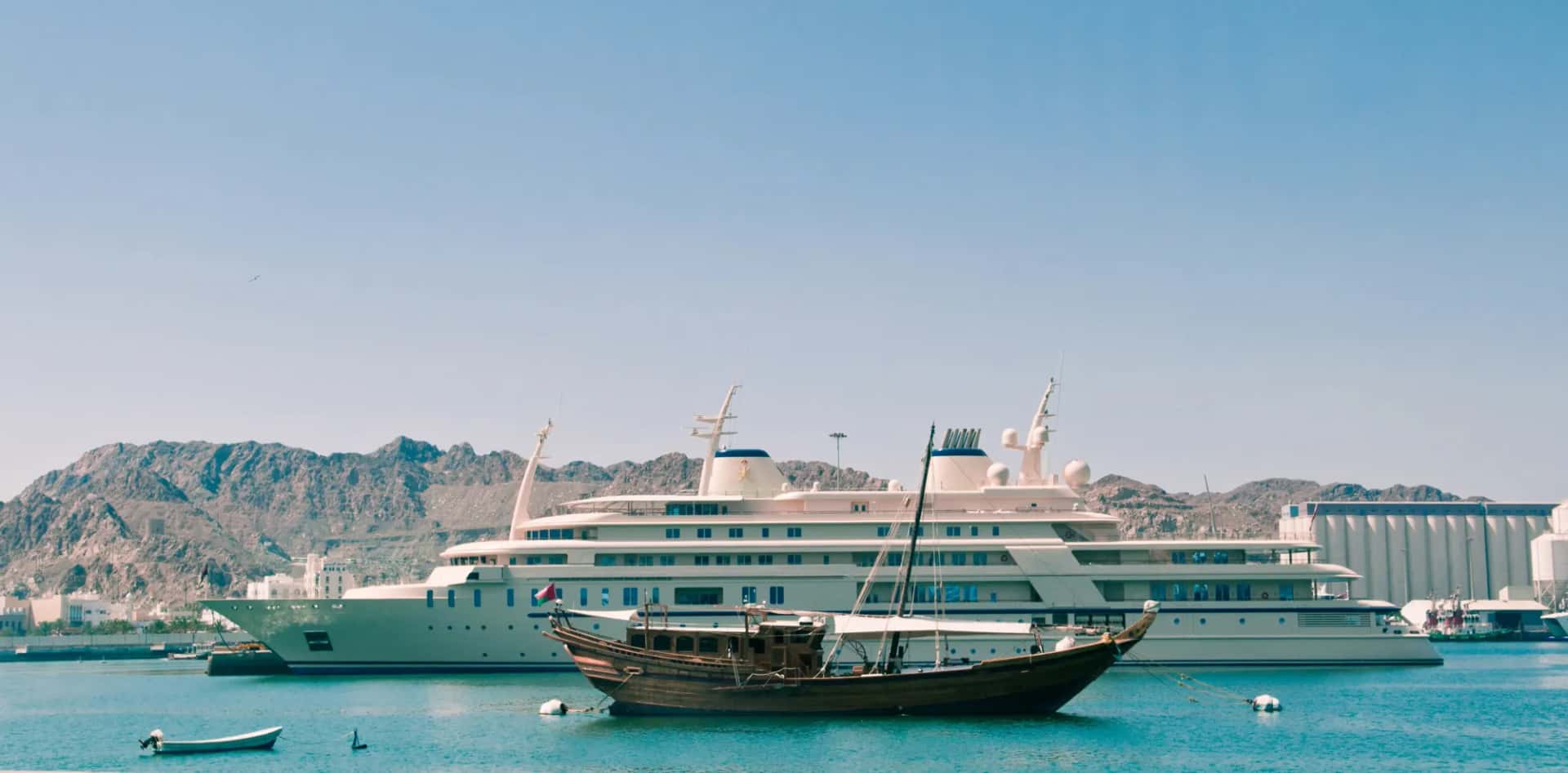
Tourism in Oman – why is it growing and how does it affect the real estate market?
Tourism in Oman is growing dynamically, serving as a key element of the strategy to diversify the economy away from the raw materials sector. The country attracts tourists with its unique authenticity, diverse landscapes, and the Khareef season phenomenon in Dhofar, which generates massive tourist traffic. The increase in the number of visitors is significantly stimulating the real estate market, driving the development of short-term rentals and Integrated Tourism Complexes (ITC). The consequence is an increase in rental rates and property values, particularly in Muscat and the Salalah region. This opens up new prospects for investors looking for opportunities in the premium and lifestyle segments.


Article summary
The most important conclusions from the article in 30 seconds.
Tourism in Oman is growing dynamically, serving as a key element of the strategy to diversify the economy away from the raw materials sector. The country attracts tourists with its unique authenticity, diverse landscapes, and the Khareef season phenomenon in Dhofar, which generates massive tourist traffic. The increase in the number of visitors is significantly stimulating the real estate market, driving the development of short-term rentals and Integrated Tourism Complexes (ITC). The consequence is an increase in rental rates and property values, particularly in Muscat and the Salalah region. This opens up new prospects for investors looking for opportunities in the premium and lifestyle segments.
Tourism in Oman has been growing for several years at a pace that is attracting the attention of not only the travel industry but also investors and real estate market analysts. The country, previously associated mainly with oil and gas, is increasingly focusing on tourism as a stable source of revenue and a development impulse for the entire economy. Along with the increase in the number of visitors, interest in real estate—both residential and investment—is also growing.
Why is tourism in Oman growing?
The dynamic development of tourism in Oman is no accident. It is the result of a long-term state strategy that assumes a gradual diversification of the economy and the building of a strong brand for the country as a holiday and lifestyle destination.
State strategy and economic diversification
For several years, the Omani authorities have been consistently investing in tourism as an alternative to the commodity sector. Transport infrastructure, accommodation facilities, and a range of attractions aimed at foreign and regional tourists are being expanded. As a result, tourism is becoming one of the pillars of economic growth, generating jobs and attracting private capital.
A stable mix of source markets
A significant growth factor is the diverse structure of tourists:
- strong regional traffic from the Gulf countries, especially the UAE,
- growing interest from European tourists,
- a gradual influx of visitors from Asia.
This diversification makes tourism demand more resilient to economic fluctuations in individual regions.
Authenticity and the character of Oman
Oman attracts people looking for a quieter alternative to the highly urbanized and densely built-up resorts of the region. Natural landscapes, deserts, mountains, a long coastline, and a deeply rooted culture make the country perceived as a more authentic destination, focused on quality rather than mass tourism.
The importance of the Khareef season for tourism development
One of the most characteristic elements of Omani tourism is the Khareef season in the southern part of the country.
What is Khareef and why does it attract tourists?
Khareef is a monsoon season occurring in the summer in the Dhofar region, centered on Salalah. While most of the Arabian Peninsula struggles with extreme heat, the area around Salalah becomes green, cooler, and humid. This unique phenomenon attracts hundreds of thousands of tourists annually, mainly from countries in the region.
The impact of Khareef on the local economy
The Khareef season generates:
- a sharp increase in the number of visitors during the summer months,
- increased demand for accommodation and short-term rentals,
- the development of retail and service infrastructure.
For the real estate market, this means a strong, albeit seasonal, demand impulse that is increasingly attracting investors looking for holiday projects.
Tourism development and the real estate market in Oman
The growing number of tourists translates directly into changes in the structure of demand for real estate. In Oman, this is particularly visible in several areas.
The growing importance of short-term rentals
Tourism favors the development of the short-term rental market, especially in places with high holiday appeal. Apartments and villas intended for holiday stays are becoming a popular form of capital investment.
Short-term rental:
- allows owners to benefit from high rates during the season,
- increases investment flexibility,
- attracts both local and foreign investors.
At the same time, this market is subject to increasing regulation, which favors its professionalization.
Integrated Tourism Complexes as a market driver
Integrated Tourism Complexes (ITCs) play a special role in the development of the real estate market. These are large projects combining hotel, residential, and recreational functions within a single urban development.
Such investments:
- attract people looking for second-home properties,
- offer a high standard of living and access to infrastructure,
- increase Oman's attractiveness to foreign investors.
Increase in rental rates and property values
With the development of tourism and the influx of expats, rental rates in prime locations are rising. This is particularly visible in projects located along the coast and in modern residential districts.
In the long term, tourism also influences:
- the increase in land value,
- increased interest in the premium segment,
- the development of the lifestyle real estate market.
Regions that benefit most from tourism development
The impact of tourism on the real estate market is not uniform across the country. Regions with the greatest holiday and investment potential gain the most.
Muscat as a premium market center
Muscat remains the main beneficiary of tourism growth. The capital concentrates the largest number of hotels, apartments, and high-standard projects. This is where demand from tourists, expats, and investors is concentrated.
Dhofar and Salalah – a seasonal market with potential
The Dhofar region, led by Salalah, is an example of a market strongly dependent on the tourist season. Despite the seasonality, interest in holiday properties is systematically growing, especially in the context of planned hotel and infrastructure investments.
Musandam and mountain regions
Northern Musandam and mountain areas attract tourists looking for contact with nature and a quieter holiday. Although the scale of investment there is smaller, the potential for boutique and ecological projects is systematically increasing.
Challenges and limitations of the real estate market
The development of tourism also brings challenges that affect the real estate market.
Seasonality and its consequences
In some regions, especially in Dhofar, demand is concentrated in specific months. This requires investors to have:
- a realistic assessment of profitability,
- proper property management off-season,
- diversification of income sources.
Regulations and the pace of infrastructure development
The growing number of investments requires parallel infrastructure development and clear legal regulations. Their absence or delays can temporarily limit the pace of market growth.
Prospects for the coming years
Tourism in Oman is not a passing trend, but an element of the country's long-term development strategy. The growing number of visitors, new hotel and infrastructure projects, and a stable economic environment favor the further development of the real estate market.
In the coming years, Oman may strengthen its position as:
- an investment alternative to more saturated markets in the region,
- a destination for those looking for holiday properties,
- a market of growing importance in the premium and lifestyle segment.
Summary
The development of tourism in Oman has a clear and measurable impact on the real estate market. The increase in the number of tourists drives demand for short-term rentals, increases the attractiveness of residential investments, and supports the development of large tourism and residential projects. For investors and those interested in the real estate market, Oman is becoming a destination worth watching closely—with potential that is only just beginning to fully emerge.

Author
Patrycja Kordys
BOARD MEMBER | SALES DIRECTOR
For nearly 17 years, she has been associated with the premium real estate market. She gained her experience working with international clients—particularly German and English speakers—ensuring the highest standard of service and communication. After years of working on the Costa del Sol, she now focuses on the dynamically developing market of Oman, where she supports clients in discovering new investment opportunities and lifestyles. She combines professionalism with a natural ease in building relationships, ensuring that the purchasing process is smooth and stress-free.
