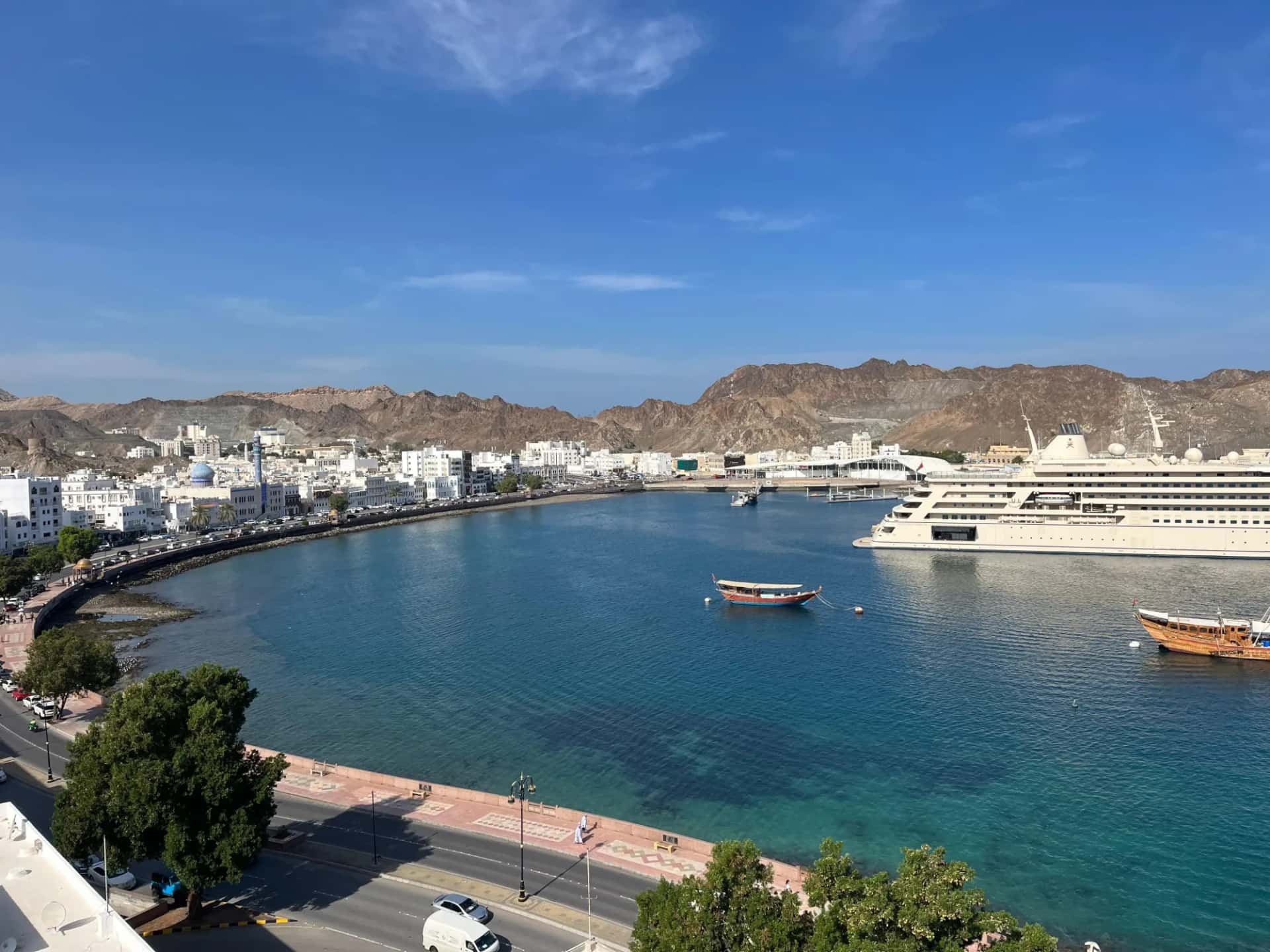



Apartment in Warsaw or apartment in Oman? A comparison of price per m², ROI, taxes, and lifestyle
Oman represents an attractive investment alternative to real estate in Warsaw, offering lower purchase prices in the premium segment and potentially twice the ROI. In Muscat, the capital of Oman, prices per m² in prestigious ITC complexes range from 9,000 to 11,000 PLN, while in Warsaw they reach 17,700–22,500 PLN. Investors can count on an 8–12% gross rental yield in Oman, compared to 6–7% in Warsaw. Additionally, Oman does not levy personal income tax until 2028, has a lower transfer fee of 3%, and a purchase in an ITC zone entitles the buyer to residency.


Zusammenfassung des Artikels
Die wichtigsten Erkenntnisse aus dem Artikel in 30 Sekunden.
Oman represents an attractive investment alternative to real estate in Warsaw, offering lower purchase prices in the premium segment and potentially twice the ROI. In Muscat, the capital of Oman, prices per m² in prestigious ITC complexes range from 9,000 to 11,000 PLN, while in Warsaw they reach 17,700–22,500 PLN. Investors can count on an 8–12% gross rental yield in Oman, compared to 6–7% in Warsaw. Additionally, Oman does not levy personal income tax until 2028, has a lower transfer fee of 3%, and a purchase in an ITC zone entitles the buyer to residency.
Real estate prices in Warsaw are rising year by year, and the profitability of investing in rental apartments is increasingly limited by high taxes, rising maintenance costs, and market saturation. It is no surprise, then, that many investors are starting to look for alternatives outside of Poland — destinations that, just a few years ago, were reserved mainly for the most experienced players. One of them is Oman – a safe, stable, and dynamically developing country in the Middle East that is competing more and more boldly with Dubai, offering luxury real estate at prices… often lower than studio apartments in Warsaw.
Is it really possible to buy a spacious, modern apartment with access to a beach, marina, and golf course for the cost of a small apartment in the capital? What are the differences in price per meter, rental return potential, taxes, or cost of living? And finally — can Oman truly be the new Dubai when it comes to real estate investment?
Real estate prices: Warsaw vs. Oman
The choice between an apartment in Warsaw and an apartment in Oman begins with a fundamental question: how much does a square meter cost in both places today? And here comes the first big surprise — the premium segment in Oman can be cheaper than apartments in many districts of Warsaw, even those outside the city center.
Warsaw: a mature but increasingly expensive market
For years, Warsaw has maintained its position as the most expensive city in Poland in terms of real estate prices. Demand is driven by:
- a dynamic labor market,
- an influx of professionals and students,
- rapid infrastructure development,
- interest in investment purchases.
Average prices per m² in 2024/2025 are as follows:
- approx. 17,700 PLN/m² – average for the primary market,
- 20,000–22,500 PLN/m² – in the city center (Śródmieście), Wola, and top premium locations.
For an investor, this means that a small studio apartment of 30–35 m² costs about 530,000–650,000 PLN today, and even more in luxury projects. And while demand remains stable, high purchase prices translate into lower accessibility for many individual investors.
Oman: luxury standard at a lower price
Oman — and especially its capital, Muscat — is developing its premium real estate market at a rapid pace. Modern, high-quality developments are being built here, often to resort standards: with access to a marina, beach, golf courses, private clubs, or promenades.
Prices per m² in Muscat vary greatly, but are still more favorable than in Warsaw:
- 5,600–7,100 PLN/m² – in standard residential districts,
- 9,000–11,000 PLN/m² – in prestigious ITC complexes, such as Al Mouj, Muscat Hills, or Yiti.
Importantly: foreigners can buy real estate as full ownership (freehold) only in ITC zones, which are also the best in terms of quality, infrastructure, and investment potential.
Comparative example: studio in Warsaw vs. apartment in Al Mouj
To better illustrate the difference, let's take a concrete example:
Warsaw — 30 m² studio
- Location: good district, primary market
- Price: approx. 530,000–600,000 PLN
Oman — 1 BR apartment (approx. 70 m²)
- Luxury resort by the ocean
- Access to marina, beach, golf course
- Price: approx. 77,000 OMR = ~724,000 PLN
- Price per m²: approx. 10,300 PLN/m² (significantly less than in Warsaw)
Why are prices in Oman still relatively low?
- The market is at an earlier stage of development than in Dubai.
- The state is investing heavily in tourism and foreign capital.
- Foreigner access is controlled (only ITC), which stabilizes supply.
- ITC projects are designed to attract investors, so they offer a high standard at an attractive price.
Check out our article: What are the real estate prices in Oman?
ROI and rental potential: Warsaw vs. Oman
The profitability of real estate investment largely depends on the actual rental return. And while Warsaw still maintains a solid level of profitability, in Oman — especially in prestigious ITC zones — the ROI can be even twice as high. It is this difference that makes Oman one of the most interesting destinations for investors from Europe.
Warsaw: a stable 6–7% gross, but with decreasing momentum
Warsaw is the most mature and predictable rental market in Poland. Demand remains high due to:
- a large student population,
- a strong labor market,
- internal and international migration,
- a constantly growing corporate base.
The average rate of return is currently about 6.0–6.5% gross (realistically 4.5–5.2% net after lump-sum tax and costs).
However, rising tax burdens and high purchase prices mean that there is limited room to increase ROI. To achieve a higher return, an investor must look for opportunities or enter the short-term rental market — which is becoming increasingly regulated.
Oman: 8–12% ROI in prestigious ITC zones – a clear advantage over Europe
Rentals in Oman — especially in projects such as Al Mouj, Muscat Hills, Yiti Sustainable City — offer some of the best rates of return in the GCC region, higher than:
- Dubai (typically 5–7%),
- Qatar (4–6%),
- Bahrain (5–7%).
In Oman, the actual observed ROI in premium projects is 8–12% gross (and even more when fully utilizing the winter season and short-term rentals).
Why such an advantage?
- Strong winter season (November–April) – this is a period of high daily rates, often comparable to Dubai, but at a much lower purchase cost.
- Limited supply in ITC zones – the state allows foreigners only into selected complexes — thanks to this, the market is not overheated.
- High expat budgets – professionals employed in the energy and financial sectors prefer premium apartments with access to a marina, beach, and golf courses.
- Dynamically growing tourism – Oman is set to reach 11 million tourists annually by 2040.
An increase in occupancy and rental rate hikes during the season is already visible.
Taxes, property rights, and safety: Poland vs. Oman
Investing in real estate is not just about analyzing prices and ROI. Equally important are: taxation, rules for purchase by foreigners, as well as safety and quality of life. In this respect, Poland and Oman present completely different approaches — and it is this difference that is increasingly deciding the choice of investment destination.
Taxes: where will the investor pay less?
Poland
- Private rental taxed exclusively via lump-sum: 8.5% up to 100,000 PLN and 12.5% above.
- Secondary market: 2% PCC (civil law transaction tax).
- Primary market: 8% or 23% VAT.
- Additional costs: insurance, renovations, property manager commissions, rising administrative fees.
Oman
- No personal income tax (until 2028).
- Local rental tax: 3% municipal tax.
- No annual property tax.
- One-time fee upon purchase: 3% transfer fee.
- VAT does not apply to residential real estate.
Property rights: who can buy and where?
Poland
- No restrictions for Poles and EU citizens.
- Complete freedom of purchase in the residential market.
Oman
- Full ownership (freehold) only in designated ITC – Integrated Tourism Complexes zones.
- The most important ones: Al Mouj, Muscat Hills, AIDA, Hawana Salalah.
- Purchase in an ITC grants the right to residency for the investor and their family.
- Outside of ITCs, long-term usufruct rights are available.
Safety and lifestyle: two different worlds
Warsaw / Poland
- High level of safety for Europe.
- Urban, dynamic lifestyle.
- Variable climate: from freezing winters to hot summers.
Oman
- One of the safest countries in the world (TOP 5 globally).
- Resort lifestyle: beaches, marina, golf, restaurants, private clubs.
- In winter (November–March) ideal weather 24–28°C.
Summary
Comparing Warsaw and Oman, it is clear that both markets represent completely different stages of development and completely different investment models. Warsaw remains a stable, mature, and predictable real estate market — however, increasingly higher purchase prices, rising tax burdens, and rental saturation make it difficult to achieve spectacularly high returns here. An ROI of 5–6% net is the standard today, and in many cases — the upper limit of what is possible.
Oman, on the other hand, is only just building its position in global tourism and the luxury real estate segment, allowing investors to benefit from the advantage of early entry. Attractive prices per m², no income tax until 2028, limited supply in ITC zones, dynamic growth in tourist traffic, and a stable, safe political climate translate into a real 8–12% ROI in premium projects — a result difficult to achieve in European capitals.
Furthermore, for the price of a small studio in Warsaw, one can buy a spacious, luxury apartment by the ocean, with a marina, private beach, restaurants, and access to one of the best golf courses in the region. This is a completely different level of lifestyle that attracts both tourists and wealthy long-term tenants.
Sources:
- https://okeask.com/en/category/poleznaya-informaciya/1722324384-apartment-prices-in-warsaw-in-june-2024
- https://investropa.com/blogs/news/average-apartment-price-per-sqm-warsaw
- https://www.globalpropertyguide.com/europe/poland/price-history
- https://www.dubizzle.com.om/en/properties/properties-for-sale/apartments-for-sale/muscat/q-al-mouj/
- https://www.globalpropertyguide.com/middle-east/oman/price-history
- https://vistaoman.com/itc-properties-in-oman/
- https://uinvestgroup.com/can-foreigners-buy-property-in-oman/
- https://www.ey.com/en\_gl/technical/tax-alerts/oman-to-introduce-personal-income-tax-from-january-2028
- https://www.reuters.com/world/middle-east/oman-moves-become-first-gulf-state-impose-personal-income-tax-2025-06-23/
- https://taxsummaries.pwc.com/oman/corporate/other-taxes
- https://www.investroyal.co/oman-property-taxes-2025-rental-purchase/
- https://www.podatki.gov.pl/pit/osoba-nieprowadzaca-dzialalnosci-gospodarczej/rozliczenie-osob-26-60/rozliczenie-dochodow-z-najmu-ryczalt-ewidencjonowany/
- https://studio.pwc.pl/aktualnosci/preferencje-w-pit/pl/istotne-zmiany-w-opodatkowaniu-najmu-prywatnego-oraz-w-ramach-dzialalnosci-gospodarczej-w-2024-i-2025
- https://www.gov.pl/web/rozwoj-technologia/kupno-mieszkania-lub-domu-na-rynku-wtornym-bez-podatku-pcc
- https://rutkowskidevelopment.pl/jakie-podatki-obowiazuja-przy-zakupie-mieszkania-od-dewelopera-kompletny-przewodnik/
- https://www.thearabianstories.com/2025/03/26/oman-is-the-5th-safest-country-in-the-worlds-2025-safety-index-by-numbeo

Autor
Mariusz Sawicki
MEMBER OF THE MANAGEMENT BOARD
He combines experience from the financial and real estate sectors, which allows him to support clients in making informed and well-thought-out investment decisions. He views real estate purchases not only through the lens of emotions, but primarily through data, security, and potential. He specializes in investment analysis and risk assessment, particularly in emerging markets such as Oman. In his work, he focuses on specifics, transparency, and a partnership-based approach.