


Dubai vs. Oman: where to buy a luxury property to earn more and pay less?
Dubai and Oman are two premium real estate markets in the Gulf, offering different investment profiles. Dubai is characterized by high prices (30,000–40,000 PLN/m²) and an average ROI of 5–7%, with higher returns of up to 10% in the short-term rental segment, but with high supply and high transaction costs (4% DLD, 5% municipal fee). Oman, especially in ITC zones like Al Mouj Muscat, offers luxury properties at significantly lower prices (9,000–14,000 PLN/m²) and a stable gross ROI of 8–12%. Lower entry costs (3% transfer fee), limited supply, and the absence of income tax on rentals for individuals (currently) translate into higher net profits and better capital diversification.


Zusammenfassung des Artikels
Die wichtigsten Erkenntnisse aus dem Artikel in 30 Sekunden.
Dubai and Oman are two premium real estate markets in the Gulf, offering different investment profiles. Dubai is characterized by high prices (30,000–40,000 PLN/m²) and an average ROI of 5–7%, with higher returns of up to 10% in the short-term rental segment, but with high supply and high transaction costs (4% DLD, 5% municipal fee). Oman, especially in ITC zones like Al Mouj Muscat, offers luxury properties at significantly lower prices (9,000–14,000 PLN/m²) and a stable gross ROI of 8–12%. Lower entry costs (3% transfer fee), limited supply, and the absence of income tax on rentals for individuals (currently) translate into higher net profits and better capital diversification.
For years, Dubai has been synonymous with luxury in the real estate market: spectacular apartments with views of the Palm Jumeirah, a marina full of yachts, a global city of the future brand, and an almost unlimited investment offering. It is no wonder that many people take their first steps there when thinking about purchasing premium real estate in the Gulf region. But the more expensive Dubai becomes, the more frequently the question arises: are we paying for real profitability, or primarily for prestige and brand recognition?
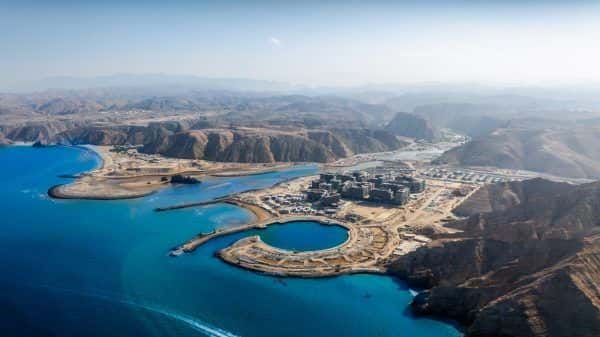
At the same time, Oman is increasingly appearing on investors radars — calmer, more boutique, and less market-overheated. In top ITC (Integrated Tourism Complex) zones (such as Al Mouj in Muscat), one can buy resort-standard properties: with a marina, beach, and golf course — often at prices noticeably lower than in Dubai's icons, with rental yields comparable to those offered by Dubai in many districts.
Luxury real estate prices: Dubai vs. Oman
The first and most visible difference between Dubai and Oman is the entry price into the luxury segment. Although both markets offer very high-standard properties, the cost per square meter — especially in top locations — can differ dramatically.
Dubai: prestige, recognition, and very high prices
Dubai is one of the most expensive real estate markets in the Gulf region, especially in the most desirable waterfront locations. The average price of apartments across the city is relatively high, but the real price jump is visible in districts considered icons of luxury.
In places like Palm Jumeirah, Dubai Marina, or Downtown Dubai, prices for premium apartments often reach 30,000–40,000 PLN per m², and even more in ultra-luxury projects. For example, a 1-bedroom apartment on the Palm Jumeirah is often an expense of 4–5 million AED, which translates into several million PLN for a relatively small area.
It is here that one pays not only for the finishing standard but primarily for the Dubai brand, location recognition, and ease of resale. For many investors, this is an asset — for others, an entry barrier that significantly increases risk and extends the capital payback period.
Oman: boutique luxury and a significantly lower price per m²
Oman, and especially its prestigious Integrated Tourism Complexes (ITC), offers a completely different approach to luxury. Instead of dense development and skyscrapers, low-rise architecture, space, marinas, beaches, and golf courses dominate here — all in a more intimate, resort style.
In top projects such as Al Mouj Muscat, prices for luxury apartments are clearly lower than in Dubai. For a 1-bedroom apartment with an area of 70–100 m², we will usually pay several dozen to about 130,000 OMR, which translates to approx. 9,000–14,000 PLN per m² — even in the best locations right by the marina or golf course.
This means that for the price of one apartment in a top Dubai district, one can buy two, and sometimes even three, premium-segment units in Oman, while maintaining a very high finishing standard and access to resort-class infrastructure.
What does paying less really mean?
The price difference is not just a matter of nominal purchase value. A lower price per m² in Oman means:
- a lower entry threshold into the luxury market segment,
- the possibility of capital diversification (several properties instead of one),
- lower risk in the event of a resale,
- greater flexibility in rental strategy (short- and long-term).
In practice, it is the purchase price that makes Oman begin to be perceived as a place where luxury does not have to mean maximum capital burden — and this directly affects the future profitability of the investment.
ROI and rental yield: where does luxury really earn money?
The purchase price is only a starting point. The real attractiveness of an investment is determined by the relationship between the entry cost and the generated income, and in this area, the differences between Dubai and Oman are much greater than the property standard alone would suggest.
Dubai: high demand, but increasingly difficult to achieve above-average ROI
Dubai remains one of the strongest short-term rental markets in the world. A huge number of tourists, the city's global brand, and excellent flight connections ensure high demand for most of the year.
In practice, however:
- average ROI in Dubai usually falls in the 5–7% gross range,
- in selected districts and with intensive short-term rentals, 8–10% is possible,
- results above 10% are increasingly difficult to maintain long-term.
The main challenge for Dubai is the huge supply of new projects. Every year, thousands of new apartments hit the market, which increases competition, lowers the bargaining power of owners, and means that high ROI requires active, often costly management.
Oman: 8–12% ROI thanks to lower entry prices and limited supply
In Oman — especially in prestigious Integrated Tourism Complex (ITC) zones, such as Al Mouj Muscat, Muscat Bay, or Hawana Salalah — real rates of return are noticeably higher.
Based on current market data and rental models:
- ROI in Oman usually fluctuates in the 8–12% gross range,
- the highest returns are achieved by properties:
- in top locations by the marina or golf course,
- operated in a hybrid model (seasonal + long-term rental),
- with sizes most sought after by expats and premium tourists.
Key factors boosting profitability in Oman include:
- significantly lower purchase price than in Dubai,
- limited supply of properties in ITCs,
- growing, but still unsaturated tourism,
- no income tax on rentals (current status),
- a strong winter season (November–April), during which rental rates are highest.
Comparative example: same capital, different effects
With the same investment budget:
- in Dubai, an investor usually buys one premium apartment,
- in Oman, the same capital allows for the purchase of two, and sometimes three apartments in ITC zones.
The end result? Total rental income in Oman is often higher, despite lower unit rents, because:
- the purchase cost is lower,
- the risk of vacancies is spread across several units,
- the percentage ROI is clearly higher.
So where does luxury earn more?
- Dubai – high rental volume, great market liquidity, and a global brand, but it is increasingly difficult to achieve double-digit ROI without increased risk.
- Oman – 8–12% ROI, a calmer market, less competition, and a much better ratio of purchase price to generated income.
This makes Oman increasingly win over Dubai for investors focused on maximizing returns with controlled risk — especially in the luxury real estate segment.
Taxes, fees, and real costs of ownership: Dubai vs. Oman
Even the highest ROI on paper can lose its meaning if taxes and fees eat up a significant portion of the profits. Therefore, when comparing Dubai and Oman, it is crucial to look not only at rental income but also at the total costs of entry and property maintenance.
Dubai: no classic taxes, but high indirect costs
Dubai is often perceived as a tax haven — and in many respects, rightly so. In the United Arab Emirates:
- there is no personal income tax,
- there is no capital gains tax,
- there is no annual property tax.
However, an investor must reckon with significant transaction and operating costs.
Key fees in Dubai:
- 4% Dubai Land Department (DLD) fee upon property purchase,
- registration and administrative fees,
- housing / municipality fee of 5% of the annual rent value,
- relatively high service charges in premium buildings (marina, concierge, pools, security).
In practice, this means that although Dubai does not collect classic taxes, the cost of entering the investment is high, and annual fees can significantly lower the real ROI — especially with long-term rentals.
Oman: simpler system and lower burdens
Oman uses a much more conservative and investor-friendly approach to property taxation.
Key features of the system in Oman:
- 3% transfer fee upon purchase (equivalent to PCC),
- no annual property tax,
- no income tax on rentals for individuals (current status),
- no capital gains tax upon property sale,
- local municipal fees (usually approx. 3% of the rent).
Thanks to this, the total costs of maintaining the investment are clearly lower than in Dubai, which directly translates into higher net income and better cash flow predictability.
Planned tax changes in Oman – what is worth knowing?
In the context of long-term investments, it is worth mentioning the announcements regarding the introduction of a personal income tax in Oman (approx. 5%). At the moment:
- it is expected to apply mainly to high incomes,
- implementation details are not yet fully specified,
- even after its introduction, the total tax burden will remain competitive compared to other countries in the region.
For most investors owning 1–2 properties for rent, the impact of this change on profitability should be limited.
So where does one really pay less?
Dubai offers no classic taxes but compensates for this with a high entry fee and service costs.
Oman wins with a lower purchase fee, fewer fixed burdens, and a simpler system.
It is the difference in costs and taxes that makes the investor's real net profit in Oman often turn out to be higher than in Dubai, despite similar or even higher rates of return.
For whom Dubai, for whom Oman? – practical investment scenarios
Although both Dubai and Oman offer access to luxury real estate and attractive rental markets, they are not markets for the same type of investor. Differences in entry prices, market scale, risk level, and lifestyle mean that each of these directions meets different needs and strategies.
Dubai will be a better choice if…
Dubai will work primarily for investors who:
- have a high initial budget and are ready to invest several million PLN in one property,
- expect very high market liquidity and easy asset resale,
- want to actively manage short-term rentals or cooperate with an operating company,
- aim for prestige, location recognition, and the city's global brand,
- are considering a Golden Visa as an additional investment value,
- accept high competition and price volatility in exchange for market scale.
Investor profile: dynamic, focused on value growth and rapid capital turnover, often treating the property as part of a broader international portfolio.
Oman will be a better choice if…
Oman definitely suits investors who:
- are looking for a lower entry threshold into the luxury segment,
- want to achieve high, stable ROI at the 8–12% level,
- prefer a calmer, less overheated market with limited supply,
- are thinking about capital diversification (several properties instead of one),
- value a simple and transparent tax system,
- treat the property not only as an investment but also as a lifestyle choice (personal stays, golf, marina, beach).
Investor profile: long-term, focused on passive income, stability, and a real price-to-quality ratio.
Comparative scenario: same capital, two different approaches
Imagine an investor with an identical budget:
- in Dubai – they buy one apartment in a top location, counting on prestige, liquidity, and high rental rates,
- in Oman – they buy two or three apartments in ITC zones, spreading the risk and maximizing total income.
The end result often shows that total net income from a portfolio in Oman can be higher, even though individual rents are lower than in Dubai.
Summary
Comparing Dubai and Oman from the perspective of luxury real estate investment, it is clear that although both markets belong to the Gulf region, they play by completely different rules. Dubai is a global brand, spectacular scale, huge tourist demand, and very high liquidity. It is a city that never sleeps — and one that can reward an investor, provided they accept the high entry threshold and strong competition.
Oman, on the other hand, represents a boutique luxury approach: lower entry prices, limited supply in prestigious ITC zones, a transparent tax system, and real ROI at the 8–12% level, which is difficult to achieve in mature markets like Dubai. This is a direction for an investor who values stability, predictability, and the long-term nature of rentals, while simultaneously not wanting to overpay for location recognition alone.
In effect:
- Dubai wins with scale, prestige, and market liquidity — ideal for investors looking for a global-class asset.
- Oman wins with price-to-quality ratio, stable income, and lower burdens — ideal for those who want to earn more and pay less.
The final choice depends on the strategy: by buying in Dubai, the investor also invests in brand and status; by buying in Oman — in efficiency and a higher percentage return. For an increasing number of investors, it is Oman that is becoming the quiet winner in the Middle East's luxury real estate segment.

Autor
Mariusz Cieślukowski
CEO / FOUNDER
Co-founder of PlanoGroup and the person responsible for the development of the entire group. He built a brand based on quality, trust, and effectiveness, developing it in the Spanish market and subsequently expanding operations to further investment destinations. Today, he is developing PlanoGroup - a project that responds to the needs of clients who are looking not only for real estate but also for new opportunities for living, investment, and relocation. He specializes in trend analysis and building investment strategies in foreign markets - including Spain, Oman, and emerging locations such as Montenegro.
