


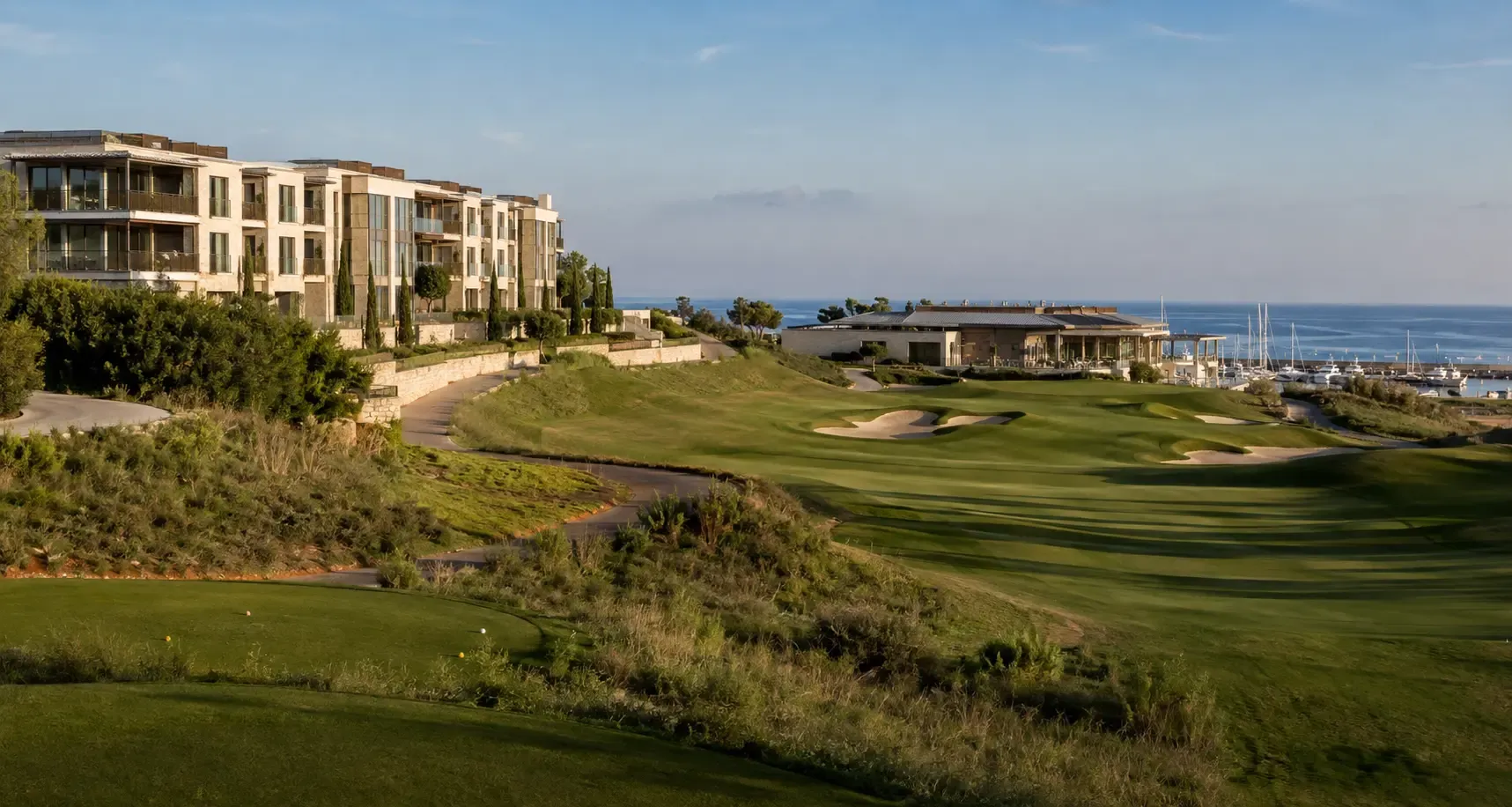
Golf real estate as an investment: when does a golf course actually improve ROI?
A golf property improves ROI only when the golf course creates measurable demand: it extends the season, raises ADR, increases occupancy, or strengthens resale at cost. An investor should check the tenant profile, playing calendar, tournaments, flights, service charges, rental licenses, the project's legal status, and course access rules. Oman, Dubai, the Costa del Sol, and Montenegro require different tests because they differ in season, regulations, market maturity, and common costs. A view of the fairway can be an asset, but without an operator, data, and infrastructure, it is often just a cost to the owner's comfort. The decision should stem from a comparison of specific units, documents, and net cash flows, rather than the mere promise of "frontline golf."


Article summary
The most important conclusions from the article in 30 seconds.
A golf property improves ROI only when the golf course creates measurable demand: it extends the season, raises ADR, increases occupancy, or strengthens resale at cost. An investor should check the tenant profile, playing calendar, tournaments, flights, service charges, rental licenses, the project's legal status, and course access rules. Oman, Dubai, the Costa del Sol, and Montenegro require different tests because they differ in season, regulations, market maturity, and common costs. A view of the fairway can be an asset, but without an operator, data, and infrastructure, it is often just a cost to the owner's comfort. The decision should stem from a comparison of specific units, documents, and net cash flows, rather than the mere promise of "frontline golf."
A golf course property doesn't make money because it has a nice view. It makes money when the course creates repeatable demand: outside the beach season, during tournament weeks, among high-budget stay tenants, and in locations where access, the rental operator, and resort infrastructure are consistent with the rhythm of the game. For an investor from Poland, the key question is therefore not: "does golf raise prestige?", but rather: "do a specific course, club, and calendar improve ADR, occupancy, and resale value after costs?".
This text compares the mechanics of renting properties near golf courses in Oman, Dubai, Montenegro, and the Costa del Sol. In the background are real investment variables: seasonality, service charges, rental licenses, tee time access, the risk of maintenance closures, the resort masterplan, the rental operator, and the guest profile. Golf can be a revenue stabilizer, but only when the investor knows how to separate measurable demand from their own view preference.
—
Who actually rents a property near a golf course?
Tenant profiles vs. profitability
A golf tenant is not a single group. In the short-term rental model, at least four segments must be separated because each of them reacts differently to price, timing, and location. The first segment consists of golfers coming for 4–7 days, often in pairs or small groups. For them, distance to the course, tee time availability, clubhouse standards, airport transfer, and the ability to store equipment are of the utmost importance. A sea view is sometimes a bonus, but if the morning round requires a 35-minute drive, the apartment loses part of its edge.
The second segment consists of winter tenants from Northern Europe looking for stays of 1–3 months. This is especially important in the Persian Gulf, where the playing season falls during the region's cooler months, which are simultaneously warm from a European perspective. Such a tenant looks at the monthly bill, internet quality, kitchen, parking, access to services, and cost predictability. The golf course helps, but only if the resort is not cut off from everyday life.
The third segment comprises expats and remote workers. In Dubai and Muscat, they can treat golf as part of their weekly routine rather than a vacation episode. For this segment, not only the course matters, but also access to the city, schools, restaurants, medical care, and transportation. The fourth segment consists of families using the resort, for whom golf is one of several amenities alongside pools, the beach, the marina, walking paths, and safe spaces for children.
The most important conclusion: the mere phrase "golf-side apartment" tells you nothing yet about profitability. A property near a tournament course in Dubai operates differently, an apartment in Jebel Sifah combining golf, a marina, and the coast operates differently, and a unit in the more mature Costa del Sol market operates differently. Before an investor accepts a higher price per square meter, they should determine which tenant segment will dominate and whether that segment genuinely pays for the proximity to the tee box.
How to check the tenant profile step by step
The first step is to talk not to the developer's sales department, but to the rental operator, resort reception, golf club, and local apartment managers. You need to ask where guests come from, how long they stay, in which months demand rises, and whether Stay & Play packages are actually sold or just written into a brochure. The second step is to compare rates for similar apartments: close to the course, further from the course, with a fairway view and without one. The third step is to analyze guest reviews. If distance to the club, course quality, and ease of booking a round repeat in comments, golf matters for demand. If guests write mostly about the beach, pool, and city center, the course is mostly a bonus.
For an investor, a useful reference point is PlanoGroups text on the second home as an investment, because it shows how to combine private use with a rental calendar. For a golf property, the same logic is even more important: the owner's private stay during a tournament week or in the most valuable climatic window can cost more than the price of a plane ticket alone.
—
How to check if the golf season aligns with your financial plan?
Calendar analysis vs. cash flows
The profitability of a golf property starts with the calendar. In Southern Europe, the golf season is longer than the classic beach season, but it is not immune to weather, supply competition, and local short-term rental regulations. On the Costa del Sol, golf helps fill the spring and autumn periods, while the investor still needs to check whether the homeowners association, tourist license, and local rules allow renting the property in the assumed model. Following the changes applicable in Spain from April 3, 2025, new uses of a unit for tourist rentals in buildings subject to a homeowners association require prior approval by the association under the rules indicated in the Ley de Propiedad Horizontal. This is not an administrative detail, but a risk to the entire revenue forecast.
In the Persian Gulf, the logic is different. The months from autumn to spring are friendlier for playing, which is why Dubai and Oman can build demand when some European markets are just entering their transitional season. The official DP World Tour calendar shows that events of this rank in Dubai focus golfers' attention in the winter months, for example, the Dubai Invitational and the Hero Dubai Desert Classic in January 2026. For rentals, this does not automatically mean a jump in ROI, but it signals when the city attracts golfers, sponsors, media, corporate guests, and people combining sports with a business stay.
In Oman, you need to look wider than just the tournament calendar. Invest Oman describes tourism as one of the pillars of diversification and points to investments in tourism complexes, resorts, and infrastructure as part of the Vision 2040 program. For an investor in a golf-side apartment, this means that season analysis should include not only weather, but also flights, hospitality, road infrastructure, operators, and whether the project is in a zone allowing foreign purchases.
Three-step season due diligence
First, check the "peak season" for a specific location, not for the entire country. Muscat, Dubai, Marbella, and the Budva area have different demand rhythms. In the second step, compare the season calendar with the flight route network. An apartment may have very good parameters on paper, but if flying in during target months requires difficult connections, the tenant base narrows. The third step is to contact the golf course or resort operator regarding maintenance work: overseeding, green aeration, temporary hole closures, clubhouse renovation. If these work periods fall on dates that were supposed to generate revenue in the forecast, they must be subtracted from the model.
It is worth preparing an annual revenue matrix. For each month, enter the expected ADR, occupancy, operator commission, service charges, taxes, utilities, and a maintenance reserve. Only such a table shows whether golf complements the beach season or merely shifts revenue to other months. In a conservative model, you should also assume a few weeks without rentals during the most valuable season, because the owner often wants to use the property privately then.
—
Does a fairway view genuinely raise the rental rate?
Premium for location inside the resort
A fairway view can raise the purchase price and rental rate, but not always in the same proportion. This is a classic ROI analysis mistake: the investor pays extra for "frontline golf" and then assumes the tenant will cover the entire price difference. Meanwhile, the tenant is not buying square meters. The tenant is buying stay convenience, time, infrastructure quality, and stay predictability. If two apartments are in the same resort, have a similar standard and similar access to the course, the view alone does not have to justify a large difference in the nightly rate.
The situation is different when a fairway location shortens the path to the club, provides silence, an advantage in terrace exposure, and limits the risk of accidental neighboring construction. Then the premium stems not just from the view, but from the position in the masterplan. Therefore, in off-plan projects, the investor should request the current masterplan, project phasing, planned building heights, common area maintenance rules, and the legal status of the view. A "green view" in the first phase does not guarantee that another building, technical road, or service facility will not appear in front of the terrace in a few years.
In Dubai, an additional element is the service charge. The Dubai Land Department indicates that owners of jointly owned property are responsible for service charges and usage charges, and RERA provides a Service Charge Index for jointly owned properties. In golf resorts, these fees can cover expensive common infrastructure, security, greenery, common area cooling, and management. A high nightly rent is not enough if the fixed maintenance cost eats up the difference between gross and net ROI.
How to compare a view with financial performance
The comparison should take place within a single resort or very similar locations. Comparing a fairway apartment with a city-center apartment will not answer the question about the value of a view. In practice, you should gather three pairs of data: purchase price per square meter, average rental rate, and annual occupancy for units with and without a view. If the difference in purchase price is high and the revenue difference is marginal, the view is a lifestyle cost, not an ROI driver.
The second test concerns resale. In more mature golf locations, such as selected parts of Marbella, limited supply near the course can help sales liquidity, but you still need to check comparable transactions, not just asking prices. In Oman and Montenegro, where some locations are only just maturing, the project's status, infrastructure schedule, and developer credibility matter more. These are areas worth contrasting with the process described in PlanoGroups article on guaranteed rental abroad: a guarantee, a view, or a brand will not replace cost and risk analysis after the end of the first sales period.
—
How to calculate revenue outside the beach season?
The economics of a golf property
Revenue outside the beach season must be calculated separately because it is governed by different incentives. For a seaside apartment, temperature, the beach, and school holidays may be the main magnets. For a golf apartment, playing conditions, tee time availability, course quality, tournaments, club packages, weekend flights, and service standards are more important. This is precisely why a golf property can improve revenue stability, but only in a location where the golf season does not fully overlap with the beach season.
In the financial model, it is worth separating three revenue lines. The first is classic vacation rentals. The second is golf stays: short trips, Stay & Play packages, group and tournament stays. The third is medium-term stays, especially winter ones. Each line has different guest acquisition costs. A standard booking portal may work for a beach tourist, but for a golfer, an operator who collaborates with clubs, coaches, golf travel agencies, and local concierge services is often more effective.
Costs must be calculated on a net basis. Enter into the model operator commission, cleaning, linen service, utilities, insurance, maintenance, service charges, local taxes, an FF&E reserve, and vacancy periods. Only then can you compare the "golf helps" scenario with the "golf costs" scenario. A high course standard often increases shared costs. If the operator cannot sell this advantage to tenants, the investor pays for infrastructure that does not return in revenue.
Three off-peak ROI tests
The first test is the green fee test. Check how much a round costs for an outside guest, whether the club offers resident packages, and whether apartment tenants can enjoy preferential rates. If the green fee is high, but the apartment grants no access advantage, the course may be close by, but it does not necessarily generate demand. The second test is the operator test. Ask what percentage of bookings in recent seasons came from golfers, how such bookings are marked, and whether the operator has ADR data for golf stays. The third test is the shared cost test: compare service charges with an analogous project without a course or without extensive greenery.
In Oman, especially with resort projects and ITC zones, an additional element is the legal status and post-purchase management model. It is worth comparing it with PlanoGroups guide on ROI, taxes, and the condohotel model in Oman, because the mere legal possibility of purchase by a foreigner does not yet determine the profitability of a specific apartment. Decisions are made at the level of the project, contract, costs, and rental calendar.
—
When does proximity to a golf course become a "red flag"?
Investment risks and due diligence
The biggest risk is not the golf course, but the golf course in the presentation. Off-plan projects can display visualizations of fairways, clubhouses, and greenery before the investor sees the financing schedule, permits, operator agreements, and completion guarantees. If the course is yet to be built, you must ask who is financing it, who will operate it, when individual holes will be handed over, whether building the course is a condition of the development agreement, and what the consequences of delays are.
The second red flag is isolation. A golf resort may look good on a map, but if there are no shops, restaurants, medical care, sports academies, beaches, or marinas outside the course, the tenant base may prove narrow. Golfers will come for a few days, but families and medium-term tenants need everyday infrastructure. The investor should drive the route to the nearest supermarket, pharmacy, airport, and service center during the hours when guests will actually be moving around.
The third red flag is the membership model. A private course closed to outsiders can increase owner comfort, but limit rental potential. For an investment apartment, a course that has a clear Pay & Play model, hotel packages, or partnerships with rental operators is often more beneficial. The fourth flag is a service charge inadequate to revenue. If the cost of maintaining grounds, greenery, and sports infrastructure is high, and the operator cannot translate it into a higher ADR or occupancy, the investor is paying for a utility benefit, not an investment one.
List of questions before booking
Before booking, ask for documents and answers to specific questions: does the project have status allowing foreign purchases, is the course already operating, who manages it, what are the access rules for tenants, does the apartment owner have discounts or priority tee times, what is the service charge per square meter, does the fee include golf infrastructure, are subsequent building phases planned that would block the view, and does short-term renting require an additional license. In Spain, add a question about association approval and local limits. In Dubai, about holiday home registration, the manager, and RERA service charges. In Oman, about ITCs, title deeds, the operator, and rental rules.
—
Oman, Dubai, or Costa del Sol - where does golf work hardest for the investor?
Market comparison and impact table
There is no single "golf property" market. There are markets at different phases of maturity. The Costa del Sol has dense infrastructure, recognition among golfers, and high comparable supply, but also strong competition and increasingly important short-term rental regulations. Dubai has global visibility, tournaments, expats, and a high standard of property management, but requires rigorous calculation of service charges and operator costs. Oman is a less obvious direction, but projects in Muscat, Jebel Sifah, Al Mouj, or AIDA must be analyzed through ITCs, tourist infrastructure, the winter season, and capital appreciation potential. Montenegro can benefit from the off-beach season, but the market scale and resale liquidity require careful evaluation.
Table for analyzing the impact of golf on the investment:
| Market | What can help with ROI | What to check before buying | Typical risk |
|---|---|---|---|
| Oman | Winter season, ITC projects, developing tourism infrastructure, lower market obviousness than Dubai | ITC status, title deed, rental management company, access to the golf course, resort schedule, common expenses | Purchasing visualizations without confirmed infrastructure and real rental data |
| Dubai | City recognition, expats, golf events, good aviation infrastructure, DLD/RERA tools | Holiday home permit, operator, service charge index, distance to the pitch, real ADR difference | High common costs and the competition of many apartments of a similar class |
| Costa del Sol | Mature golf ecosystem, long playing season, brand recognition of Marbella and Malaga | Rental license, community consent following changes effective April 3, 2025, off-season demand, competitive supply | Purchasing an expensive location without a proportional rent premium |
| Montenegro | Shorter comparative market, potential for extending the season, second home demand | Off-season flights, course scale, operator, non-golf infrastructure, resale liquidity | Too narrow a tenant base and stronger seasonality than assumed |
Oman
Oman requires looking at golf through the prism of resort development and the admissibility of purchases by foreign buyers. Official Invest Oman materials indicate the development of tourism, tourist complexes, and infrastructure under Vision 2040, but for a private investor, the specific project is what matters. Apartments in Jebel Sifah, such as Solaris near the sea and golf course, must be analyzed not only by the view, but also by the commute from Muscat, the status of the resort, the operator, and maintenance costs.
Dubai
Dubai has strong expat demand and golf events, but the advantage of a golf course does not exempt one from math. The high standard of buildings and common infrastructure means service charges that must be checked through DLD/RERA sources. For an investor, it is crucial to compare an apartment by the golf course with alternatives in better urban locations. If tenants pay for the commute, view, and club access, golf can help. If they pay mainly for the address, metro, office, and restaurants, the course may be less relevant.
Costa del Sol
Costa del Sol is a market of mature comparability. This is an advantage because the investor can check more transactions, rates, and occupancy. It is also a disadvantage because the premium for location is sometimes already factored into the purchase price. For projects such as GS Royal River at Rio Real Golf in Marbella, it is worth separately calculating the potential for seasonal rental, owner stays, and regulatory risks associated with tourist rentals.
Montenegro
Montenegro can be interesting as a second home and off-season rental market, but it requires greater caution with data. A smaller number of comparable transactions means the investor should rely on conversations with operators, demand tests, and real infrastructure, rather than simply copying the model from Spain or Dubai. Golf can extend the season only if flights, the course, services, and the operator operate in the same months.
—
How to combine a golf trip with reliable due diligence?
Scouting trip as an asset test
A golf trip can be a due diligence tool if the investor treats it as an asset test rather than a vacation. A round of golf reveals things that are not visible on a spreadsheet: the condition of the fairways, the pace of play, course occupancy, the quality of the clubhouse, reception organization, resort transport, and the profile of people using the infrastructure. These are demand signals. If the course is empty during peak hours, the clubhouse has no turnover, and the staff cannot say when foreign groups are arriving, the rental forecast requires adjustment.
The Golf Scouting Trip methodology should have a plan. On the first day, check the airport commute, road quality, check-in time at the reception, and the standard of the nearest services. On the second day, play a round during the hours the club indicates as typical peak time and talk to the Caddie Master, reception, and clubhouse staff. On the third day, view competing apartments, not just the project you want to buy. Compare the view, noise, sun exposure, standard of common areas, and actual walking time to the course.
In Oman, a natural complement to this approach may be talking to a Polish real estate agency in Oman and using the Fly & Buy program, if the investor is at the stage of a specific reservation and wants to see the project before making a final decision. However, it is important to maintain the correct sequence: first the investment goal and criteria, then the trip, and only later the decision on a reservation or choosing a unit. The trip is meant to verify assumptions, not to confirm a thesis assumed at a desk.
What to check on-site
On-site, it is worth acting like an auditor. Ask for the rental regulations, service charge price list, owner usage rules, sample net settlement, list of costs on the owner's side, information on planned course renovations, and documents confirming the legal status of the project. Walk the route from the apartment to the clubhouse, shop, beach, marina, and parking lot. Check if there are construction sites, empty plots, or phases nearby that could change the surroundings. Do a test at two times of the day, because a resort can look different in the morning, at noon, and in the evening.
The most valuable questions are simple: who rents apartments here outside the vacation season, which countries do guests come from, how many days does a typical golf stay last, does the operator have agreements with clubs, which months are the weakest, when is the course closed for maintenance, how much is the cleaning cost, and who pays for damages? If your interlocutors cannot answer or only answer in generalities, that is also investment information.
—
What's next: investment conversation with PlanoGroup
If you are looking for a property where the golf course is a measurable element of the rental model, the conversation should start with numbers, not the view. PlanoGroup can help compare Oman, Dubai, Montenegro, and Spain through the prism of investment goals, purchase costs, rental regulations, the operator, service charges, and resale potential. In practice, this means selecting projects where golf has a chance to support demand, rather than just raising the entry price.
A good decision is not about choosing the "most golf" location. It is about matching the asset to the strategy: short-term rental, second home with owner usage, capital protection, exposure to an emerging market, or purchase in a mature location with a larger comparative database. In any scenario, the investor should receive an answer to one question: what in this property actually works for the result, and what is the cost of the owner's comfort?
—
FAQ
Does a golf course automatically increase rental performance?
No. A golf course improves performance only when it creates demand that can be measured in ADR, occupancy, length of stay, or resale liquidity. If tenants choose a location because of the beach, city, or price, the course may be an addition with little impact on ROI. You need to compare data for similar units with and without a fairway view.
How to check golf demand before purchase?
It is best to combine three sources: rental operator data, conversations with the golf club, and independent analysis of competing rates. Ask about the percentage of bookings from golfers, months of highest demand, Stay & Play packages, countries of origin of guests, and typical length of stay. The developer's asking prices alone are not enough to assess demand.
Is an apartment by a golf course only suitable for golfers?
No, but it depends on the infrastructure. Family tenants and expats may choose a golf resort if it has access to services, restaurants, swimming pools, a beach, a marina, schools, or the city. If the location is isolated and operates mainly around the course, the tenant base may be narrow. Then the investor bears a higher risk of vacancy outside of golf weeks.
Which is a greater risk: the golf season or the beach season?
The risk depends on the country and location. On the Costa del Sol, golf can extend the season beyond typically warm vacation months, but tourist rental regulations come into play. In the Persian Gulf, the golf season can work in winter, but common costs and off-season temperatures must be factored in. In Montenegro, the flight network and the scale of demand outside of summer are important.
How to use a golf trip to evaluate an investment?
Treat the trip like an audit. Play a round during peak hours, check the clubhouse, talk to the staff, drive the routes to the airport and services, view competing apartments, and ask for documents regarding costs and rentals. The goal is not to confirm that you like the place, but to check whether it works as an asset generating predictable demand."

Author
Mariusz Cieślukowski
CEO / FOUNDER
Co-founder of PlanoGroup and the person responsible for the development of the entire group. He built a brand based on quality, trust, and effectiveness, developing it in the Spanish market and subsequently expanding operations to further investment destinations. Today, he is developing PlanoGroup - a project that responds to the needs of clients who are looking not only for real estate but also for new opportunities for living, investment, and relocation. He specializes in trend analysis and building investment strategies in foreign markets - including Spain, Oman, and emerging locations such as Montenegro.

Related articles
Second home as an investment – how to manage rentals and ROI?

Guaranteed rent abroad: How to realistically assess ROI?
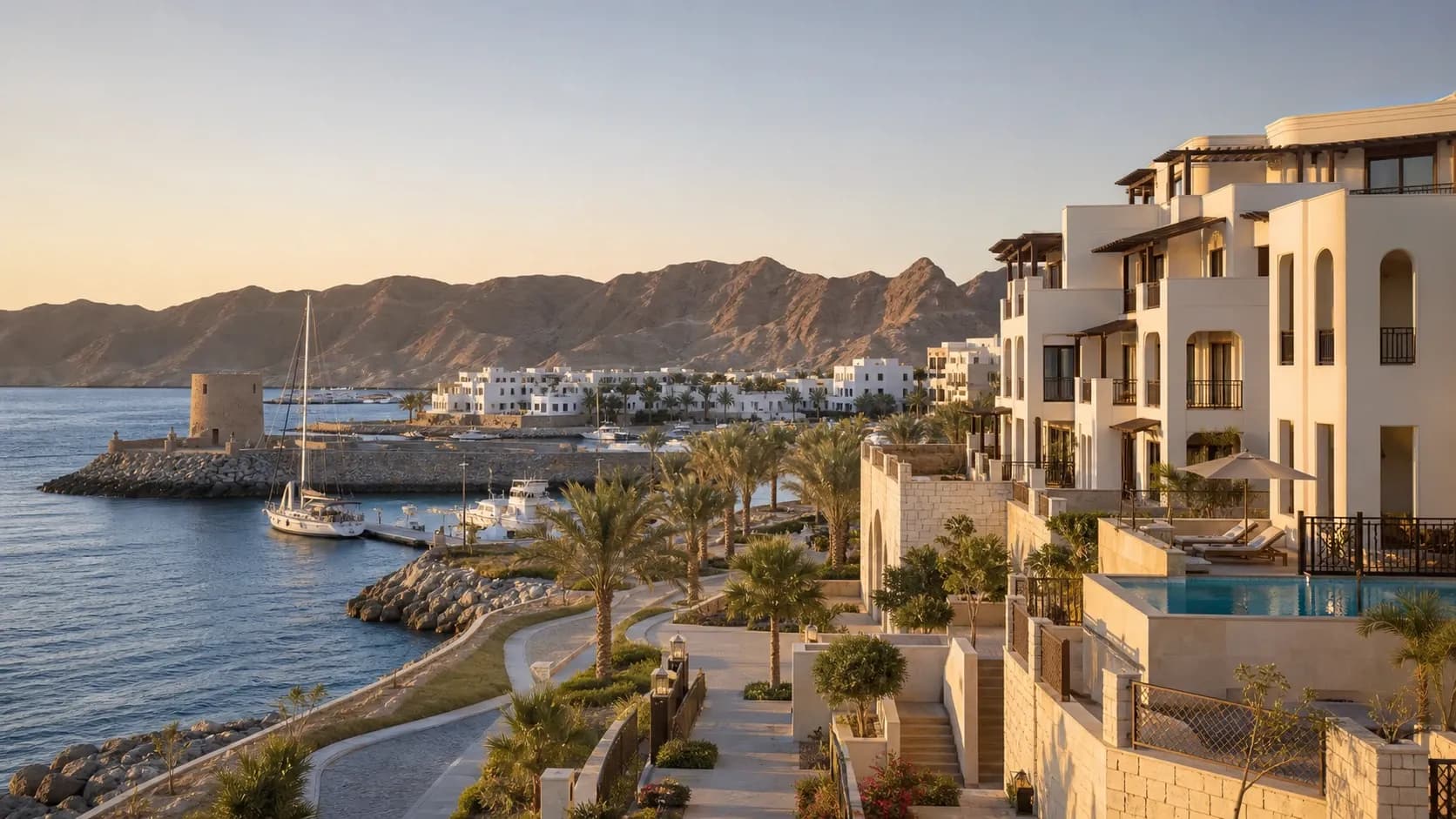
Real estate in Oman: ROI, taxes, and the condohotel model for an investor from Poland