


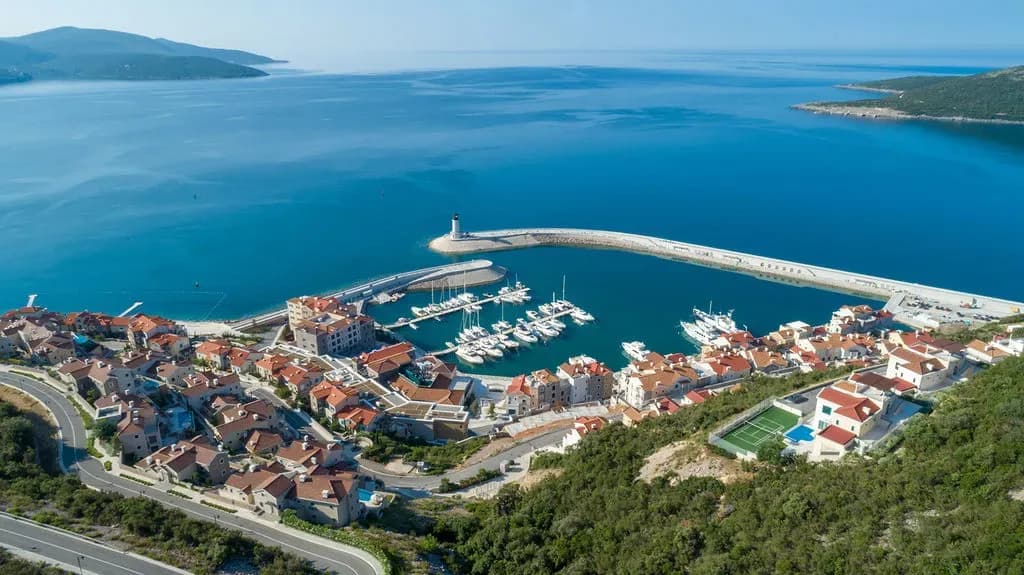
Is it worth investing in real estate in Montenegro?
The real estate market in Montenegro in 2025 is attractive to investors, mainly due to the dynamic development of tourism and a stable economy based on the euro. Apartment prices in coastal regions have increased by 8.2% year-on-year, reaching an average of €2,900/m² on the secondary market. Foreigners can freely purchase real estate, incurring a 3% property transfer tax or 21% VAT from the developer. Rental income and capital gains are taxed at a rate of 15%. The investment offers high returns from tourist rentals and potential for value appreciation, and the purchasing process is transparent and relatively fast.


Article summary
The most important conclusions from the article in 30 seconds.
The real estate market in Montenegro in 2025 is attractive to investors, mainly due to the dynamic development of tourism and a stable economy based on the euro. Apartment prices in coastal regions have increased by 8.2% year-on-year, reaching an average of €2,900/m² on the secondary market. Foreigners can freely purchase real estate, incurring a 3% property transfer tax or 21% VAT from the developer. Rental income and capital gains are taxed at a rate of 15%. The investment offers high returns from tourist rentals and potential for value appreciation, and the purchasing process is transparent and relatively fast.
Buying real estate abroad has for years tempted investors looking for attractive opportunities, and Montenegro is increasingly appearing on their radar. This small country located on the Adriatic attracts not only tourists with its picturesque beaches, charming towns, and mountain landscapes, but also investors who see its growing real estate market potential. In recent years, the number of visitors has been systematically increasing, which translates into a rise in demand for short-term and long-term rentals. Added to this are attractive prices compared to neighboring Croatia or popular Western European destinations, as well as a stable economy based on the euro.
But is investing in an apartment in Budva, a villa in Kotor, or a house in the mountains always a good choice? What are the real profits, what are the risks, and what formalities and costs must be taken into account? In this article, we will take a closer look at the real estate market in Montenegro – from prices and taxation, through advantages and challenges, to a practical step-by-step buying guide.
The real estate market in Montenegro – why does it attract investors?
In recent years, Montenegro has gained a reputation as one of the most promising investment destinations in Southeast Europe. Its primary asset is the dynamically developing tourism sector – every year, the country is visited by more and more guests from Europe and beyond, which generates a growing demand for accommodation. This, in turn, translates into the attractiveness of short-term rentals, especially during the summer season.
Numerous apartment buildings, luxury villas, and hotel complexes are being built along the Adriatic coast, attracting investors looking for both rental properties and vacation residences. Cities such as Budva, Kotor, and Herceg Novi have already become symbols of Montenegro's transformation into prestigious resorts, and more and more projects are being implemented in accordance with Western quality standards.
The attractiveness of the market is also influenced by the fact that Montenegro is focusing on the development of tourism and transport infrastructure – roads, airports, and marinas are being modernized, which further increases the investment potential of the region. Investments in luxury projects, such as Porto Montenegro in Tivat, which attract foreign clients with high requirements, are also becoming increasingly popular.
Thanks to these factors, the real estate market in Montenegro is today perceived as promising and relatively safe, especially for those looking for an alternative to the more expensive and competitive markets of Croatia or Spain.
Real estate prices in Montenegro – how much does an apartment and a house cost (2025)
The Montenegrin real estate market in 2025 continues to show strong price dynamics, especially in coastal regions and premium locations. Below is an overview of the latest price ranges for various types of properties and locations.
General trends and context
- Nationwide, real estate prices have risen by 86% in nominal terms since 2020.
- In December 2024, year-on-year, apartment prices grew by 8.2%.
- More intensive growth is observed in coastal towns – in some regions, property prices along the Adriatic coast have increased by even more than 12% over the year.
- The projected price growth for 2025 is 3-7% in the standard coastal real estate segments.
Apartment prices in popular regions
| Location | Price range (€/m²) |
|---|---|
| Budva | ~ €2,500 – €3,500/m² |
| Kotor | ~ €2,500 – €3,500/m² |
| Tivat / Porto Montenegro | ~ €3,000 – €4,000+/m² (standard); luxury properties can exceed €5,000/m² |
| Bar | ~ €1,600 – €2,100/m² |
| Ulcinj and other smaller resorts | ~ €1,400 – €3,000/m² |
| National average (secondary market) | ~ €2,900/sqm |
Houses, villas, luxury and private properties
- New builds (new houses) cost approximately €1,700 – €3,500/m², depending on the location and standard.
- Older houses are cheaper – often in the range of €1,200 – €2,500/m² (depending on condition).
- Luxury villas on the coastline in prestigious locations can cost €3,500 – €10,000/m² or more.
Mountains and inland areas – cheaper, but with challenges
- In mountain towns (e.g., Kolašin, Žabljak), new buildings typically cost €1,200 – €1,400/m².
- Building plots in mountain areas, close to tourist routes, are available in the range of €25-€50/m² (in places with infrastructure).
- In remote locations, without roads or utilities, land prices can be significantly lower: €10-€25/m².
Price dynamics and segment differences
- In the most attractive coastal locations, property prices currently reach €2,700-€5,000/m², which corresponds to the prime coastal range.
- In the luxury sector, especially along the coastline, marinas, etc., prices can be many times higher — prices of €6,000-€10,000/m² are recorded in the most exclusive projects.
- Differences between new buildings and older properties can be 20–40% lower for older facilities in need of renovation.
Investing in Montenegro: taxes and property rights
Montenegro is one of the more friendly countries for foreign investors. Foreigners can freely buy apartments, houses, commercial premises, or building plots without the need to set up a company or have permanent residency. Exceptions include agricultural land, forests, and border or protected areas – additional restrictions apply there.
Taxes upon purchase
- Secondary market – the property transfer tax is approximately 3% of the property value.
- Primary market – when buying from a developer, VAT of 21% is added (usually included in the price).
- There are also notary and registration costs, which usually amount to a few percent of the transaction value.
Taxes during ownership
- Property owners pay an annual property tax, usually in the range of 0.25–1% of the value.
- In tourist regions, an additional tourist tax is charged.
Rental and sale
- Rental income (short- and long-term) is taxed at a rate of 15%.
- When selling a property, capital gains tax is paid (also approx. 15%), unless exemption conditions are met, e.g., if it was the owner's primary residence.
Additional benefits
Investors often emphasize that the tax system in Montenegro is transparent and less burdensome than in many EU countries. An additional advantage is the fact that owning property can facilitate obtaining residency, although it does not guarantee it in itself.
Advantages of investing in real estate in Montenegro
In recent years, Montenegro has increasingly appeared in rankings of attractive investment markets. This is for good reason – it combines the charm of a tourist country with growing economic potential.
Why consider an investment?
- High returns on tourist rentals – in summer, the country experiences a real siege of tourists, and apartments by the sea are often booked in advance. This means stable income from short-term rentals.
- Potential for value growth – prices are still lower than in neighboring Croatia or Spain, and forecasts indicate further increases – especially in coastal areas.
- Possibility of obtaining residency – owning property does not automatically grant residency, but it makes it easier to obtain, which is a significant plus for people planning to stay in the country more frequently.
- Political and economic stability – Montenegro uses the euro, which protects investors from currency risk. Additionally, the country is striving to join the European Union, which usually increases the attractiveness of the real estate market.
- Development of infrastructure and tourism – new airports, roads, and tourist investments mean that more and more areas are gaining value.
In summary, investing in property in Montenegro can be not only a way to make a profit but also a way to have your own holiday sanctuary on the Adriatic. It is an interesting alternative for people who are looking for a still-developing market while wanting to have a sense of security and stability.
How to buy property in Montenegro step by step?
Buying property abroad is a dream for many people – but it is also a process that requires good preparation. In Montenegro, the procedures are relatively simple, but for foreigners, it is important to have the support of local experts to avoid formal pitfalls. Below you will find a practical step-by-step guide.
Choosing the location and type of investment
The first stage is to think carefully about the purpose of your property purchase. You will approach the purchase of an apartment for short-term rental in Budva differently than a house in the mountains intended as a vacation home for your family.
The most popular destinations are:
- Budva – the tourist heart, ideal for vacation rentals.
- Kotor – an atmospheric old town and a bay listed as a UNESCO World Heritage site.
- Herceg Novi – a quieter place with great health and recreational potential.
- Bar and Ulcinj – cheaper alternatives, attractive for those looking for larger square footage.
- Žabljak, Kolašin – mountain resorts, great for investments in winter tourism.
The purchase process: from reservation to land registry
The purchase itself follows transparent rules. The key steps are:
- Property reservation – usually a deposit payment (5–10% of the value).
- Preliminary agreement – specifies the price, payment terms, and transaction conditions.
- Notarial deed – signed at a notary's office, in the presence of a sworn translator if you do not speak the language.
- Entry into the cadastre – i.e., the property register. Only after this step do you become the official owner.
It is worth remembering that the entire procedure is public and relatively fast – it usually closes within a few weeks.
Transaction costs and taxes
In addition to the purchase price itself, you must take into account additional fees. The most important of these are:
- Property transfer tax – approximately 3% of the value when purchasing on the secondary market.
- VAT – 21% when purchasing from a developer (usually included in the price).
- Notary and registration fees – usually a few hundred euros, depending on the value of the property.
In total, transaction costs usually amount to between 3.5% and 5% of the value.
Financing – can a foreigner get a loan in Montenegro?
Yes, but the availability of mortgage loans for foreigners is limited. Banks usually require:
- a high down payment (30–40%),
- confirmation of steady income in the country of residence,
- additional collateral, e.g., in the form of an insurance policy or a guarantor.
For this reason, most foreign investors buy properties with cash. A loan is sometimes possible, but it is worth preparing for more demanding procedures and less favorable conditions than for Montenegrin residents.
Summary – is it worth buying property in Montenegro?
Montenegro is a market that still offers many opportunities for investors – both those thinking about short-term rental profits and those looking for a safe place to invest capital in the long term. High tourist occupancy in the season, rising property prices, and economic stability associated with the use of the euro make this destination stand out from many other Southern European countries.
On the other hand, it is worth remembering a few challenges: the seasonality of the market, the costs of maintaining the property, and the need to carefully check legal formalities. This is precisely why the support of local experts – lawyers, notaries, or real estate agencies – is crucial for the investment to be safe and profitable.
When does a purchase in Montenegro make sense?
- If you are planning a vacation rental and are aware of the seasonality.
- If you want to buy property in a country where prices are still lower than in Croatia or Spain.
- If you are interested in a long-term investment with capital growth potential.
Conclusion: buying property in Montenegro is an interesting option for investors looking for a combination of profit and lifestyle. It is a market that is still developing, but already offers solid opportunities today – provided that the investor prepares well for the transaction and uses the help of specialists.
Sources
- https://investropa.com/blogs/news/montenegro-property-actual-costs
- https://investropa.com/blogs/news/montenegro-prices-overinflated-now
- https://investropa.com/blogs/news/montenegro-buy-property
- https://investropa.com/blogs/news/kotor-property
- https://tranio.com/montenegro/prices/
- https://realting.com/montenegro/property
- https://www.ceicdata.com/en/indicator/montenegro/house-prices-growth
- https://www.destinationsbyleadingre.com/article/montenegro-coastal-inland-properties-for-sale-2025-insights

Author
Patrycja Kordys
BOARD MEMBER | SALES DIRECTOR
For nearly 17 years, she has been associated with the premium real estate market. She gained her experience working with international clients—particularly German and English speakers—ensuring the highest standard of service and communication. After years of working on the Costa del Sol, she now focuses on the dynamically developing market of Oman, where she supports clients in discovering new investment opportunities and lifestyles. She combines professionalism with a natural ease in building relationships, ensuring that the purchasing process is smooth and stress-free.
