


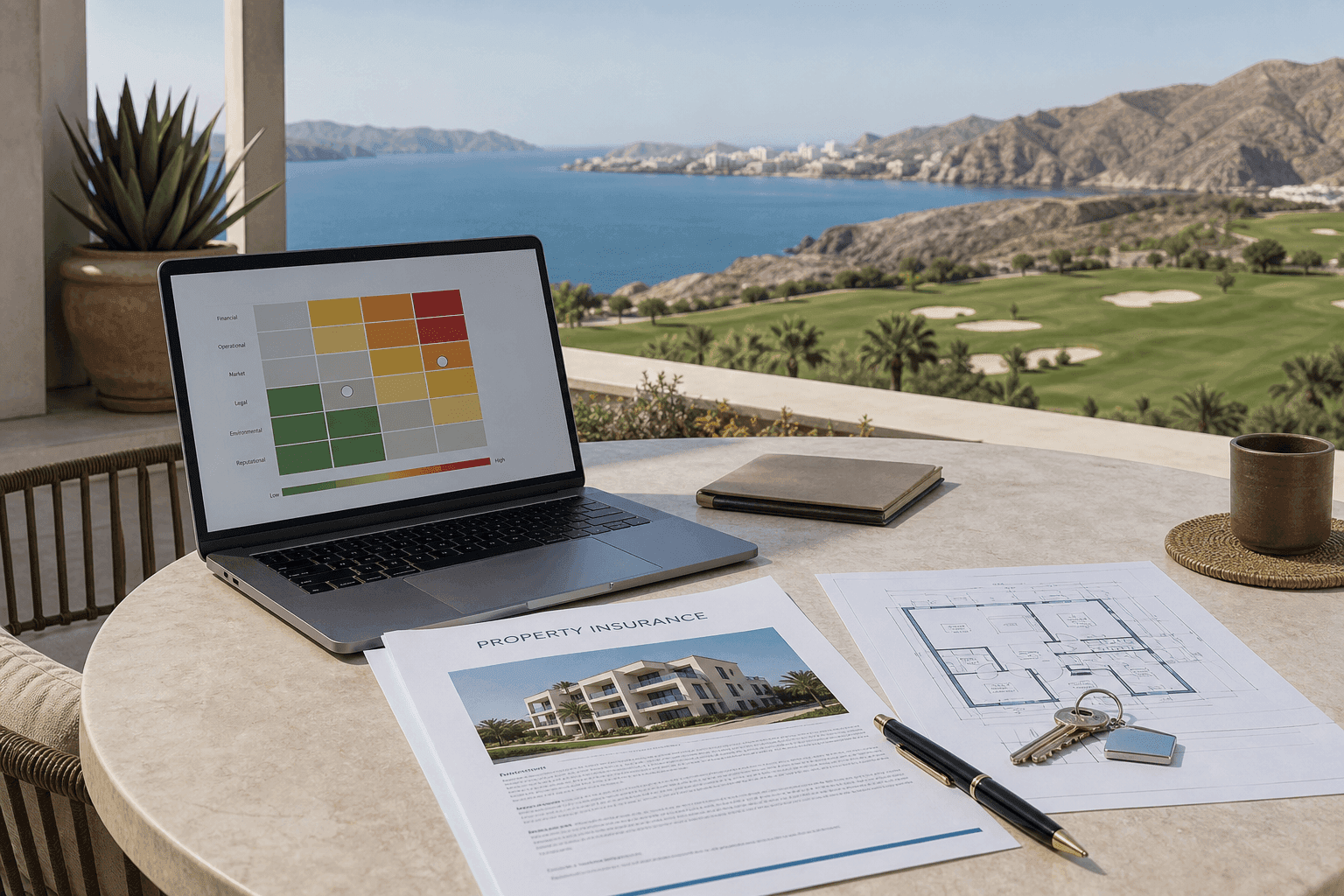
Property insurance abroad: how to protect your ROI?
Real estate insurance abroad is an element of the operating model, not an add-on to the transaction. It protects the investor's liquidity when property damage, system failure, a guest's claim, or a rental vacancy could lower the actual ROI. A building or homeowners' association policy alone is not enough if it does not cover furnishings, owner's liability, loss of income, and damages incurred during the rental period. In Oman, wadis, flash floods, temperature, and the load on HVAC systems are significant. In Spain, an investor should check the relationship between the *Comunidad* policy, property protection, and legal risks associated with renting. In Montenegro, one must account for seismicity, seasonality, and periods when a second home stands empty. In each of these markets, the policy should be aligned with the Service Charge, the scope of the operator's services, and the actual replacement value of the FF&E. For a premium investor, it is not just the cost of the premium that matters. Limits, exclusions, deductibles, the claims settlement procedure, and who will prepare the documentation on-site are all essential. A good decision starts with an audit of the documents, not with choosing the cheapest policy.


Article summary
The most important conclusions from the article in 30 seconds.
Real estate insurance abroad is an element of the operating model, not an add-on to the transaction. It protects the investor's liquidity when property damage, system failure, a guest's claim, or a rental vacancy could lower the actual ROI. A building or homeowners' association policy alone is not enough if it does not cover furnishings, owner's liability, loss of income, and damages incurred during the rental period. In Oman, wadis, flash floods, temperature, and the load on HVAC systems are significant. In Spain, an investor should check the relationship between the *Comunidad* policy, property protection, and legal risks associated with renting. In Montenegro, one must account for seismicity, seasonality, and periods when a second home stands empty. In each of these markets, the policy should be aligned with the Service Charge, the scope of the operator's services, and the actual replacement value of the FF&E. For a premium investor, it is not just the cost of the premium that matters. Limits, exclusions, deductibles, the claims settlement procedure, and who will prepare the documentation on-site are all essential. A good decision starts with an audit of the documents, not with choosing the cheapest policy.
Purchasing an investment apartment abroad is usually analyzed through entry price, location, yield, transaction costs, and potential Capital Appreciation. Insurance appears later, often only at handover or before launching rentals. This is a management error. A policy affects the stability of cash flows because it transfers part of the operational risks off the investor's balance sheet.
The owner of a property in Oman, Spain, or Montenegro operates in a different legal, tax, and technical system than in Poland. Homeowners' association rules, developer practices, repair speeds, and the cost of spare parts differ. The role of the rental operator also looks different. Therefore, property insurance abroad should be evaluated together with the sales agreement, handover protocol, inventory list, technical documentation, Service Charge, and management agreement.
This article shows how to translate a policy into investment language: where protection gaps arise, how to read a master policy, how to check the owner's liability (OC) scope, what Loss of Rent means, and how to prepare a remote damage procedure. It is not about promising a lack of losses. It is about limiting situations where a single technical incident wipes out several months of rental income.
—
Property insurance abroad as an element of ROI protection
Why a policy is part of the financial model
ROI in foreign real estate does not come solely from the purchase price and rental income. The real result depends on service costs, repairs, local taxes, operator commissions, association fees, vacancy periods, and random events. Insurance is one of the operating costs that must be included in cash flow even before signing a reservation agreement.
A policy does not create income. Its role is to limit unplanned cash outflows. If flooding an apartment requires replacing the floor, painting, repairing built-in furniture, and temporarily taking the apartment off the rental market, the investor faces two consequences at once: the cost of repair and lost income. Without the proper scope of protection, both consequences burden the owner.
In the premium segment, the difference between the book value of equipment and the replacement value can be significant. FF&E (furniture, fixtures, and equipment) includes furniture, lighting, appliances, textiles, fixed elements, electronics, and finishing details. For branded residences projects, such as Marriott Residences or Mandarin Oriental, the replacement standard should match the brand's requirements and project specifications, not the lowest replacement price.
In Oman, the equipment insurance sum must account for logistics, customs duties, material availability, and the time required to import parts. In Spain, it is worth assessing labor costs and the workload of renovation crews during the season. In Montenegro, access to contractors outside the main tourist months may be important. In any case, the insurance sum should correspond to the real cost of restoring the premises to a condition suitable for rental.
Scope of protection: walls, FF&E, and owner's liability
The investor should separate three areas. The first is the walls and structure, often covered by the building or association policy. The second is the internal elements of the premises, i.e., finishes, equipment, and movables. The third is the owner's civil liability for damages to third parties. These areas are sometimes confused, and confusing them leads to protection gaps.
The owner's policy should cover water damage, power surges, fire, theft, vandalism, guest damage, and liability. In the case of an apartment for rent, an analysis of exclusions for commercial activity is also needed. Some residential policies do not work if the premises are regularly made available to tourists. In that case, the insurer may treat the damage as an event related to business use, not ordinary private use.
Owner's liability is important for events that affect neighbors, the association, or guests. Examples include flooding the unit below, a piece of equipment detaching, installation failure, a guest slipping on a wet floor, or damage to common areas caused by a tenant. The owner should check not only the liability limit but also the territorial scope, the deductible, and whether the protection works for short-term rentals.
When buying off-plan, one more level of analysis must be added. Until handover, construction risks usually lie with the developer, but the investor should check the escrow account, payment schedule, the scope of the Defects Liability Period, and the moment from which they assume responsibility for the premises. This is especially important for mixed-use development projects, where hotel services, marinas, retail, sports infrastructure, or a rental operator function alongside apartments.
Handover documentation as a basis for claims
An insurance claim is only as strong as the documentation prepared before the damage occurs. Therefore, during the apartment handover, an inventory list, photographic documentation, and a condition report must be prepared. Photos should cover every room, equipment, installations, serial numbers of appliances, and higher-value items. It is worth keeping invoices, warranty cards, FF&E specifications, and service logs.
A practical point of reference is the handover process in Oman described in the PlanoGroup article on taking over property from a developer. The handover does not end with signing the protocol. This is the moment when the investor determines what is covered by the developer's warranty, what passes to the owner's policy, and what should be included in the operator's procedure.
For investment properties in Oman at PlanoGroup, it is worth comparing the price of the unit with maintenance costs and the scope of services in the project. The more extensive the infrastructure, the greater the importance of the Service Charge, the association's regulations, and the scope of the master policy. These elements affect yield because they determine fixed costs and how quickly the unit can return to rental after damage.
A policy as a risk control tool does not replace due diligence. It is part of it. The investor should ask for the General Terms and Conditions (GTC), service schedule, description of the damage reporting procedure, local broker data, and information on whether the rental operator has their own professional liability insurance. Without this data, the premium is just a number, not an element of risk management.
—
Association policy vs. owner's policy: identifying protection gaps
Master policy and unit policy
In many foreign projects, the investor is told that the building is insured. This is true, but it does not always mean the unit is protected. A master policy, Comunidad policy, or association policy most often covers common areas, structure, main installations, facades, roofs, elevators, garages, and the manager's liability for selected areas. The scope depends on the country, the association, and the specific GTC.
The owner's policy has a different function. It should protect the interior of the unit, equipment, tenant damage, owner's liability, and sometimes loss of rent. If an air conditioning failure destroys the ceiling, furniture, and parquet, the association may cover only part of the event or not recognize the claim regarding equipment at all. Then the owner is left with a gap between the building policy and the actual loss.
In Spain, the investor should ask the Comunidad administrator for a copy of the association policy, an insurance certificate, and information about deductibles. Limits for water damage, the scope of liability for vertical and horizontal installations, the failure reporting procedure, and whether the policy covers only common areas are important. For seaside properties, it is worth checking the effects of corrosion, humidity, and intensive use during the season.
The Spanish market also shows that the way a property is used affects risk assessment. MAPFRE - seguro de hogar indicates in its materials that location, property type, installations, and use of the premises, including second homes or rentals, are factors taken into account when calculating the policy. This is not a formal detail. For an investor, it means the necessity of honestly declaring the function of the unit.
Underinsurance risk and top-up
Underinsurance occurs when the insurance sum is lower than the actual replacement value of the property. In such a case, the insurer may apply the principle of proportion and pay compensation reduced relative to the scale of the underestimation. This is particularly dangerous for premium apartments, where the cost of finishing and FF&E can be a significant part of the investment value.
Top-up, or supplementary insurance, makes sense when the master policy does not cover internal elements or when limits are too low. The owner should compare the association's scope with their own policy's scope. If the association covers structural damage but not furniture, equipment, loss of rent, and liability during rental, a top-up is not an excess. It is adjusting protection to the actual risk profile.
When buying a second home that is to be used seasonally, one must also check vacancy clauses. Some policies limit protection if the unit stands empty for longer than a specified number of days. For an investor living in Poland, this has practical significance. The operator or manager should perform regular inspections, document the condition of the unit, and react to failures before the damage increases.
Policy audit step by step
Step 1: download insurance documents
Ask the developer, association administrator, or operator for the master policy, insurance certificate, GTC, association regulations, Service Charge table, and description of the damage reporting procedure. For off-plan, also ask for the sales agreement, technical attachments, handover schedule, escrow account terms, and information about the Defects Liability Period. Check from what date responsibility passes to the owner.
Step 2: compare sums and limits
Set the replacement value of the unit and FF&E against the insurance sums. Compare limits for water damage, electrical damage, theft, tenant damage, liability, and Loss of Rent. The control indicator is not the premium itself, but the relationship of the insurance sum to the cost of restoring the unit to rental condition. If equipment must be imported from Europe, include transport, customs, assembly, and downtime.
Step 3: check exclusions
Read exclusions regarding short-term rental, vacancy, gradual damage, technical wear and tear, corrosion, humidity, tenant actions, illegal occupation of the premises, and lack of inspections. Ask the insurer if the policy works for tourist rentals, if it requires a license, who can report damage, and what documents must be sent remotely.
Step 4: evaluate costs and deductibles
Compare the premium, deductible, limits, and claim settlement time. A low premium with a high deductible can be deceptive if typical damage in the unit falls below the payout threshold. Check if the tenant's deposit covers the deductible and if the operator has a procedure for deductions for damage visible after a stay.
—
Regional specifics: risks in Oman, Spain, and Montenegro
Oman: wadis, HVAC, ITC, and mixed-use development
Oman requires a different way of thinking about risk than Southern Europe. From an insurance perspective, flash floods, wadi flows, temperature, coastal humidity, and intensive HVAC system operation are significant. An apartment that generates yield through rental can lose income not only after major damage. An air conditioning failure in high season or flooding of a technical part of the building is enough.
For projects in Integrated Tourism Complex (ITC) zones, the foreign investor often obtains freehold in a specific legal structure. It should be checked whether the insurance covers the unit, common areas, parking spaces, terraces, external structures, and equipment belonging to the owner. In mixed-use development, one must additionally separate the responsibilities of the developer, association, hotel operator, and unit owner.
Location analysis should include the Greater Muscat Structure Plan (GMSP) if the investment is in the Muscat metropolitan development area. The investor should not limit themselves to the view from the apartment. One must assess service access, water drainage, road infrastructure, distance from the airport, planned neighboring functions, and the availability of technical operators. These factors affect the response time after damage and service costs.
For Omani projects, it is worth asking the developer questions about the HVAC standard, equipment warranties, inspections, leak monitoring, emergency power, procedures for flash floods, and who is responsible for damage in technical parts. The owner should also determine whether the Service Charge includes preventive inspections or only current maintenance of common areas.
Spain: Comunidad, rental, and legal risks
In Spain, the starting point is the distinction between the Comunidad and the owner's unit. The Comunidad may have a well-described scope of protection for common areas, but the apartment owner needs their own policy for equipment, liability, and rental. One should ask the administrator for the policy document, check the deductible, and ask whether the association participates in claim settlement in the event of water damage inside the unit.
The second area is rental regulations. Tourist rental requires compliance with local regulations, a license, and association rules. A standard residential policy may not cover damage incurred during commercial rental. The owner should confirm whether the policy accepts short stays, whether it covers guest damage, theft without break-in, loss of rent, and legal assistance.
For longer rentals, the topic of Seguro de Impago de Alquiler, or protection against non-payment of rent, appears. This solution is not the same as apartment damage insurance. The investor should separate rental income protection, property protection, and liability. If the unit is used rotationally, one must check which rental model dominates and what the consequences are for the policy.
The risk of illegal occupation of the premises requires a cautious approach. Not every policy covers legal costs, loss of rent, or damage after such an event. The owner should ask about legal protection, reporting procedures, required response time, documents confirming ownership, and the role of a local proxy. Without someone on-site, even a good policy works slower.
Montenegro: seismicity, seasonality, and second home
Montenegro combines the risk of seasonality with technical risks typical for the seaside market and seismic areas. The investor should check whether the policy covers earthquakes, landslides, storm damage, flooding, and periods when the unit is not in use. For a second home, requirements regarding security, condition monitoring, and shutting down installations off-season are important.
In projects such as Luštica Bay at PlanoGroup, risk should be assessed through the prism of the scale of the investment, infrastructure, and management method. Large urban developments have their own regulations, operators, service departments, and rental rules. This facilitates control but requires checking documents: association regulations, the scope of the Service Charge, safety procedures, parking usage rules, and operator liability.
Seasonality affects the cost of damage. If a failure occurs just before the season, the owner loses the potentially most profitable period. If it occurs after the season, the availability of contractors and the speed of repairs may be a problem. Therefore, the policy should be linked to a service plan, not purchased in isolation from property management.
When comparing markets, the investor should check more than just the premium. It is worth comparing claim settlement time, the possibility of reporting in English, required documents, deductibles, the network of contractors, cashless payment rules, and whether the operator can act on the owner's behalf. These elements have a direct impact on net yield.
—
Short-term rental insurance and the role of the managing operator
Commercial rental and business use exclusion
The most common mistake an owner makes is purchasing a residential policy even though the unit is to be used for short-term rental. The insurer may then decide that the damage occurred as part of commercial use. If the GTC excludes business use, the owner loses protection where the risk is greatest: during guest rotation, intensive cleaning, frequent air conditioning use, and faster equipment wear.
A policy for a rental unit should cover damage caused by guests, theft, vandalism, water damage, owner's liability, liability toward the association, and selected emergency costs. It is also worth checking if it covers lost keys, lock replacement, terrace damage, kitchen equipment damage, and device failures that prevent rental.
The managing operator does not replace a policy. However, they can significantly shorten response time. They see the unit before a guest arrives and after they leave. They order cleaning, take photos, report failures, and organize repairs. If the operator does not have a procedure for documenting damage, even a good scope of protection may be difficult to use.
Loss of Rent, deposit, and deductible
Loss of Rent protects rental income when damage covered by the policy excludes the unit from use. This is important in second home and aparthotel projects, where a few weeks of downtime in the season can significantly lower annual yield. The investor should check whether the policy covers only loss of rent from a long-term contract or also income from short-term rentals confirmed by bookings.
The tenant's deposit should be coordinated with the deductible. If the deductible is higher than the deposit, minor damage will burden the owner. If the deposit is too low, the operator may not have a tool to settle guest damage. The owner should establish rules for collecting the deposit, documenting damage, and deductions before starting rentals.
One must also check if the operator has their own professional liability insurance. The operator's policy should cover management errors, staff negligence, incorrect handover of the unit, delayed damage reporting, or improper securing of property. The owner should ask for the operator's liability certificate and check the limit and exclusions.
Remote damage procedure step by step
Step 1: designate the person responsible for reporting
In the management agreement, indicate who reports the damage: the owner, operator, local proxy, or broker. Record deadlines, communication channels, and required data. The operator should have access to the policy, contact number, owner's data, inventory list, and photographic documentation from before the damage.
Step 2: prepare a documentation standard
Establish that after every booking, the operator takes photos of critical areas: kitchens, bathrooms, terraces, floors, walls, air conditioners, and appliances. In the event of damage, documentation should show the cause, scope of destruction, date, room, apartment number, and security measures taken. Photos without context are often insufficient.
Step 3: link the procedure to bookings
The operator should secure booking history, payment confirmations, stay regulations, the deposit, and correspondence with the guest. If the claim concerns Loss of Rent, evidence of lost bookings or actual unavailability of the unit is needed. Without this, the insurer may consider the claim undocumented.
Step 4: check repair and return to rental
After claim settlement, the operator should send invoices, a repair protocol, photos after repair, and confirmation of the unit's readiness. The owner should compare the repair cost with the deductible, check the impact on yield, and update the inventory list. This closes the evidentiary loop and organizes subsequent claims.
—
Conclusions and contact with PlanoGroup
When to conduct an insurance audit
An insurance audit is worth conducting at three stages. The first moment is due diligence before purchase, when the investor compares location, purchase costs, Service Charge, expected yield, and rental profile. The second moment is handover, when the inventory list, photographic documentation, and handover protocol are created. The third moment is the start of rental, when business use, Loss of Rent, deposit, and operator procedure must be confirmed.
When buying off-plan, the audit should include the escrow account, payment schedule, developer warranties, and the scope of the DLP. When buying a finished unit, one must check the history of damage, condition of installations, inspections, compliance of equipment with the description, and any arrears to the association. For already rented property, operator reviews, cleaning documentation, and past incidents are important.
An investor comparing directions should analyze regional risk together with the offer. Property offers in Montenegro at PlanoGroup require a different set of questions than projects in Oman, and a Mediterranean property requires something different than an apartment in Muscat. The climate, association law, rental season, and availability of service crews differ.
How PlanoGroup organizes risk after purchase
PlanoGroup operates in an advisory model where the purchase does not end the analysis. After choosing a property, the investor should know the structure of maintenance costs, rules for managing the unit, legal requirements, operator procedures, and areas that need to be insured. This is especially important for people diversifying capital outside of Poland who will not be regularly present on-site.
In practice, support should include organizing documents: sales agreement, technical attachments, master policy, GTC, management agreement, Service Charge table, handover protocol, and inventory list. Only on this basis can it be assessed whether the owner needs a supplementary policy, an increase in insurance sums, an extension of liability, or loss of rent protection.
If you are planning a purchase in Oman, on the Adriatic, or in Spain, ask for an analysis of maintenance and management costs by contacting the PlanoGroup team. The conversation should concern not only the price of the unit but also how the property will be protected after purchase, who will handle damage, what documents will be collected, and how risks will affect net ROI.
For a premium investor, insurance is not a side topic. It is part of the transaction architecture. The right policy, a good operator, and reliable documentation do not eliminate risk, but they reduce its impact on cash flows. It is this level of preparation that distinguishes an emotional purchase from an investment decision.
—
FAQ
Is an association policy enough for an apartment owner?
Usually not. An association policy may cover the structure, roof, facade, elevators, main installations, and common areas, but it does not always protect the unit's finish, FF&E, owner's liability, tenant damage, and loss of income. The owner should ask for the master policy, check limits, deductibles, and exclusions, and then compare them with their own risk. If the apartment is to be used for rental, a policy tailored to commercial use is needed.
What should insurance for a rental unit contain?
The scope should cover water damage, fire, power surges, theft, vandalism, tenant damage, owner's liability, equipment, technical assistance, and possibly Loss of Rent. The owner should check if the policy works for short-term rental, who can report damage, what documents are required, and how loss of rent is calculated. Deductibles, limits for movables, and requirements regarding inspections are also important.
Does the climate of Oman affect the policy scope?
Yes, because location affects the risk profile. In Oman, one must assess exposure to wadis, flash floods, coastal humidity, temperature, and HVAC load. The investor should ask the developer about drainage, air conditioning standards, equipment warranties, service plans, and emergency procedures. It is also worth checking if the Service Charge includes preventive inspections and who is responsible for damage in technical parts.
How to document a unit before rental?
Before starting rental, you must create an inventory list, full photographic documentation, a description of the technical condition, a list of equipment with serial numbers, copies of invoices, and warranty protocols. The operator should update the documentation after every booking and after every repair. Such a set of evidence facilitates settling damage with the insurer and settling the deposit with the guest.
Who should handle damage when the owner lives in Poland?
It is best for a local operator, manager, or proxy to handle the procedure. Such a person can secure the unit, take photos, organize repairs, collect invoices, and send documents to the insurer. The owner should have response times, the scope of the operator's responsibility, and reporting methods written in the management agreement. Without this, damage handling may be prolonged, and downtime costs will increase.

Author
Mariusz Cieślukowski
CEO / FOUNDER
Co-founder of PlanoGroup and the person responsible for the development of the entire group. He built a brand based on quality, trust, and effectiveness, developing it in the Spanish market and subsequently expanding operations to further investment destinations. Today, he is developing PlanoGroup - a project that responds to the needs of clients who are looking not only for real estate but also for new opportunities for living, investment, and relocation. He specializes in trend analysis and building investment strategies in foreign markets - including Spain, Oman, and emerging locations such as Montenegro.

Related articles
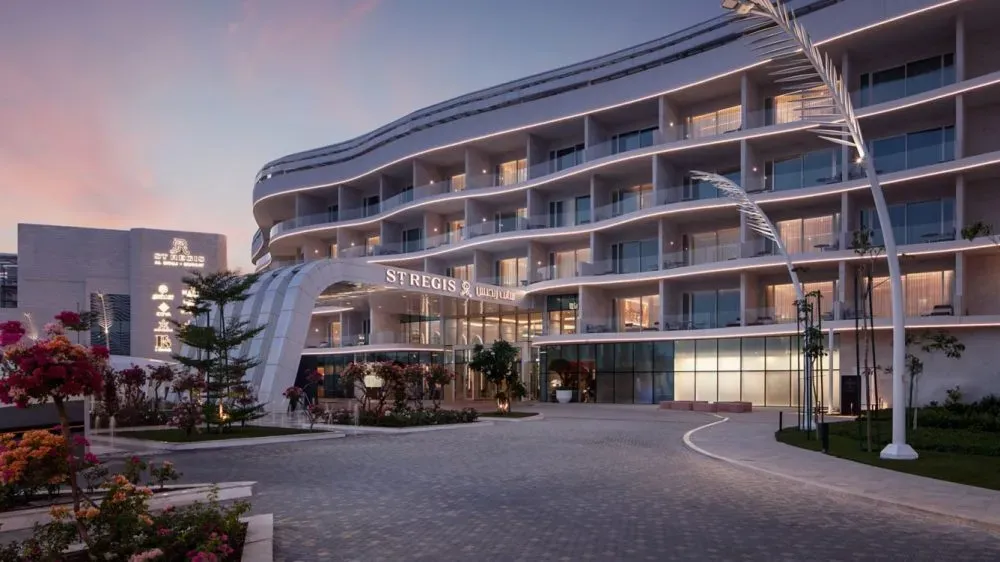
Property handover from a developer in Oman – a complete guide

Differences between the primary and secondary market in Oman – what to choose?
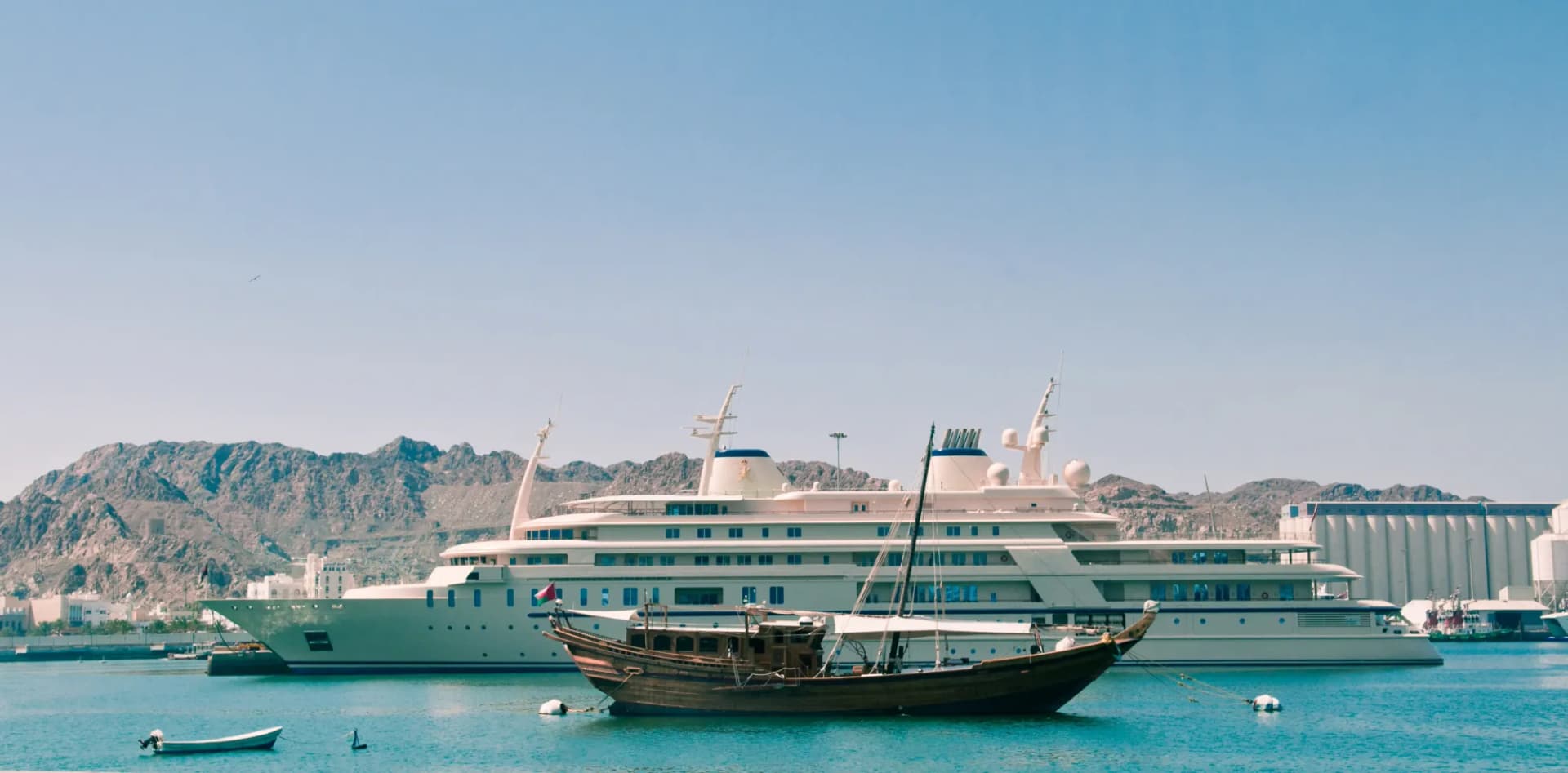
Tourism in Oman – why is it growing and how does it affect the real estate market?