

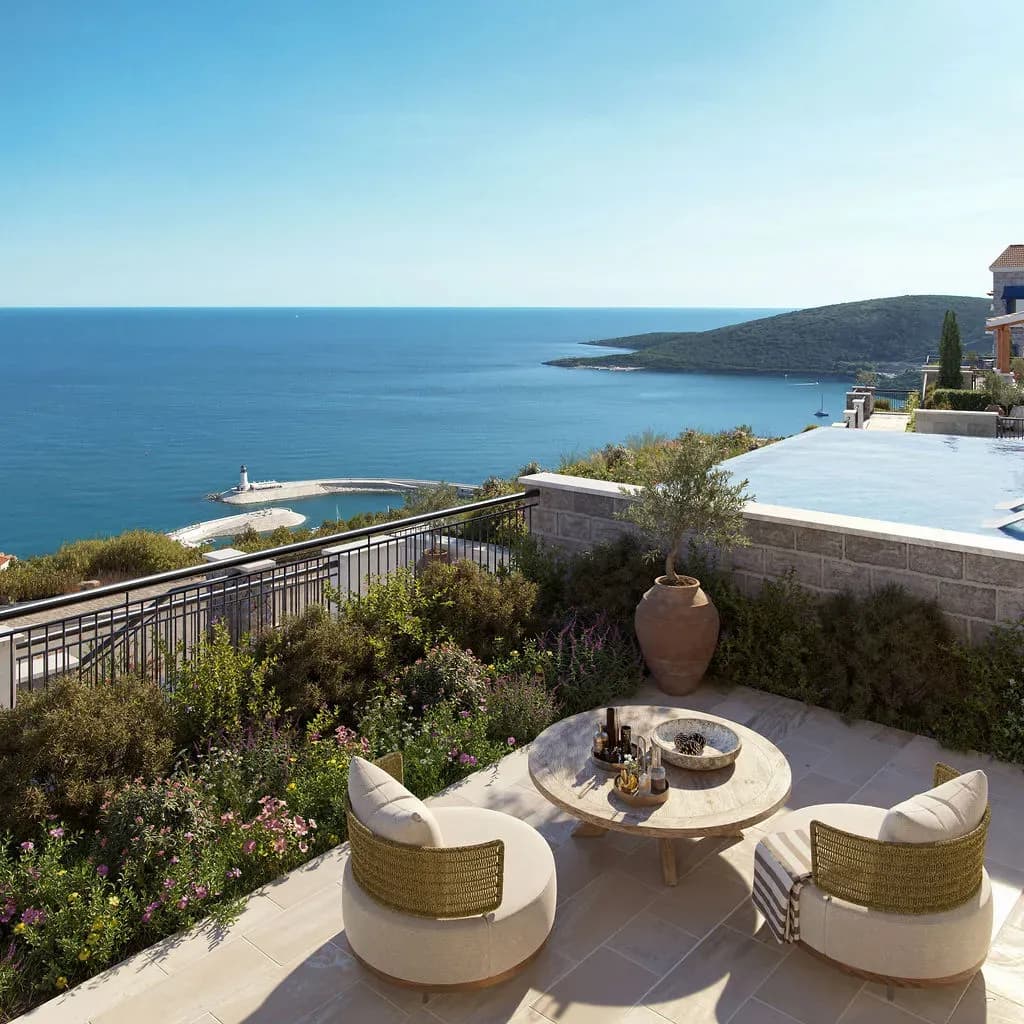
Real Estate in Montenegro: A Guide to the Primary Market
Purchasing an apartment on the primary market in Montenegro can lower the entry cost due to an exemption from the 3-5% property transfer tax if the seller is a developer registered for VAT. Three areas require the most attention: the legal status of the land, the investment's compliance with permits, and the actual rental management model after handover. For an investor from Poland, important locations include Tivat, Kotor, Budva, Luštica Bay, and Herceg Novi, but each has a different tenant profile, seasonality, and resale liquidity. PlanoGroup analyzes such projects through the lens of total price, legal risk, Service Charge costs, yield potential, and the possibility of Capital Appreciation during construction. Montenegro is not a market that should be evaluated solely by price per square meter. In the premium segment, it is more important whether the investment operates as a year-round mixed-use development or as a seasonal building without service facilities. An apartment in Tivat serving tenants associated with the marina is analyzed differently than a unit in Budva focused on high holiday occupancy, and differently still from a unit in Luštica Bay, where value is also built by the operator, infrastructure, and quality control of common spaces. In practice, an investor should compare Montenegro not only with Spain or Croatia but also with markets like Oman and Dubai. There, concepts such as Integrated Tourism Complex (ITC), Greater Muscat Structure Plan (GMSP), freehold in designated zones, and escrow accounts as a payment control mechanism appear. In Montenegro, the logic is different: the emphasis shifts to *List Nepokretnosti* (Title Deed), *Građevinska dozvola* (Building Permit), *UTU* (Urban-Technical Conditions), *Upotrebna dozvola* (Use Permit), and precise provisions in the development agreement. It is these documents, not the sales brochure, that determine the quality of an investment.


Article summary
The most important conclusions from the article in 30 seconds.
Purchasing an apartment on the primary market in Montenegro can lower the entry cost due to an exemption from the 3-5% property transfer tax if the seller is a developer registered for VAT. Three areas require the most attention: the legal status of the land, the investment's compliance with permits, and the actual rental management model after handover. For an investor from Poland, important locations include Tivat, Kotor, Budva, Luštica Bay, and Herceg Novi, but each has a different tenant profile, seasonality, and resale liquidity. PlanoGroup analyzes such projects through the lens of total price, legal risk, Service Charge costs, yield potential, and the possibility of Capital Appreciation during construction. Montenegro is not a market that should be evaluated solely by price per square meter. In the premium segment, it is more important whether the investment operates as a year-round mixed-use development or as a seasonal building without service facilities. An apartment in Tivat serving tenants associated with the marina is analyzed differently than a unit in Budva focused on high holiday occupancy, and differently still from a unit in Luštica Bay, where value is also built by the operator, infrastructure, and quality control of common spaces. In practice, an investor should compare Montenegro not only with Spain or Croatia but also with markets like Oman and Dubai. There, concepts such as Integrated Tourism Complex (ITC), Greater Muscat Structure Plan (GMSP), freehold in designated zones, and escrow accounts as a payment control mechanism appear. In Montenegro, the logic is different: the emphasis shifts to *List Nepokretnosti* (Title Deed), *Građevinska dozvola* (Building Permit), *UTU* (Urban-Technical Conditions), *Upotrebna dozvola* (Use Permit), and precise provisions in the development agreement. It is these documents, not the sales brochure, that determine the quality of an investment.
Primary market in Montenegro: why is it an optimal investment model?
Tax benefits and technical standards
The primary market differs from the secondary market not only in the age of the building. In Montenegro, the tax structure of the transaction is significant. When purchasing from a developer who is a VAT payer, the investor generally does not pay the property transfer tax, which in the secondary market usually ranges from 3-5% of the property value. However, one must check whether the offer price is a gross price or if VAT is to be added separately. This question should be asked before booking, not at the stage of the notarial deed.
For an absentee investor who does not live on-site, a new apartment reduces some technical risks. The developer should provide the finishing standard, work schedule, construction warranty, and installation documentation. In older stock, problems often include the condition of insulation, the efficiency of air conditioning, the compliance of alterations with the design, and the lack of a clear renovation history. In a new project, these risks do not disappear, but they are easier to describe in the contract and enforce during the handover.
Off-plan purchasing can create space for Capital Appreciation, i.e., the increase in capital value between the booking stage and the building's completion. However, this is not an automatic profit. Value grows when the project is located in an area with limited land supply, has real tenant demand, and does not compete solely on price. The investor should check comparable offers within a few kilometers, the sales pace in the project, the standard of common areas, and whether the developer has a history of completed investments.
The most serious mistake is comparing the primary and secondary markets solely by the entry price. A secondary market property may look cheaper, but after adding tax, renovation, installation replacement, equipment, downtime, and management costs, the difference shrinks. A new apartment in a well-managed project allows for faster entry into the rental market, and in the premium segment, time-to-market matters for ROI. Therefore, the analysis should include the total price, not just the transaction price.
Verifying the developer before making a decision
Before signing a reservation, you should ask for the plot number, the name of the development company, VAT status, payment plan, technical prospectus, and a sample contract. Then, you need to compare the building standard with other projects in Tivat, Budva, Kotor, and Luštica Bay. It is also worth checking if the offer is similar to projects available in the PlanoGroup foreign real estate database and whether the location has infrastructure that operates off-season.
—
What documents must the developer provide before signing the contract?
Legal verification and transaction security
The first document is the List Nepokretnosti, which is the Montenegrin equivalent of a land and mortgage register. The investor should check the landowner, plot number, area, purpose, and entries in sections regarding encumbrances, mortgages, and restrictions. If the land belongs to an entity other than the company selling the apartment, the legal basis for using the plot and the method of transferring the share or right to the premises after construction must be determined.
The second area is construction documentation. The Građevinska dozvola confirms the building permit, and the Prijava građenja concerns the notification of the start of works. In phased investments, it should be checked whether the permit covers the specific building, floors, function of the premises, and common infrastructure. The seller's mere statement that the project is legal is not enough. A lawyer should compare the plot number, architectural design, and administrative decisions.
Urban-technical conditions, or UTU, are also important. This document shows what can be built on a given plot and in its surroundings. For apartments with a sea view, this has investment significance: if the adjacent plot allows for taller buildings, the value of the view may be less stable. It is worth verifying plot data via eKatastar and the Montenegro geoportal, and for planning matters, via the website of the relevant ministry, MDP.
An independent lawyer is a risk control element here, not a formal accessory. They should analyze the reservation agreement, sales agreement, payment schedule, penalties for delays, withdrawal conditions, the moment of ownership transfer, and the developer's obligations regarding the handover. It is worth asking whether funds go directly to the developer, to a notary account, or to an escrow account. If an escrow account is not used, the contract should more strongly link payments to measurable stages of construction.
Red flags in documents
A warning signal is the lack of an up-to-date List Nepokretnosti, an unclear land ownership structure, lack of a permit for a specific stage, inconsistency of square footage with documentation, overly general definition of the finishing standard, and pressure for a quick payment without full documentation. In regions covered by landscape and cultural protection, especially in the Bay of Kotor, one must additionally check restrictions resulting from local plans and UNESCO protection.
—
How much does a new apartment really cost? VAT and transaction-related costs
Budgeting the investment beyond the offer price
The offer price is only a starting point. The first question is: does the amount include VAT, and is the seller an entity entitled to issue a VAT invoice? If so, the investor usually avoids the transfer tax, but must be clear whether VAT has already been included in the price. In the secondary market, you must add the transfer tax, and in larger transactions, a difference of a few percentage points can mean tens of thousands of euros.
The second category is notary costs, translations, and legal services. A foreigner should assume the participation of a sworn translator in notarial acts and the cost of document analysis by a lawyer familiar with local procedures. It is worth asking for a cost estimate before booking, because in an investment model, every expense lowers the initial ROI and affects the rental break-even point.
The third area is finishing and furnishing. The terms developer finish and fully furnished are not interchangeable. Developer finish may mean completed installations, floors, and bathrooms, but without a full furniture package, appliances, textiles, and equipment for short-term rental. In the premium segment, the plan often assumes 500-800 EUR/m2 for equipment, but the investor should verify the specification: appliance brands, carpentry, lighting, curtains, terrace, air conditioning system, and a complete set of accessories for the rental operator.
After the purchase, maintenance costs appear. The Service Charge or maintenance fee may differ in a standalone building compared to a resort with security, reception, pool, greenery, garage, and technical facilities. A lower monthly fee is not always more favorable if the building does not have a budget to maintain the standard of common areas. The analysis should compare the fee per m2, scope of services, renovation fund, cost of a parking space, utilities, insurance, and rental operator commission.
ROI calculation model
ROI should be calculated on total capital: gross price, transaction costs, equipment, Service Charge, management commission, taxes, and a reserve for downtime. If the developer presents a high yield, you must ask for the assumptions: number of rental nights, average price per night, seasonality, platform commissions, cleaning costs, textile replacement, and repairs. Without this data, the percentage is just a sales slogan, not an investment model.
—
Tivat, Budva, or Luštica Bay – where to look for the best liquidity?
Location analysis based on tenant profile
Tivat is a market linked to the marina, airport, and year-round traffic in the premium segment. A well-located apartment can be rented not only in July and August but also off-peak if it serves business tenants, yacht owners, remote workers, and people spending part of the year on the Adriatic. The investor should check the distance to the marina, access to parking, seasonal noise, view, building standard, and supply of similar apartments.
Budva and Bečići have a higher tourist volume but also higher competition in short-term rentals. These are locations where occupancy in the season can be high, but off-season, one must count on lower demand and price pressure. It is worth comparing not only apartment prices but also the number of active listings, average competition standard, distance to the beach, availability of restaurants off-season, and building maintenance costs.
Kotor and Dobrota require a different analysis. Limited supply and landscape protection can support property values but simultaneously increase the importance of local plans and permits. In a protected region, the investor must verify that the project does not violate conservation restrictions and that the view, access, and tourist traffic will not be a source of operational problems. It is worth checking the official UNESCO entry for the Kotor region as context for assessing supply and area protection.
Luštica Bay operates more like a controlled mixed-use development than a single residential investment. In practice, this means a higher entry price, but also more consistent space management, service facilities, operators, beaches, a marina, and year-round functions. For the investor, this means a different type of liquidity: less dependent on random tourist traffic, more based on the quality of the entire environment. An example of a real offer subpage is the Luštica Bay offer in Montenegro.
Herceg Novi and the Portonovi area are worth analyzing through access to two airports: Tivat and Dubrovnik. Proximity to the Croatian border can increase accessibility for some tenants, but one must check the logistics of travel in the season, border queues, beach structure, and the supply of new projects. A location with a good rental history but poor operational access may perform worse than a location with a slightly lower price and more efficient service.
How to compare locations
The investor should compare five indicators: resale liquidity, length of the season, maintenance cost, quality of the rental operator, and the location's resistance to oversupply. It is worth comparing data from offers, conversations with operators, and actual rental rates. Proximity to the sea is not enough if the building lacks parking, a reception, an elevator, efficient air conditioning, and technical support.
—
Resort or smaller investment – what protects capital better?
Comparison of property management models
A large resort gives the investor an orderly operational environment: reception, security, greenery maintenance, technical service, and often also a rental operator and established standards for property service. This can support resale because the buyer acquires not only an apartment but also access to infrastructure and a management mechanism. The downside is a higher entry price and a higher Service Charge. Therefore, one must analyze not only the costs but also what is actually provided for them.
A smaller development investment may have a lower monthly fee and greater simplicity of management, but it requires greater owner control. If the community does not consistently maintain common areas, the building's value may fall faster than the value of the units themselves. For an investor who does not live in Montenegro, this means the need to find an external operator, establish repair procedures, and perform quality control after each season.
A rental pool in hotel-apartment complexes involves combining some units into a rental pool and dividing revenue according to the operator's rules. Before entering such a model, you must ask about the revenue-sharing method, minimum participation period, owner usage options, costs of excluding the unit from the pool, equipment standard, and performance reporting. A high declared yield without access to the assumptions should not be the basis for a decision.
A parking space, access to a garage, and a storage unit are particularly important in Tivat and Budva. In the season, the lack of parking can limit rentals, even if the apartment itself has a good view and standard. When purchasing, check whether the space is sold as a separate right or as an element of a usage agreement, and what the garage maintenance costs are. It is also worth assessing whether the infrastructure is sufficient for all units, not just for part of the first stage.
When a resort has an advantage
A resort has an advantage when the infrastructure operates all year round, the operator shows transparent reports, the Service Charge is justified by the scope of services, and the project has a real sales and rental history. A smaller investment makes sense when the location is strong, the entry price is lower, the community has clear maintenance rules, and the investor has a trusted company to manage the unit. In both models, PlanoGroup recommends analyzing the total cost, not just the square footage.
—
How to secure the payment schedule and handover process?
Construction stages and investor financial security
A typical payment schedule includes a reservation fee, the first tranche after signing the contract, and subsequent payments related to construction stages. The safest model links tranches to measurable milestones: completion of construction, building enclosure, installations, facade, technical handover, and Upotrebna dozvola (use permit). The investor should avoid a schedule where the majority of the price is paid before the project reaches an objectively verifiable stage.
The contract must define delay, contractual penalty, maximum penalty limit, grace period, notification procedure, and the right of withdrawal. Common examples like 0.1% per day only make sense if it is known what amount they are calculated from and when they start to apply. It is worth asking whether the delay also includes the lack of a use permit, or only the physical completion of works.
The technical handover protocol should be carried out with a checklist. Check the joinery, insulation, humidity, slopes on terraces, drains, air conditioning, electrical installations, water pressure, ventilation, quality of grout, window tightness, and compliance of equipment with the technical annex. Each defect should have a removal deadline and a method of re-inspection. Without this, the handover can turn into an informal conversation that does not protect the investor.
The Upotrebna dozvola, or use permit, is a critical document when finalizing an investment. Without it, the unit may be more difficult to use, finance, insure, or rent out in a model compliant with local requirements. Before the last tranche, check whether the permit applies to the specific building and stage, not just part of the investment. This is especially important in phased projects.
The ghost town risk concerns locations that look good in the season but have no services, restaurants, shops, transport, or technical support off-season. For the investor, this means greater fluctuations in occupancy and more difficult resale. Therefore, before buying, it is worth visiting the location outside of July and August or commissioning a local audit. Check what is operating in November, February, and March, not just in the middle of the holidays.
Questions for the developer before signing the contract
The investor should ask about the permit number, planned handover date, payment rules, payment account, security of funds, liability for delays, scope of warranty, definition of finishing standard, Service Charge cost, handover procedure, and documents required for final ownership transfer. The answers should be included in the contract or annexes, not remain in sales correspondence.
—
Practical investor checklist: 7 steps to a safe purchase
Risk and solution matrix
Step 1: Define the investment goal
First, you need to determine whether the apartment is to serve primarily for lifestyle, short-term rental, capital protection, or currency diversification. For a lifestyle goal, the view, access to the beach, layout, and infrastructure will be more important. For ROI, occupancy, operator cost, Service Charge, resale liquidity, and the ability to quickly enter the rental market are more important.
Step 2: Verify location and demand
Compare Tivat, Budva, Kotor, Luštica Bay, and Herceg Novi by season length, tenant profile, competition, airport access, parking, year-round services, and the number of similar units. Ask rental operators about real rates, not just developer declarations. Also, check the PlanoGroup blog to compare the logic of other foreign markets.
Step 3: Check legal documents
Ask for the List Nepokretnosti, Građevinska dozvola, Prijava građenja, UTU, design, VAT status, selling company data, and a sample contract. A lawyer should check encumbrances, mortgages, plot compliance with the design, and planning restrictions. Cadastral data can be verified via eKatastar, and spatial context via the Montenegro geoportal.
Step 4: Calculate the total cost
Add VAT to the price or confirm that it is already in the gross price. Then include the notary, translator, lawyer, equipment, insurance, Service Charge, utilities, taxes, operator commission, and repair reserve. Only such a number allows you to compare ROI between Montenegro, Spain, Oman, or Dubai.
Step 5: Assess the payment schedule
Tranches should be linked to construction stages. Ask if payments are secured, if there is a trust account or escrow account, what happens in case of a delay, and when the right to withdraw arises. Do not sign a contract where the technical standard and handover date are described vaguely.
Step 6: Prepare for handover and management
Before the handover, prepare a list of defects and a technical person on-site. After the handover, choose a rental operator, reporting model, cleaning rules, frequency of unit inspections, and repair budget. If the project has a rental pool, check the regulations and real conditions of owner usage.
Step 7: Plan the exit from the investment
Resale should be analyzed at the time of purchase. Check who will be the natural buyer in 3-7 years: a local buyer, an investor from the region, a client from Poland, or a second-home owner. Capital protection is built by location, documents, building condition, infrastructure, and a predictable management model, not just a price increase declaration.
—
When is it worth talking to a PlanoGroup advisor?
Investment audit before booking
If you are considering buying an apartment from a developer in Montenegro, talking to an advisor makes sense before making a reservation payment. At this stage, you can still compare locations, verify documents, analyze the payment plan, and assess whether a given offer fits your investment goal. After signing the contract, the room for maneuver is much smaller.
PlanoGroup works with investors who are looking for diversification outside of Poland and want to compare Montenegro with other markets, such as Spain, Oman, Dubai, or Saudi Arabia. In practice, this means legal, investment, and operational analysis: from project selection, through negotiations with the developer, to property management after the purchase. The starting point can be the PlanoGroup contact page.
—
FAQ
Is it easier to buy a new apartment in Montenegro than a house for renovation?
Often yes, but not because the primary market is free of risk. A new apartment usually has a clearer technical standard, payment schedule, and sales documentation. A house for renovation requires a deeper analysis of the structural condition, installations, legality of alterations, and construction costs. When buying remotely, an apartment from a developer can be more operationally predictable, provided that the documents have been checked by an independent lawyer.
Which primary market locations in Montenegro are most often analyzed by investors?
The most frequently analyzed are Tivat, Kotor, Budva, Bečići, Luštica Bay, and Herceg Novi. Tivat has a stronger year-round profile and connection to the marina. Budva provides high seasonal volume but requires careful competition analysis. Kotor and Dobrota have limited supply and landscape protection requirements. Luštica Bay is an example of a project where not only the unit matters, but also the scale and quality of the entire environment.
What should be included in the contract with a developer in Montenegro?
The contract should specify the gross price, VAT status, square footage, unit number, share in common areas, finishing standard, payment schedule, handover date, penalties for delay, defect removal procedure, withdrawal conditions, and documents required for ownership transfer. Technical annexes are just as important as the contract itself, because they allow you to assess later whether the developer handed over the unit in accordance with the arrangements.
Does a new apartment in Montenegro require an additional budget after purchase?
Yes. Besides the transaction price, you must anticipate equipment, insurance, Service Charge, utilities, rental management, taxes, cleaning, repairs, and periods without rentals. If the unit is to work in short-term rentals, the budget should also include textiles, kitchen equipment, guest access solutions, and post-stay inspection procedures. The lack of this reserve lowers the real yield.
Is buying in a large resort project safer than in a small investment?
Large resorts usually offer more stable infrastructure and ready-made management models, while smaller investments can generate lower fixed costs at the expense of greater owner responsibility.

Author
Patrycja Kordys
BOARD MEMBER | SALES DIRECTOR
For nearly 17 years, she has been associated with the premium real estate market. She gained her experience working with international clients—particularly German and English speakers—ensuring the highest standard of service and communication. After years of working on the Costa del Sol, she now focuses on the dynamically developing market of Oman, where she supports clients in discovering new investment opportunities and lifestyles. She combines professionalism with a natural ease in building relationships, ensuring that the purchasing process is smooth and stress-free.

Related articles
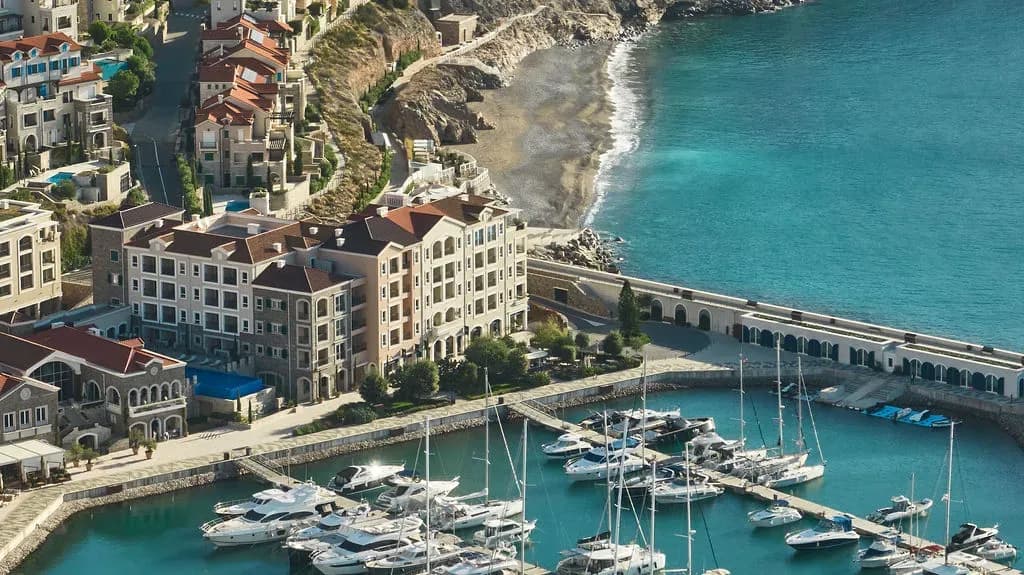
How to buy real estate in Montenegro? A complete guide
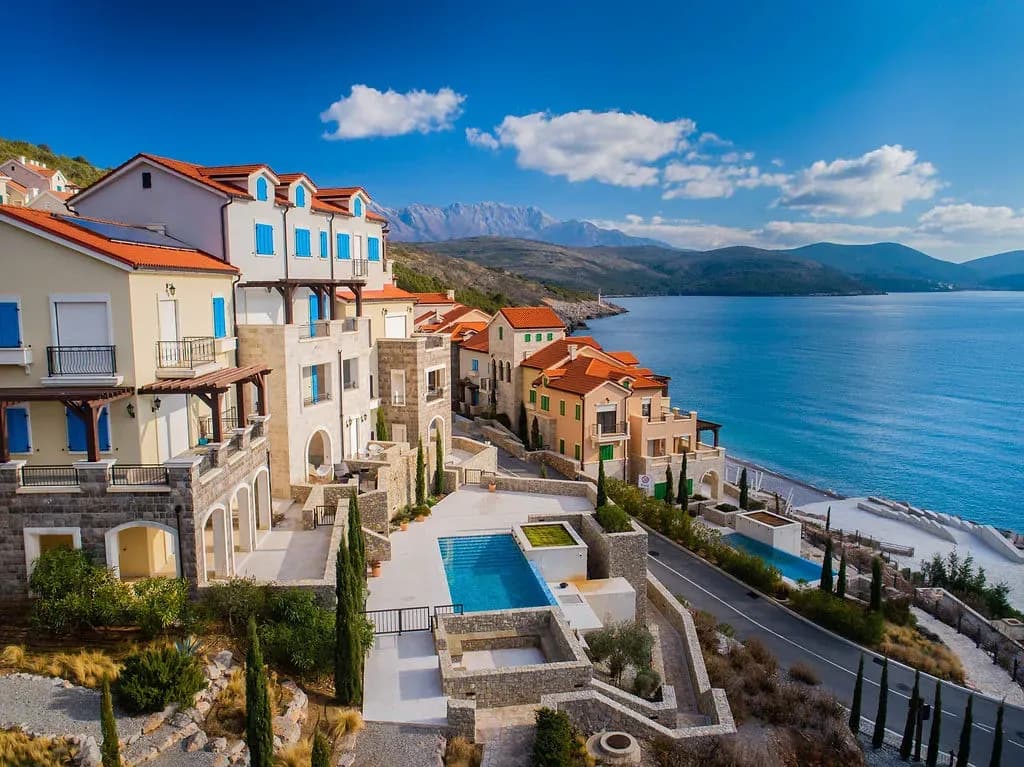
Buying property in Montenegro step by step – what does the process look like at the notary?
Real Estate in Oman: How to Invest Wisely in ITC Projects