


Why is Muscat the most stable real estate market in the Gulf? Analysis 2020–2025
Muscat, the capital of Oman, has earned the title of the most stable real estate market in the GCC between 2020 and 2025. Its predictability stems from conservative fiscal policy, a stable Omani rial, and the long-term Oman Vision 2040 strategy, which is focused on the phased development of the economy. The market is characterized by a high share of mortgage loans, which limits speculation, and a gradual increase in prices and rents, e.g., villas by over 20% annually in some segments. Unlike Dubai or Riyadh, Muscat offers lower entry prices and transparent regulations, making it attractive to long-term investors.

Article summary
The most important conclusions from the article in 30 seconds.
Muscat, the capital of Oman, has earned the title of the most stable real estate market in the GCC between 2020 and 2025. Its predictability stems from conservative fiscal policy, a stable Omani rial, and the long-term Oman Vision 2040 strategy, which is focused on the phased development of the economy. The market is characterized by a high share of mortgage loans, which limits speculation, and a gradual increase in prices and rents, e.g., villas by over 20% annually in some segments. Unlike Dubai or Riyadh, Muscat offers lower entry prices and transparent regulations, making it attractive to long-term investors.
Real estate markets in the Persian Gulf countries are associated with dynamics, spectacular projects, and rapid price spikes. Dubai is experiencing successive sales records, Riyadh is developing gigantic megaprojects under Vision 2030, and Doha invested heavily in infrastructure ahead of the World Cup. However, in the shadow of these high-profile markets lies Muscat – the capital of Oman – which in recent years has consistently built its position as the most stable real estate market in the GCC.
Analyses from 2020–2025 show that Muscat stands out not for record-breaking growth, but for predictability, balance, and controlled development, supported by a stable economy and transparent regulations. This is precisely why an increasing number of investors – both regional and international – view Oman as a safe and long-term alternative to the more speculative Gulf markets.
Why has Muscat earned the reputation of the region's quiet bet? How did the market develop between 2020 and 2025, and what factors make investors eager to direct capital here? In the remainder of this article, we will analyze the key data, trends, and regulations that have cemented the stability of this unique market.
Oman's Stable Economic Foundations (2020–2025)
Real estate market stability does not come from nowhere. In Oman's case, a key role was played by government actions focused on streamlining state finances, diversifying the economy, and limiting risks typical of the region. It is this macroeconomic balance that makes Muscat stand out against the dynamic but volatile markets of the UAE or Saudi Arabia.
Conservative Fiscal Policy and Stable Currency
Between 2020 and 2025, Oman pursued one of the most cautious fiscal policies in the GCC. After initial challenges related to the pandemic, the country quickly returned to a path of stabilization – in 2022, for the first time in years, a clear budget surplus was recorded, which improved credit ratings and strengthened investor confidence.
At the same time, the Omani rial remains one of the most stable currencies in the region, strongly pegged to the dollar and supported by conservative financial policy. In practice, this means that real estate investors do not have to fear the sharp exchange rate fluctuations that can significantly impact investment profitability in other countries.
Oman Vision 2040 – A Development Plan Based on Predictability
In 2020, Oman began implementing the long-term Vision 2040 strategy, which assumes gradual economic diversification and independence from the oil sector. The plan includes infrastructure modernization, the development of logistics, tourism, and technology, and one of the key elements is the construction of modern, sustainable cities.
Importantly, Vision 2040 assumes planned, phased development rather than rapid and risky acceleration of market dynamics. Thanks to this, every new project – from the expansion of Muscat's districts to the creation of integrated complexes – fits into the country's long-term development strategy. The result? No sharp supply spikes or excessive price speculation.
The Muscat Real Estate Market in 2020–2025
The real estate market in Muscat has undergone a calm but clear maturation process over the last five years. Instead of rapid growth and equally dynamic corrections – as seen in Dubai or Riyadh – Oman recorded a gradual rebuilding of demand, price increases in the most sought-after segments, and orderly development of new investments. This phased nature of change is one of the key elements building Muscat's stability.
Transaction Volume and the Role of Mortgages
One of the most important hallmarks of the Omani market is the large share of bank financing. The vast majority of residential transactions are based on mortgages, which testifies to stable demand from local families and expats buying properties for their own use. It is this group – rather than investors focused on quick profits – that sets the tone for the market and limits its susceptibility to speculative fluctuations.
It is also worth noting that despite the difficult year of 2020, the market quickly returned to balance. In subsequent years, transaction volumes remained in a stable range, and foreign sales grew by over a dozen percent annually. The growing share of investors from outside Oman testifies to the gradually built trust in the market and the increasingly better recognition of Muscat as a safe investment location.
Building Structure: Dominance of Villas and a Growing Apartment Segment
Traditionally, villas make up the largest part of Oman's residential market. However, it is the apartment segment – especially in modern, integrated projects – that is developing the fastest. Between 2020 and 2025, demand for apartments in Muscat grew thanks to:
- younger residents focusing on convenience and infrastructure,
- expats looking for well-located residential areas,
- the development of ITC projects, which offer a standard on par with Dubai, but at a lower price.
Such diversification of building types makes the market more resistant to turmoil – it does not rely on just one type of demand.
Stable Growth of Prices and Rents
During the analyzed period, Muscat recorded a clear but orderly increase in prices. Rental rates for villas and townhouses grew the most – in some segments, even by over 20% year-on-year. At the same time, purchase prices remain much more affordable than in Dubai, Doha, or Riyadh – which makes Muscat an entry-level market for investors who want to enter the GCC without massive capital.
From an investor's perspective, this means increasing rental yields without the risk of a sharp price correction. The market dynamics are calm but very consistent.
Comparison: Muscat vs. Other GCC Markets
To understand why Muscat has earned the reputation of the most stable real estate market in the Gulf, it is worth looking at it in the context of other GCC markets. Although all countries in the region are investing dynamically in infrastructure development, their markets function quite differently in terms of cyclicality, scale of speculation, regulatory transparency, and demand structure. This is where Muscat stands out the most.
Dubai – Spectacular, Dynamic, and Cyclical
Dubai remains the most recognizable real estate market in the region, but also one of the most susceptible to economic fluctuations. It is characterized by:
- rapid boom-bust cycles,
- very high liquidity,
- a large share of short-term investors,
- exposure to global capital flows.
While the Dubai market is ideal for investors focused on quick profits and high capital turnover, it performs much worse as a market for long-term, stable growth. Against this background, Muscat presents itself as a calm and predictable alternative, devoid of extreme price spikes.
Riyadh – Huge Potential, but High Regulatory Risk
Saudi Arabia is implementing ambitious urban projects under Vision 2030, shifting the center of gravity of the country's development to Riyadh. The city is developing rapidly, but:
- many investments are still in the planning phase,
- real estate market regulations are constantly changing,
- investors must reckon with tax and administrative uncertainty,
- the market is characterized by a high concentration of large projects, which increases the risk of oversupply.
In Muscat, development proceeds more slowly, but it is precisely planned and anchored in long-term policy, which significantly reduces investment risk.
Doha – A Market Dependent on Large Events and Infrastructure Investments
The real estate market in Qatar is strongly linked to infrastructure projects and events such as the 2022 FIFA World Cup. This means that:
- price increases can be sharp but short-lived,
- demand is largely stimulated by external factors,
- investors must reckon with greater market sensitivity to global factors.
Compared to Doha, Muscat grows more evenly and organically, without sharp peaks associated with single events.
Why Does Muscat Win Against the Region?
While the markets of the UAE, Saudi Arabia, and Qatar are fast, spectacular, and susceptible to sudden changes, Muscat develops stably and predictably. Its greatest advantages are:
- moderate, regular price growth,
- high stability of local and expat demand,
- transparent regulations and a lack of excessive speculation,
- attractive entry prices, especially compared to Dubai,
- planned development in line with Vision 2040, rather than short-term spikes.
As a result, Muscat is becoming an ideal market for investors who prioritize predictability, safety, and capital stability over dynamic profits.
Author
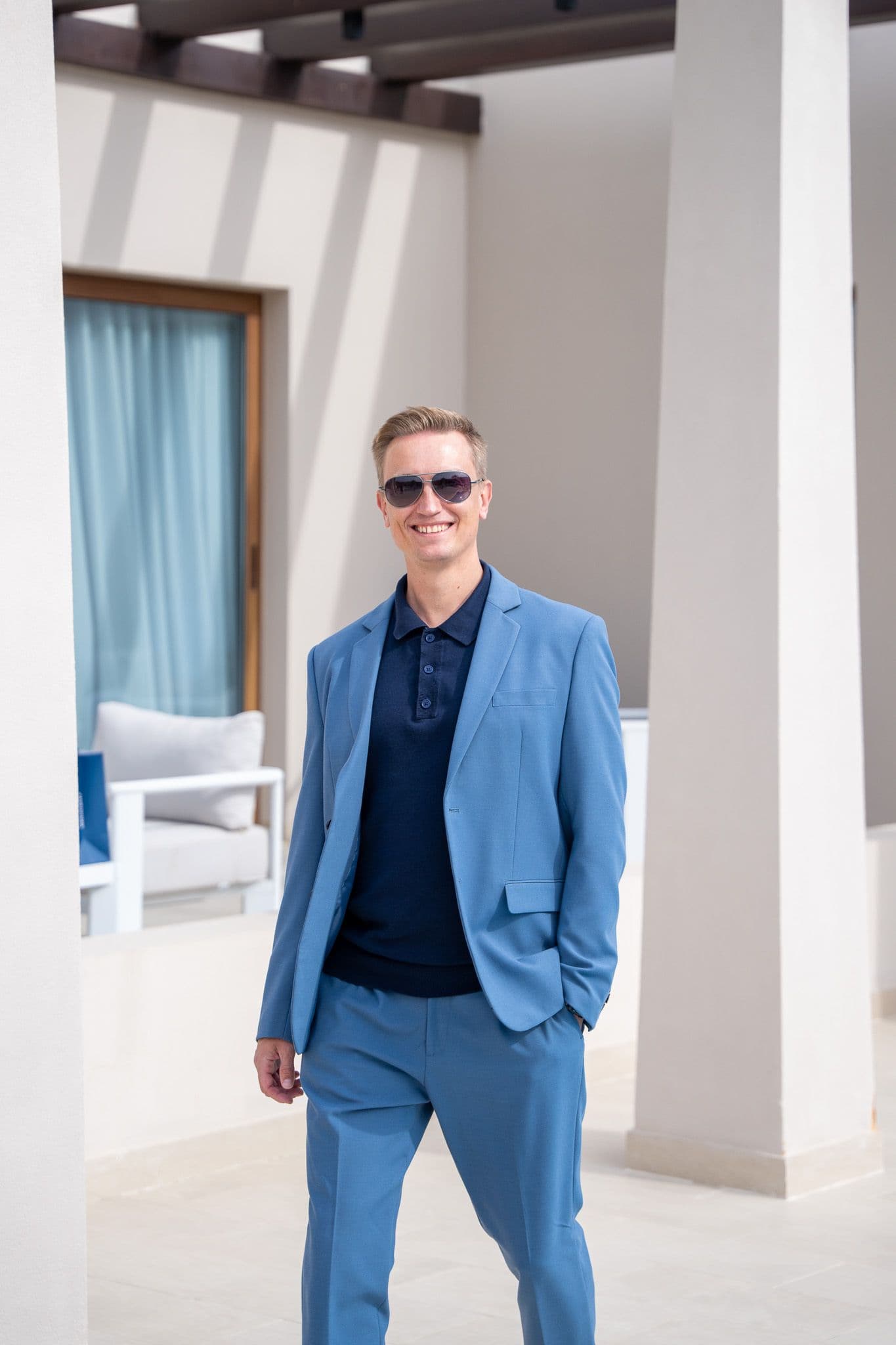
Mariusz Cieślukowski
CEO / FOUNDER
Co-founder of PlanoGroup and the person responsible for the development of the entire group. He built a brand based on quality, trust, and effectiveness, developing it in the Spanish market and subsequently expanding operations to further investment destinations. Today, he is developing PlanoGroup - a project that responds to the needs of clients who are looking not only for real estate but also for new opportunities for living, investment, and relocation. He specializes in trend analysis and building investment strategies in foreign markets - including Spain, Oman, and emerging locations such as Montenegro.
