


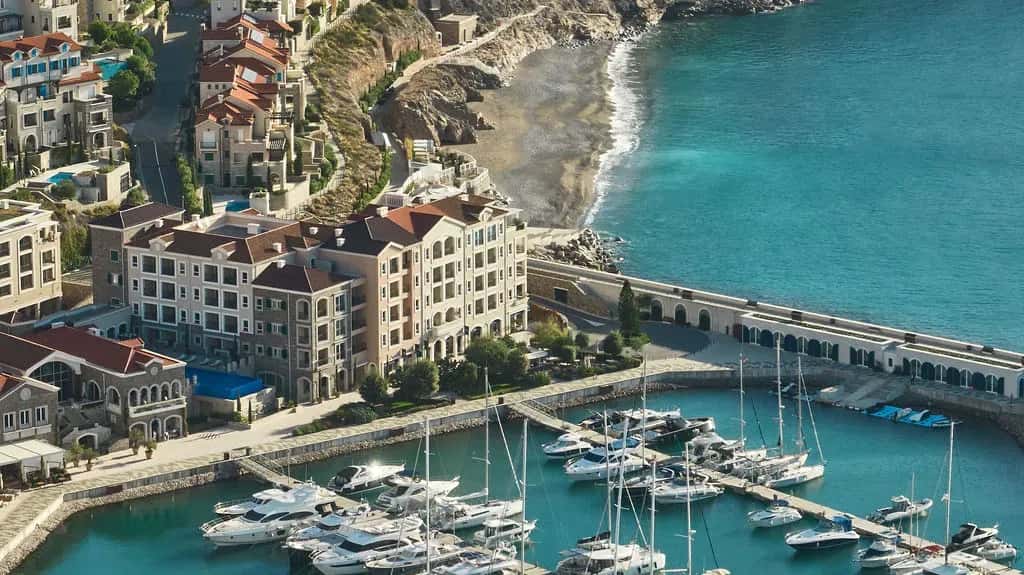
How to buy real estate in Montenegro? A complete guide
Polish citizens can freely purchase real estate in Montenegro, including apartments, houses, and building plots in urban areas, without the need to establish a company or hold permanent residency. Restrictions apply to agricultural land, forests, and strategic areas, which can be bypassed by registering a local company. The purchase process involves checking the legal status of the property in the cadastre, obtaining a local tax number, signing a notarial deed with a sworn translator, and paying the property transfer tax (3-6% on the secondary market, 21% VAT on the primary market). Montenegro offers competitive prices (e.g., €2,500–4,000/m² in resorts), high tourism potential, stable property value growth, and the right to temporary residency for owners. Financing is possible through mortgage loans from Montenegrin banks (with a 40-50% down payment) or popular developer installment plans.


Resumen del artículo
Las conclusiones más importantes del artículo en 30 segundos.
Polish citizens can freely purchase real estate in Montenegro, including apartments, houses, and building plots in urban areas, without the need to establish a company or hold permanent residency. Restrictions apply to agricultural land, forests, and strategic areas, which can be bypassed by registering a local company. The purchase process involves checking the legal status of the property in the cadastre, obtaining a local tax number, signing a notarial deed with a sworn translator, and paying the property transfer tax (3-6% on the secondary market, 21% VAT on the primary market). Montenegro offers competitive prices (e.g., €2,500–4,000/m² in resorts), high tourism potential, stable property value growth, and the right to temporary residency for owners. Financing is possible through mortgage loans from Montenegrin banks (with a 40-50% down payment) or popular developer installment plans.
More and more Poles are dreaming of their own house or apartment with a view of the Adriatic – and it is hard to be surprised. Montenegro entices not only with beautiful beaches and picturesque mountains, but also with relatively affordable real estate prices, simple purchase rules, and a friendly approach to foreigners. In recent years, this small Balkan country has become one of the most interesting places in Europe to invest in holiday apartments or second homes.
An additional advantage is the fact that Poles can easily buy property in Montenegro – without the need to set up a company or have permanent residency. The purchase process itself is quite transparent, although it requires knowledge of local regulations, a few formalities, and the assistance of a notary and a sworn translator.
Can foreigners buy property in Montenegro?
Good news to start with – yes, Poles can freely buy property in Montenegro. European Union citizens have almost the same rights as residents of the country, and the entire process is relatively simple and well-regulated by law.
What can you buy?
Foreigners can acquire:
- flats, apartments, and houses,
- commercial premises,
- building plots in urban areas.
The purchase of these properties does not require any permits or company registration. All you need is a valid passport, funds in your account, and the signing of a notarial deed in the presence of a sworn translator.
What can you not buy?
Certain restrictions apply to land of strategic importance. Foreigners cannot buy:
- agricultural and forest land,
- land located close to the state border (up to 1 km),
- islands and objects of historical or military character.
In practice, this means that the typical buyer – looking for an apartment or house on the coast – will not encounter major obstacles.
How to bypass the restrictions?
If someone is keen on buying agricultural land (e.g., for agritourism or a vineyard), there is a solution: you can set up a company in Montenegro, which, as a local entity, has the right to acquire agricultural land as well. This is a popular practice among investors, although it requires legal and accounting support.
What about citizenship or residency?
Until the end of 2022, the so-called golden passport program (citizenship by investment) was in operation, but it has been closed. Currently, the purchase of property grants the right to temporary residence – for one year, with the possibility of renewal – but it does not entitle you to work or automatically to citizenship.
For many Poles, however, this is enough to spend longer periods of the year in Montenegro, or even treat it as a second home.
Why is it worth buying property in Montenegro?
For several years, Montenegro has been gaining a reputation as one of the most attractive investment destinations in Southern Europe. For Poles, this is not only a chance to buy a house in a sunny climate, but also a real opportunity to multiply capital and improve quality of life.
1. Friendly regulations for foreigners
Montenegro does not place barriers on foreign buyers – a Pole can buy an apartment or house on exactly the same terms as a local citizen. The process is simple, transparent, and takes place at a notary's office, and the entry in the real estate register (katastar) serves as a secure confirmation of ownership.
An additional plus is the possibility of obtaining the right to temporary residence after purchasing property – a solution that attracts many Europeans looking for a place for longer stays.
2. Favorable prices compared to Croatia and Spain
Although real estate prices in Montenegro are rising, they remain significantly lower than in Croatia or southern Spain. For example:
- modern apartments in Budva or Kotor cost on average 2,500–4,000 EUR/m²,
- in smaller towns and mountain regions – 1,200–1,800 EUR/m².
Thanks to this, you can buy a spacious apartment with a sea view for the price at which you would buy a small studio in other European countries.
3. High tourism potential and rental income
Montenegro attracts more and more tourists – both from Europe and beyond. The season lasts here from May to October, and in some regions (like Tivat or Budva), you can also count on long-term rentals in winter.
Buying property can therefore become a source of stable passive income, especially with short-term rentals. Many people buy a holiday apartment, which they use for a few weeks a year, and rent it out to tourists for the rest of the season.
4. Potential for value growth
Montenegro is a candidate country for the European Union, which in the long term may translate into rising real estate prices and investment attractiveness. The development of infrastructure, new yacht marinas, highways, and airports further increase the value of the local market.
Experts emphasize that Montenegro is today at the stage of development that Croatia was 15 years ago – and that means great potential for the future.
5. Lifestyle and climate that is easy to fall in love with
250 sunny days a year, crystal clear sea, picturesque mountains, and a relaxed lifestyle – this is everyday life in Montenegro. For many Poles, it is an ideal place to live or work remotely.
An additional plus is the low cost of living – both in daily life and compared to Western tourist markets.
Real estate prices in Montenegro in 2025
The real estate market in Montenegro is still developing dynamically. Prices are gradually rising, especially in popular resorts on the Adriatic, but they remain more affordable than in Croatia or southern Spain.
For orientation:
- flats and apartments by the sea (Budva, Kotor, Bar) cost on average 2,500–3,500 €/m²,
- premium segment (e.g., Tivat, Porto Montenegro) starts from 3,000 €/m², and in luxury developments, prices can exceed 5,000 €/m²,
- in smaller towns and mountain regions, properties can be found from as little as 1,200–1,500 €/m².
However, it is worth remembering that price differences depend not only on the location, but also on the standard, sea view, and infrastructure in the area.
If you want to see a detailed breakdown of prices in individual regions, along with an analysis of investment profitability, check out our article:
Real estate prices in Montenegro
What does the property purchase process in Montenegro look like step by step?
Buying property in Montenegro is a well-regulated and relatively simple process – provided you know the sequence of actions and remember a few important formalities. Below you will find a step-by-step description of how to safely carry out the transaction as a Polish citizen.
Step 1. Checking the legal status of the property
Before you sign any document, be sure to ask for the List nepokretnosti – this is an official extract from the real estate register (katastar), which confirms:
- who the owner is,
- whether the property is encumbered by a mortgage,
- whether there are any ongoing legal disputes,
- what the actual square footage and land status are.
You can obtain the document yourself at the cadastre office or through a lawyer. It is also worth verifying the building and occupancy permit – especially in the case of new buildings.
Step 2. Obtaining a tax number and preparing funds
To buy property in Montenegro, you need a local tax number (PIB). Obtaining it usually takes 1–2 days and can be done at the local tax office. It is also good practice to open a bank account in a Montenegrin bank, which facilitates tax payments and settlements with the notary.
Step 3. Preliminary agreement (optional)
Often, before the final deed, the parties sign a preliminary agreement with a deposit payment (usually 10% of the value). The deposit can be deposited with a notary, which provides security for both parties. If the buyer does not speak Montenegrin, the presence of a sworn translator is required – without one, the notary will not draw up a valid deed.
Step 4. Notarial deed – the actual sales agreement
The final agreement is concluded at a notary's office in Montenegrin. In the presence of a sworn translator, the parties sign the deed, which is then forwarded to the cadastre office. The notary plays a very important role in Montenegro – they verify all documents and ensure the correctness of the transaction.
Step 5. Registration and tax payment
After signing the deed, you must pay the real estate transfer tax (RETT) and submit an application for entry into the register (katastar). The entire process is often handled by a notary or lawyer.
Real estate transfer tax (secondary market):
- up to 150,000 € – 3%,
- from 150,001 € to 500,000 € – 5% on the surplus,
- above 500,000 € – 6%.
Primary market:
If you are buying a new apartment from a developer, you do not pay RETT, because the price already includes 21% VAT.
Step 6. Transaction-related costs
| Cost type | Approximate height | Notes |
|---|---|---|
| Notary | ok. 0.2–1% of the value (max. €5,000) | State tariff |
| Sworn translator | approx. €50 / hour | Mandatory if you do not know the language |
| Lawyer (due diligence) | 0.5–1% of the value | Recommended for every transaction |
| Land registration | Dozens to hundreds of € | One-time fee |
| Annual property tax | 0.25–1% of the cadastral value | Paid annually |
Step 7. Cadastral entry – final confirmation of ownership
After paying the tax and submitting the documents, the land registry office makes an entry of the new owner. Only this moment signifies the formal transfer of ownership rights. This usually takes from a few days to a few weeks, depending on the region.
The entire process – from signing the contract to the entry in the register – takes on average 2–4 weeks. It is most important to ensure:
- verification of the legal status of the property,
- the presence of an interpreter and a notary,
- timely payment of taxes,
- and keeping copies of all documents.
For security reasons, it is also worth using the services of a local lawyer – the cost is not high, and it allows you to avoid potential problems with registration or property verification.
Financing options for purchasing property in Montenegro
Buying property abroad does not always mean having to pay in cash. In Montenegro, there are several ways to finance a transaction – both for residents and foreigners. However, it is worth knowing the local realities, as the banking system operates slightly differently than in Poland.
Mortgage loan in a Montenegrin bank
Foreigners (including Poles) can apply for a mortgage loan in Montenegrin banks, but the requirements are more demanding than for citizens of the country.
The most common rules:
- Down payment: at least 40–50% of the property value,
- Loan term: from 5 to 25 years,
- Interest rate: usually 5–7% per annum,
- Currency: loans are granted mainly in euros,
- Collateral: a mortgage on the purchased property, sometimes also credit or life insurance.
Required documents include proof of income, bank statements, a copy of the passport, and confirmation of the down payment. The entire process usually takes several weeks.
Some banks – e.g., Crnogorska Komercijalna Banka (CKB) or Erste Bank Montenegro – have special credit offers for foreigners, especially if the purchase concerns modern investments in coastal resorts.
Loan in Poland for a foreign property
Polish banks rarely grant mortgage loans secured by property located abroad. However, one can consider:
- a cash loan or
- a mortgage loan secured by property in Poland.
Such a solution can be faster, although the interest rate may be higher than in a classic mortgage loan.
Developer installments – a popular alternative
In Montenegro, the developer installment system is very popular, especially in new investments by the sea. It usually looks like this:
- you pay 30–40% upon signing the contract,
- the remaining part is spread into monthly or quarterly installments (usually interest-free),
- full transfer of ownership takes place after the completion of payments or after the handover of the premises.
For many foreign buyers, this is the most convenient way to purchase – without the need to apply for a loan and go through banking formalities.
Financing through a company
People buying larger investment properties (e.g., guesthouses, building plots) often set up a company in Montenegro.
A company can obtain financing from a local bank on more favorable terms than a private individual. This solution makes sense mainly for larger projects (above 200,000–300,000 euros).
Practical tips
- Prepare a documented source of income – Montenegrin banks are very meticulous regarding AML.
- The borrower does not need to have permanent residency, but having an account in a local bank is required.
- If you are buying through a developer, always check whether the installment plan and payment deadlines are included in the notarial deed.
- It is worth comparing offers from several banks – differences in interest rates can reach even 1–2 percentage points.
Most common mistakes and traps for property buyers in Montenegro
Buying property abroad is an exciting decision, but it is worth approaching it with a cool head. Montenegro is an investor-friendly country, but the market has its specifics, and mistakes made by foreigners can cost a lot. Here are the most common traps to watch out for.
1. Failure to check the legal status of the property
This is by far the most common mistake. Many buyers trust the assurances of the seller or agent without verifying the documents themselves.
Always demand an up-to-date extract from the real estate register (List nepokretnosti) and ensure that:
- the seller is the actual owner,
- the property has no mortgage or bailiff's seizure,
- the plot has building status (and not agricultural).
Failure to perform this check can result in the loss of money or a long-term court dispute.
2. Buying property without a building or occupancy permit
In Montenegro, there are still buildings constructed without full documentation – especially older houses and some apartment buildings. The lack of an occupancy permit (upotrebna dozvola) may prevent entry into the ownership register or the connection of utilities. Always ask a lawyer to confirm that the facility was built and commissioned in accordance with the law.
3. Lack of a sworn translator when signing the deed
If you do not know the Montenegrin language, the presence of a sworn translator is mandatory. Without one, the notarial deed may be considered invalid. This is a detail that many buyers forget, but which has huge legal significance.
4. Paying the deposit too quickly
Some sellers push for a quick down payment before signing the notarial deed. Never transfer money directly to the seller – not even a small deposit. It is safest to deposit it into a notary's escrow account, which will release the funds only after the contract is signed.
5. Not including all transaction costs
Buyers often forget about additional fees:
- property transfer tax (3–6%),
- notary fee,
- translator,
- lawyer and registration in the cadastre.
As a result, the total cost of the purchase can increase by several thousand euros. It is therefore worth preparing a detailed transaction budget in advance.
6. Trusting unverified agents
There are many reliable agents on the market, but unfortunately, there is no shortage of people without a license or operating without a contract. Always check the real estate agency (whether it has a registered office and registration number) and conclude a brokerage agreement in writing. This will facilitate potential claims if problems arise.
7. Skipping the services of a lawyer
Some buyers want to save money and forgo the help of a local lawyer. This is a false economy – the cost of document verification (approx. 0.5–1% of the value) is small compared to potential losses. A lawyer will not only check the legality of the transaction but also ensure that the deed and taxes are in accordance with Montenegrin law.
Summary
Buying property in Montenegro is currently one of the most interesting opportunities for Poles who are looking not only for a sunny place to relax but also for a safe form of capital investment.
The purchasing process is relatively simple and transparent – provided that you follow a few rules: carefully check the legal status of the property, sign the contract at a notary with a translator, and pay taxes on time.
It is worth remembering that:
- foreigners can freely buy apartments and houses,
- formalities can be completed within a few weeks,
- total transaction costs (including taxes and fees) are usually 3–7% of the property value,
- the purchase grants the right to temporary residence in Montenegro, renewable every year.
Thanks to a stable market, growing interest from tourists, and favorable regulations, Montenegro is becoming an increasingly popular destination for investors from Europe. For Poles, it is often a cheaper and less bureaucratic alternative to Croatia – with an equally beautiful coastline and great potential for property value growth.

Autor
Patrycja Kordys
BOARD MEMBER | SALES DIRECTOR
For nearly 17 years, she has been associated with the premium real estate market. She gained her experience working with international clients—particularly German and English speakers—ensuring the highest standard of service and communication. After years of working on the Costa del Sol, she now focuses on the dynamically developing market of Oman, where she supports clients in discovering new investment opportunities and lifestyles. She combines professionalism with a natural ease in building relationships, ensuring that the purchasing process is smooth and stress-free.
