


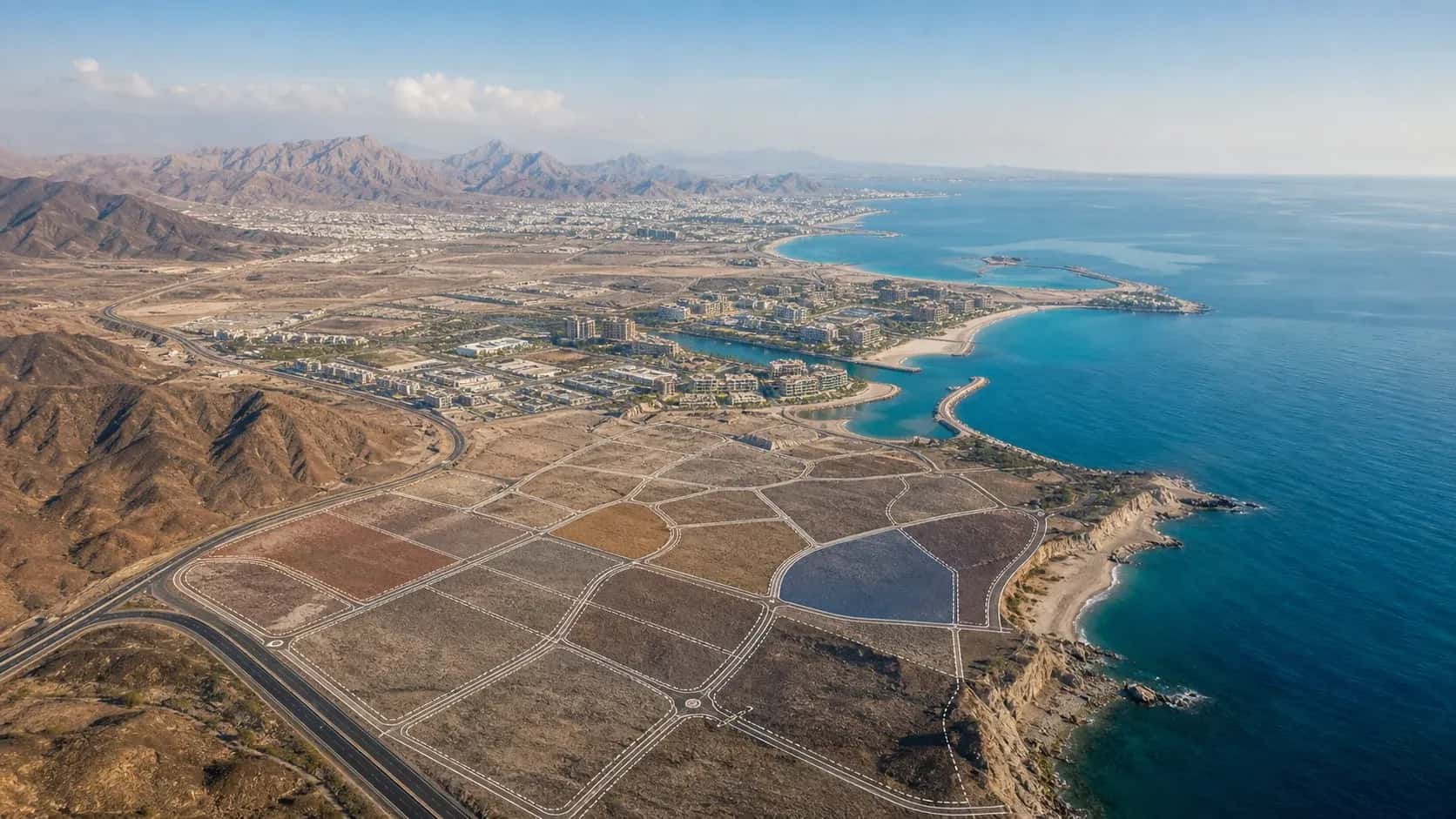
Land Investments in Oman: A Guide to ITC Zones
A Polish citizen may consider purchasing land in Oman primarily within designated Integrated Tourism Complex (ITC) zones, where a foreign buyer can obtain freehold rights. Outside of this model, an investor should very carefully analyze structures based on Usufruct, local companies, or agreements with an Omani partner, as the scope of control over the asset may differ from that of full ownership. The most important documents when analyzing a plot are the *Mulkiya*, which is the title deed, and the *Krooki*, which is the cadastral map showing the boundaries and zoning of the parcel. The price per square meter alone is not enough to evaluate the asset. One must check access to public roads, utilities, topography, *Wadi* risk, building height restrictions, the construction schedule, and the cost of taking the land from raw state to a permitted project. A land strategy in Oman has a different profile than purchasing an off-plan apartment. Land rarely provides current yield, but it can generate capital appreciation through changes in legal status, project preparation, infrastructure development, and better alignment with the goals of Oman Vision 2040. This is an asset for an investor who accepts a longer horizon, lower liquidity, and the need for technical oversight.


Zusammenfassung des Artikels
Die wichtigsten Erkenntnisse aus dem Artikel in 30 Sekunden.
A Polish citizen may consider purchasing land in Oman primarily within designated Integrated Tourism Complex (ITC) zones, where a foreign buyer can obtain freehold rights. Outside of this model, an investor should very carefully analyze structures based on Usufruct, local companies, or agreements with an Omani partner, as the scope of control over the asset may differ from that of full ownership. The most important documents when analyzing a plot are the *Mulkiya*, which is the title deed, and the *Krooki*, which is the cadastral map showing the boundaries and zoning of the parcel. The price per square meter alone is not enough to evaluate the asset. One must check access to public roads, utilities, topography, *Wadi* risk, building height restrictions, the construction schedule, and the cost of taking the land from raw state to a permitted project. A land strategy in Oman has a different profile than purchasing an off-plan apartment. Land rarely provides current yield, but it can generate capital appreciation through changes in legal status, project preparation, infrastructure development, and better alignment with the goals of Oman Vision 2040. This is an asset for an investor who accepts a longer horizon, lower liquidity, and the need for technical oversight.
The real estate market in Oman is maturing alongside the development of ITC projects, mixed-use developments, and infrastructure around Muscat, Yiti, Al Sifah, and Salalah. For a Polish investor, this means shifting from the simple question "how much does an apartment cost?" to the much more important question: "does the given location, legal status, and infrastructure allow for building real asset value?" With land, the answer does not come from a sales brochure. It comes from documents, maps, cost estimates, and planning restrictions.
PlanoGroup describes Oman as an investment destination alongside Spain, Dubai, Saudi Arabia, and Montenegro. On the PlanoGroup homepage and in the PlanoGroup blog section, it is clear that the brand is building a narrative around capital diversification outside of Poland and the European Union. In the case of land, this diversification only makes sense if the investor understands the difference between exposure to the land market and purchasing a finished unit for rent.
In Oman, it is not enough to simply transfer the model known from Dubai. In the UAE, an investor often analyzes the payment schedule, escrow account, off-plan price, and resale scenario before handover. In Oman, when dealing with land, questions arise regarding freehold, Krooki, access to Sikka, Wadi, utility connections, Technical Planning Statements, construction start deadlines, and exit strategies. These elements can determine the outcome more than the nominal price of the plot.
This article guides you through the entire process of evaluating investment land: from ITC status, through the analysis of Mulkiya and Krooki, comparison with off-plan apartments, soft cost budgets, and locations aligned with Oman Vision 2040, to technical due diligence and FAQs. The goal is not to encourage a quick decision, but to organize the questions an investor should ask before paying a deposit.
—
Can a foreigner buy land in Oman? Legal regulations and ITC zones
Freehold ownership status for foreigners
For an investor from outside the GCC countries, the key concept is the Integrated Tourism Complex (ITC). This is a designated tourism and residential project or area where a foreign buyer can acquire property under the rules provided for foreigners. In practice, an ITC is often the only path to obtaining freehold rights for land or a unit, but each project requires individual verification. It is not enough for a developer to use terms like "resort," "tourism," or "waterfront" in sales materials. The investor must see a document confirming the project's status and the scope of the buyer's rights.
In the article ITC in Oman: what does it mean for a foreigner buying property?, PlanoGroup clarifies the significance of this model for foreigners. For a land investor, three questions are particularly important. First, does the ITC status cover exactly this parcel, and not just an adjacent part of the masterplan? Second, does the buyer receive freehold rights to the land or another legal title? Third, will further resale, construction, and leasing require the consent of the operator, master developer, or administrative authority?
Attempts to bypass the rules outside of an ITC are among the most serious risks. A structure based on a purchase by a local partner, an informal trust agreement, or a power of attorney without a title entered into the register does not give the investor the same control as ownership. In the event of a dispute, the death of a partner, a change in business relations, or administrative control, the investor may have limited ability to assert their rights. With land, where capital is frozen for years, such a legal loophole is more significant than in a short-term flipping transaction.
One must also distinguish between freehold and Usufruct. Usufruct may apply to selected commercial, industrial, or logistics land, for example in development zones such as Duqm. This is a right of use for a specific time, not always full ownership. It can be useful for a warehouse project, employee facility, or operational activity, but it requires an analysis of the term, the possibility of extension, permitted use, financing rules, and rights to the structure after the usage period ends.
Step by step: verifying the legal status of a plot
Step 1. Ask the seller for a document confirming that the specific plot is in an ITC zone. Do not accept a marketing map alone. The document should allow you to link the parcel number, masterplan, and the scope of the foreigner's rights.
Step 2. Check the Mulkiya and owner details. The name, company name, plot number, and area must be consistent with the reservation agreement, Krooki map, and developer documents. If the seller is a subsidiary, establish the legal basis for the sale.
Step 3. Ask the developer if the sale of the land requires the consent of the master developer, ITC operator, or the ministry. Ask for the property transfer procedure, the expected registration date, and the list of documents required from a Polish citizen.
Step 4. Check construction restrictions. Freehold does not mean design freedom. The plot may have a height limit, intensity ratio, mandatory function, prohibition of subdivision, or an obligation to start construction within a specific time.
Step 5. Commission a local lawyer to analyze the SPA, powers of attorney, transfer fees, and resale rules. If the documentation is in Arabic, a working translation by someone who understands registry terminology is needed.
—
How to check the land title: Mulkiya and Krooki in practice
Analysis of technical and legal documentation
Mulkiya is the primary document confirming the title of ownership. In investment analysis, it should not be treated as a formality. You must check who the owner is, whether the plot number matches the map, what the area is, and whether there are any restrictions, encumbrances, liens, mortgages, easements, or entries regarding disputes. If a developer, broker, and landowner are involved in the transaction, the investor should understand who actually has the right to sell the asset and who is signing the documents.
Krooki is equally important because it shows the geometry of the plot. On the cadastral map, the investor should check the boundaries, coordinates, access to a public road, land use, and any elements restricting construction. In practice, a plot may look good on a satellite photo but have issues with access, terrain slope, Wadi, power lines, or an adjacent parcel designated for a function that will lower the quality of the future project.
Access to Sikka, i.e., a road or communication strip, is one of the points that must not be left for last. Lack of formal access to a road can hinder building permits, utility connections, and subsequent resale. The investor should compare the Krooki with the terrain map, satellite photo, and a site visit. If access runs through private land, it must be determined whether there is a legally established easement, not just customary use of the road.
Another area is Wadi, or seasonal water runoff channels. Oman has areas where heavy rainfall causes rapid surface runoff. A plot located on the path of such a flow may require expensive drainage, raising the foundation level, or giving up part of the building area. This element is not always obvious in sales materials, which is why a geotechnical analysis and a conversation with a local engineer are needed.
Document verification should also include utilities. A plot "close to infrastructure" is not synonymous with a plot ready for construction. It must be determined whether electricity, water, sewage, and internet connections are available at the plot boundary or if they require work on the investor's part. A difference of several dozen or several hundred meters can change the budget, schedule, and economic sense of the project.
Step by step: due diligence of documents and land
Step 1. Obtain the current Mulkiya and Krooki directly from the owner or developer. Check the issue date, plot number, area, and consistency of data with the reservation agreement.
Step 2. Ask for confirmation that the plot is free of encumbrances. In practice, ask about mortgages, lawsuits, liens, third-party rights, sales restrictions, and consent requirements before transfer.
Step 3. Overlay the Krooki onto a satellite map and masterplan map. Compare boundaries, access, relationship to adjacent parcels, planned roads, and service areas. Look for discrepancies, not confirmations of your own assumptions.
Step 4. Commission a site visit by a surveyor or engineer. The report should cover boundaries, terrain slopes, possible Wadi, road access, terrain obstacles, existing infrastructure, and photos with GPS points.
Step 5. Ask for technical conditions for connections. For an investor, not only declarations matter, but also the cost, deadline, responsibility for execution, and the risk that connections will require work outside the plot boundary.
—
When is land better than an off-plan apartment? Comparing strategies
Capital efficiency and forced appreciation
Land and off-plan apartments meet different investor needs. An off-plan apartment usually has a payment schedule, a specific product, a developer, an escrow account, and an expected handover. Land requires more analytical work but gives more influence over the shape of the project. The investor can build Capital Appreciation by organizing documents, bringing in utilities, preparing a concept, obtaining a permit, and creating an asset ready for sale to the next buyer.
Forced appreciation does not mean an automatic price increase. It means an increase in value resulting from specific actions. A raw plot with unclear access, no cost estimate, and no project has different liquidity than a parcel with confirmed ITC, clean Mulkiya, consistent Krooki, utility conditions, architectural concept, and a construction plan. The market rewards the reduction of uncertainty, but only if the documents are readable for the next buyer.
An off-plan apartment may be better for an investor who wants to enter the rental model faster and expects fewer technical decisions. If the project has an operator, a finishing standard, a clear Service Charge policy, and the possibility of management after handover, the analysis focuses on NOI, yield, OPEX costs, and delay risk. The article "Real estate profitability in Oman: operational model, OPEX, CAPEX and real net ROI" shows well that the real result after handover depends on the operational model, not just the purchase price.
Land is more appropriate when the investor accepts the lack of current income and has capital for subsequent stages. Buying land often requires more liquidity at the start, because bank financing for land for a foreigner can be more difficult than financing a unit. At the same time, a plot gives more freedom: you can prepare a project for a villa, a small hospitality facility, a branded residence, a family tourism segment, or later resale with a permit.
However, liquidity risk is greater. An apartment in a good project can be shown through square footage, view, standard, and rental forecast. Land requires a buyer who understands planning and wants to take over the process. This narrows the group of buyers. Therefore, the investor should define an exit scenario before purchasing: selling the raw plot, selling with a project, selling after a permit, building and selling the finished object, or keeping the asset in the portfolio.
Step by step: choosing between land and off-plan
Step 1. Determine the source of the result. For an apartment, it will be rent, NOI, yield, and potential resale. For land, it will be mainly Capital Appreciation after reducing legal, technical, and planning risks.
Step 2. Compare liquidity. Check how many similar plots are on the market, how long transactions take, who the typical buyer is, and whether resale requires the consent of the developer or ITC operator.
Step 3. Calculate the full cost of reaching the next stage. For off-plan, include the price, equipment, Service Charge, OPEX, and the period without rent. For land, add soft costs, connections, surveying, project, permits, supervision, and a reserve for delays.
Step 4. Ask the developer about the obligation to start construction. If the contract or ITC regulations require action within a specific period, passive land banking can be risky.
Step 5. Compare alternatives in the same region. It is worth comparing the plot with real estate offers in Oman, such as Marriott Residences AIDA, Zen Residences, Amazi Hawana Salalah, and The Sustainable City Yiti, to check how the market values a finished product versus land.
—
How much does it cost to prepare land for investment? Budgeting soft costs
From raw land to a finished project
The purchase price of a plot is only the first item in the budget. The investor should build a model that includes soft costs, technical costs, and a risk reserve. Soft costs are expenses that are not directly concrete, installation, or finishing, but determine the feasibility of the project. These include legal advice, architect, surveyor, engineer, planning consultations, translations, approvals, project management, and administrative fees.
The biggest mistake is assuming that a plot with a view and ITC status is automatically ready for construction. You need to check if the project requires a Technical Planning Statement, additional opinions, environmental approvals, concept approval by the master developer, or an imposed architectural standard. Each of these elements means time, costs, and the risk of returning to the designer with corrections.
Utilities are a separate category. Electricity, water, sewage, and an access road may be close, but not necessarily at the plot boundary. If the investor has to finance a section of infrastructure, the ROI model may change more than the difference in purchase price would suggest. In sensitivity analysis, you must calculate the base variant, the variant with increased connection costs, and the variant with work delays. Only comparing these scenarios shows whether the plot price has a sufficient safety margin.
With land, there is also the cost of time. If the project regulations or laws impose an obligation to start construction within a certain period, the investor cannot treat land solely as a passive asset. It must be determined whether the deadline is counted from the signing of the SPA, registration of ownership, issuance of a permit, or handover of the plot. You should also ask about the consequences of not starting work: fees, notices, loss of the right to preferential terms, or restrictions on resale.
The budget should include a reserve for investor supervision. An owner from Poland will not be on-site every day, so they need a local person or company to check surveying work, meetings with offices, developer responses, and designer actions. Lack of supervision can lead to apparent savings that later turn into the cost of corrections, delays, or loss of control over the schedule.
Step by step: land preparation budget
Step 1. Ask the developer for a list of costs beyond the land price. It should include transfer fees, administrative fees, required approvals, project, arrangements, connections, supervision, and land maintenance costs.
Step 2. Obtain technical conditions for connections. Ask where the nearest connection point is, who finances the section to the plot boundary, what the completion deadline is, and whether the consent of neighboring landowners is required.
Step 3. Commission a cost estimate for earthworks. In Oman, slopes, soil type, equipment access, drainage requirements, ground stabilization, and the risk of seasonal water runoff are important.
Step 4. Count soft costs as a separate line in the model, not as a margin in the purchase price. Separately include the lawyer, surveyor, architect, engineer, translations, project management, and official fees.
Step 5. Plan a liquidity reserve. Land does not generate income during preparation, so the investor should have funds for subsequent stages without forced sales at an unfavorable moment.
—
Locations with the greatest potential: Oman Vision 2040 in practice
Directions of expansion: Muscat Bay, Yiti, and Salalah
Oman Vision 2040 indicates the direction of economic, infrastructure, and tourism development. For a land investor, this is not a promotional slogan, but a starting point for analyzing where the state, developers, and infrastructure operators will concentrate capital. The official Oman Vision 2040 website shows the strategic framework, but the investment decision must go lower: to the map of roads, airports, ports, resorts, services, tourism demand, and local supply of plots.
Muscat remains the most important base market. It combines administration, business, expats, the airport, services, and weekend demand. Plots in areas connected to Muscat Bay, Yiti, and Al Sifah must be analyzed through the prism of access to the city, road quality, proximity to ITC projects, view, sea exposure, and planned service infrastructure. "Investing in Oman: Muscat and Salalah - where real estate value is growing" helps compare the logic of Muscat and Salalah from an investor's perspective.
Yiti deserves separate attention because the development of The Sustainable City Yiti shows how a mixed-use development project can change the perception of an entire area. However, it is worth separating the neighborhood effect from automatic price increases. A plot located next to a large project may gain from better access, recognition, and services, but it may also have restrictions resulting from the masterplan, supply competition, or investment phasing. Therefore, you should check not only the map but also the schedule, neighboring functions, and building rules.
Salalah and Dhofar have a different profile. The Khareef season creates tourism demand that is not the same as demand in Muscat. For land for vacation facilities, this can be an advantage, but it requires an analysis of seasonality, length of stay, flight availability, off-season maintenance costs, and resort competition. A plot in Salalah can make sense if the project is adapted to the rhythm of the region, and not just to the year-round assumptions known from larger cities.
Duqm is an industrial-logistics case. A Polish investor should consider this direction not as a second home purchase, but as exposure to warehouses, employee accommodation, services for companies, or land for activities supporting the port and industry. Here, the road, port, industrial zone, utilities, corporate demand, and the structure of Usufruct or another legal title will be more important than a sea view.
Step by step: land location analysis
Step 1. Check what demand the project is intended to serve. Different data will be important for a second-home villa, different for a hospitality unit, different for a warehouse, and different for employee quarters.
Step 2. Compare the location with infrastructure plans. Pay attention to roads, the airport, the port, access to services, schools, marinas, golf courses, beaches, and business centers.
Step 3. Assess the neighborhood. Check if functions that strengthen demand are planned nearby, or rather elements that lower the quality of the project, such as noise, heavy traffic, or technical functions.
Step 4. Compare the plot with finished and off-plan products in the same region. If a finished apartment in an ITC has a similar entry price after taking into account land preparation costs, the land strategy must provide a clear design advantage.
Step 5. Verify sources. Use developer documents, maps, official Oman Vision 2040 materials, information from The Sustainable City Yiti official project site, and local market reports, but do not replace due diligence of a specific plot with them.
—
Investment risks and technical due diligence
Managing threats in the land market
Planning risk is the first area that needs to be assessed. A plot may have an ocean view on the day of purchase, but adjacent parcels may receive a different function or higher buildings. There may also be a height restriction, a required architectural style, a mandatory setback, a protection zone, or a change in road alignment. The investor should check not only their own parcel but also the surroundings within a radius that affects the view, noise, access, and future utility value.
Environmental risk in Oman requires a technical approach. Flash floods, Wadi, terrain slopes, soil bearing capacity, air salinity, and high temperatures affect the project, costs, and durability of materials. A plot that looks good in a visualization may require more expensive drainage, retaining walls, higher foundations, or a change in building layout. These costs should appear in the model before purchase, not after signing the SPA.
Liquidity risk is less visible but equally important. Land does not have as broad a market of buyers as an apartment. The buyer must understand the documents, take over the process, and have capital for the next stage. If the investor needs a quick exit, they may be forced to offer a discount. Therefore, at the time of purchase, you should prepare materials that will facilitate resale: an organized Mulkiya, Krooki, surveying report, utility confirmation, concept, and a list of restrictions.
Language and legal barriers are practical, not theoretical. Documents may be in Arabic, official meetings conducted locally, and procedures different from Polish ones. The proxy should have a clear scope of authority, a limit on actions, and an obligation to report. The investor should not sign blank powers of attorney without control, especially when they concern property transfer, payments, receipt of documents, or further resale.
Step by step: risk audit before purchase
Step 1. Prepare a risk matrix. Assess ownership rights, ITC, planning, geotechnics, utilities, road, Wadi, neighborhood, liquidity, currency, and execution risks separately.
Step 2. Assign a document to each risk. For example: Mulkiya for title, Krooki for boundaries, connection conditions for utilities, geotechnical report for the terrain, SPA for construction obligations, and ITC regulations for usage restrictions.
Step 3. Establish questions for the developer. Ask about construction deadlines, penalties, transfer fees, resale restrictions, required project standard, infrastructure phasing, and the concept approval procedure.
Step 4. Compare indicators. The minimum is price per m2, connection cost, soft costs, project cost, expected CAPEX, assumed permit deadline, financing cost, sales scenario, and expected IRR after taking time into account.
Step 5. Prepare exit strategies. One scenario should assume selling the raw plot, the second selling with a project, the third selling after a permit, and the fourth building. Each scenario should have a separate list of costs and documents.
—
When is it worth using advisory services for land in Oman?
Buying land in Oman requires a combination of legal, technical, financial, and location analysis. The investor should know whether they are buying freehold in an ITC or another legal title; whether the Mulkiya and Krooki are consistent; whether the plot has access to a road and utilities; whether the construction schedule is realistic; and whether there is a sensible exit scenario.
PlanoGroup can support the investor in comparing land, off-plan projects, and finished assets in Oman. The starting point is an analysis of the goal: capital protection outside of Poland, exposure to Capital Appreciation, purchase for a second home, building for hospitality, or a commercial project. Only then is it worth choosing the location, legal status, and asset type.
If you are analyzing a plot in Muscat, Yiti, Al Sifah, Salalah, or Duqm, prepare a complete set of materials before the conversation: parcel number, Mulkiya, Krooki, price, payment terms, ITC status, information about utilities, neighborhood map, and planned investment scenario. Without this data, the conversation will remain general, and with land, generality is a risk.
—
FAQ
Can a Pole buy a plot in Oman for ownership?
Yes, but the safest path is to purchase within designated Integrated Tourism Complex (ITC) zones, where a foreigner can obtain freehold rights in accordance with the regulations of a given project. The investor should confirm that the specific plot, and not just the area, is in an ITC. You also need to check whether the right covers the land or only a unit or another type of asset. Outside of an ITC, legal structures should be analyzed very carefully, as they may not provide the same control as ownership entered into the register.
How does investment land differ from an off-plan apartment?
An off-plan apartment is a developer product with a payment schedule, standard, planned handover, and usually a simpler path to entering the rental market. Land is a project asset. It requires independent analysis of title, utilities, planning, geotechnics, preparation costs, and construction obligations. It can give more influence over the shape of the investment and Capital Appreciation, but usually means lower liquidity, no current yield, and greater responsibility on the investor's part.
What documents need to be checked before buying a plot in Oman?
The basis is Mulkiya and Krooki. Mulkiya confirms the title of ownership, owner, plot number, and any encumbrances. Krooki shows boundaries, area, road access, and land use. In addition, the investor should check ITC status, SPA, transfer terms, master developer regulations, technical connection conditions, geotechnical report, building restrictions, the obligation to start construction, and resale rules.
Can land in Oman be bought for vacation rentals?
Yes, if the land use, project status, and ITC regulations allow for the realization of a tourism facility or a rented second home. Not every plot with a view is suitable for such a model. You need to check the permitted function, operator requirements, building standard, access to services, seasonality, and maintenance costs. In Salalah, the Khareef season will be important, and in the Muscat area, the relationship to the airport, business, expats, and weekend demand.
What investment horizon makes sense when buying land in Oman?
Land usually requires a multi-year perspective because the result depends on organizing documents, preparing a concept, bringing in infrastructure, permitting, and choosing the moment of exit. The investor should assume that capital may be less liquid than with an apartment. If the goal is quick rental income, a finished unit or off-plan with a clear operational model will be a better reference point. If the goal is value growth through project preparation, land can be the right tool.

Autor
Mariusz Cieślukowski
CEO / FOUNDER
Co-founder of PlanoGroup and the person responsible for the development of the entire group. He built a brand based on quality, trust, and effectiveness, developing it in the Spanish market and subsequently expanding operations to further investment destinations. Today, he is developing PlanoGroup - a project that responds to the needs of clients who are looking not only for real estate but also for new opportunities for living, investment, and relocation. He specializes in trend analysis and building investment strategies in foreign markets - including Spain, Oman, and emerging locations such as Montenegro.

Verwandte Artikel
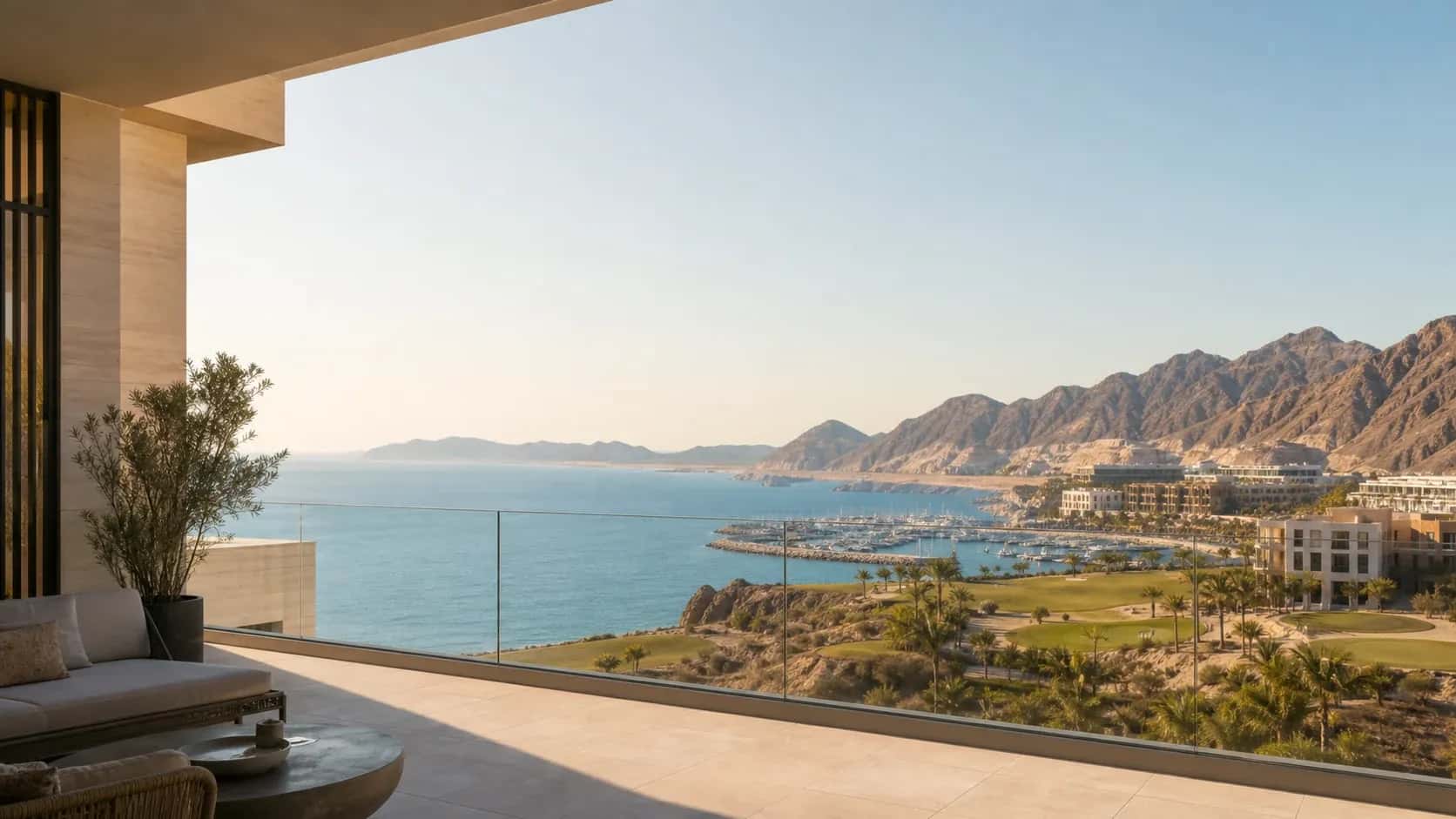
Real Estate in Oman: How to Invest Wisely in ITC Projects
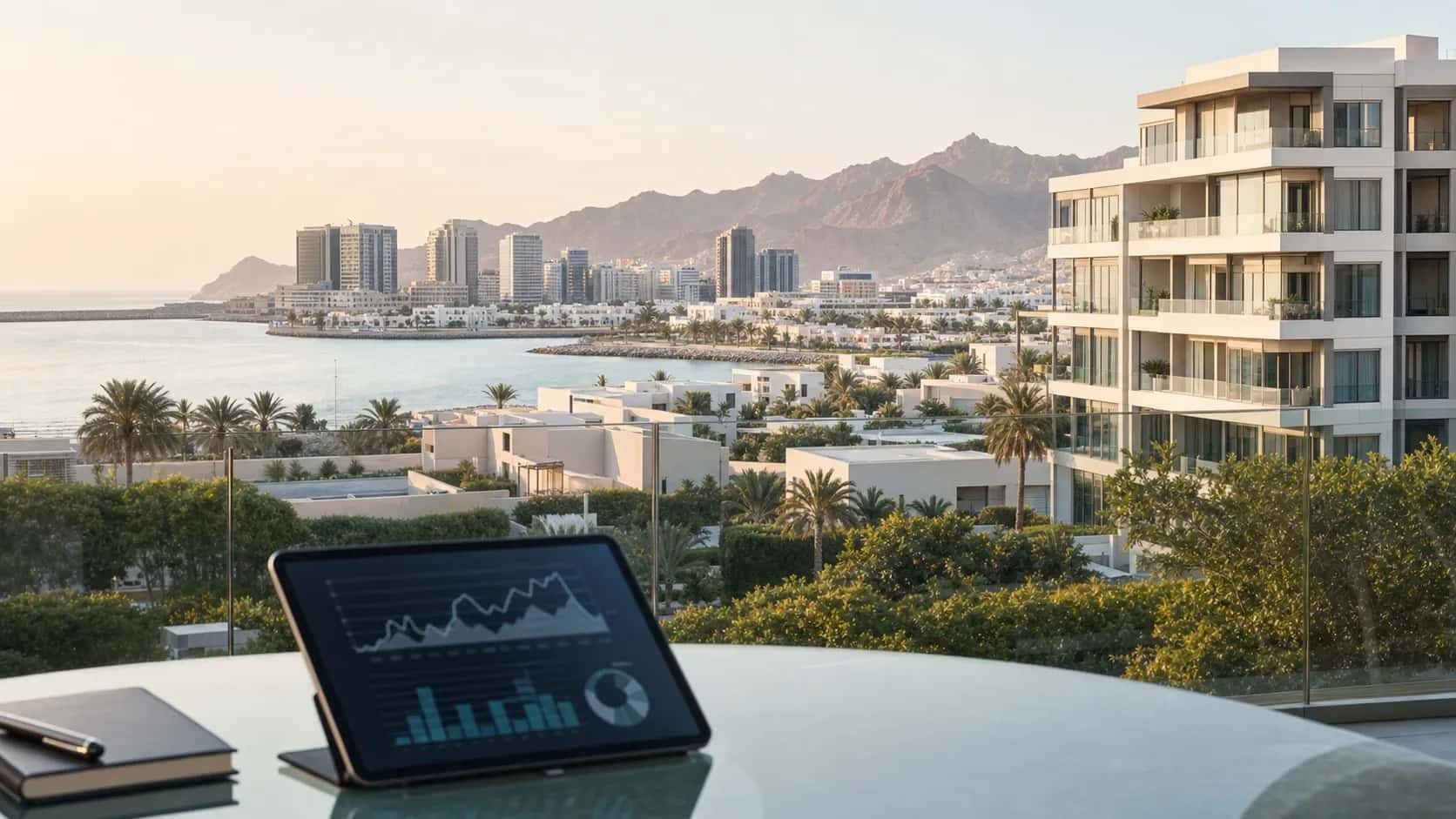
Oman's real estate market in Q1 2026: what do Savills data tell the investor?
Investing in Oman: Muscat and Salalah - where property value is growing