


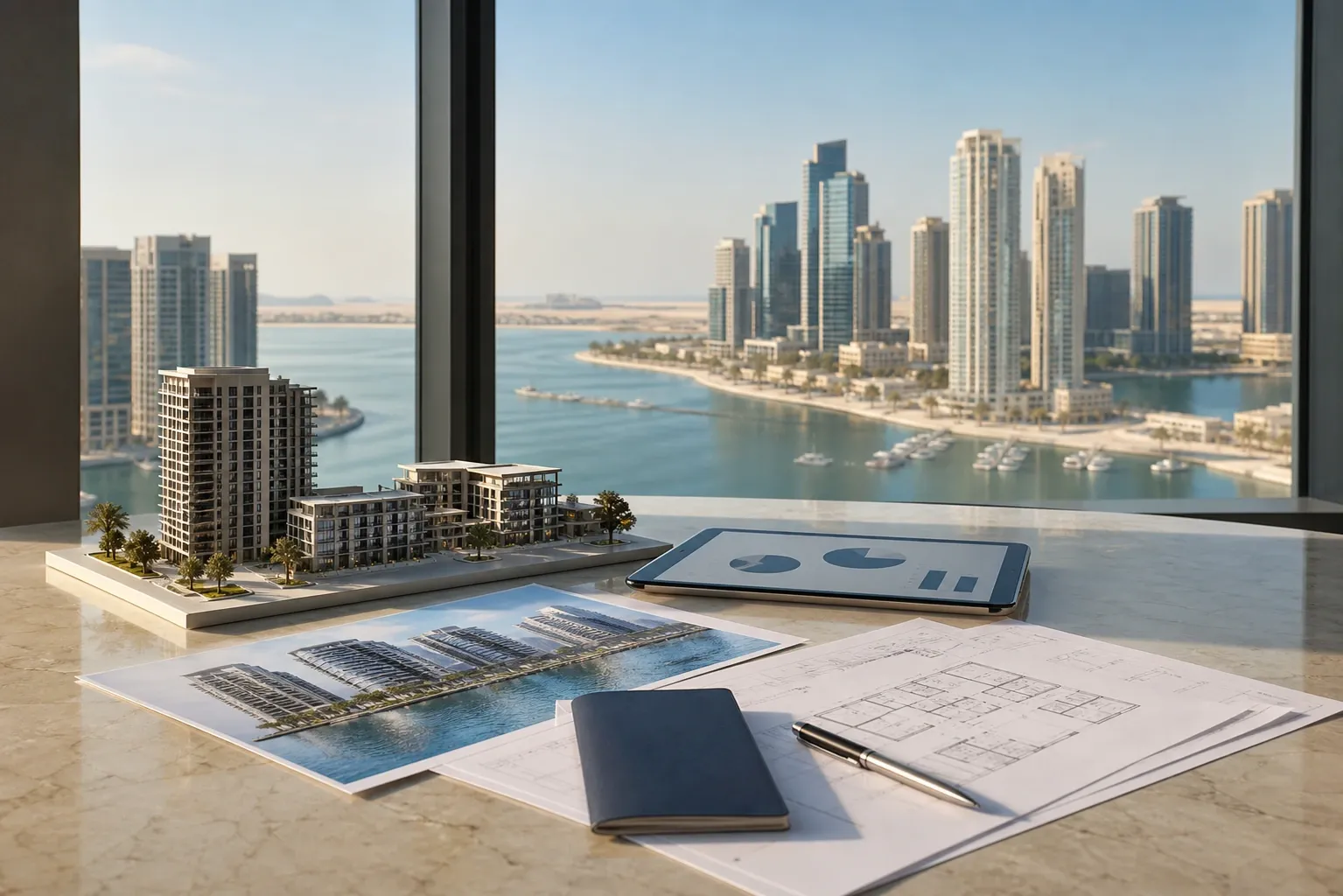
Buying property in Dubai and a residency visa - a guide
Purchasing real estate in Dubai can be a basis for applying for residency status, but it does not happen automatically. An investor must distinguish between three orders: property ownership rights, the value qualifying the asset for the visa procedure, and the administrative decision of the immigration authority. In practice, this means that the Title Deed, current valuation, payment status, and bank documents are just as important as the purchase price itself. The most frequently analyzed thresholds are 750,000 AED for the Dubai real estate investor path and 2,000,000 AED for the Golden Visa category or higher-level qualifications. However, these values must be confirmed on the day of application at the Dubai Land Department, GDRFA, ICP, or the appropriate service center. The official UAE portal describes the conditions for the Golden Visa and distinguishes between investor categories, so the financial threshold should not be treated as a guarantee of a specific length of stay without verifying the category. For a Polish investor, the core of the decision is not just the question of whether to buy an apartment in Dubai. It is more important whether the chosen property is located in a freehold zone, whether it has a properly registered title, whether the off-plan project is managed by a reliable developer, whether the funds are going into an escrow account, and what the Service Charge will be after handover. Only after putting these elements together can one analyze ROI, yield, capital appreciation, and the residency plan.


Article summary
The most important conclusions from the article in 30 seconds.
Purchasing real estate in Dubai can be a basis for applying for residency status, but it does not happen automatically. An investor must distinguish between three orders: property ownership rights, the value qualifying the asset for the visa procedure, and the administrative decision of the immigration authority. In practice, this means that the Title Deed, current valuation, payment status, and bank documents are just as important as the purchase price itself. The most frequently analyzed thresholds are 750,000 AED for the Dubai real estate investor path and 2,000,000 AED for the Golden Visa category or higher-level qualifications. However, these values must be confirmed on the day of application at the Dubai Land Department, GDRFA, ICP, or the appropriate service center. The official UAE portal describes the conditions for the Golden Visa and distinguishes between investor categories, so the financial threshold should not be treated as a guarantee of a specific length of stay without verifying the category. For a Polish investor, the core of the decision is not just the question of whether to buy an apartment in Dubai. It is more important whether the chosen property is located in a freehold zone, whether it has a properly registered title, whether the off-plan project is managed by a reliable developer, whether the funds are going into an escrow account, and what the Service Charge will be after handover. Only after putting these elements together can one analyze ROI, yield, capital appreciation, and the residency plan.
Dubai is a market where real estate can serve two functions simultaneously: securing capital exposure outside of Poland and forming the basis for residency in the United Arab Emirates. However, the latter function is often oversimplified in sales communications. Purchasing an apartment is not synonymous with automatic residency, and the right to submit an application does not yet guarantee a positive administrative decision.
An investor should start with a risk model. If the goal is solely exposure to capital appreciation, location, resale liquidity, and the price-to-rent ratio will be more important. If the goal is also residency, formal requirements come into play: property type, minimum asset value, payment status, absence of legal disputes, developer status, and a complete set of documents. This article guides you through both dimensions in parallel, without promising profits and without treating the visa procedure as a mere add-on to the transaction.
For regional context, it is worth comparing Dubai with Oman. Oman uses the Integrated Tourism Complexes (ITC) model, where foreigners can purchase real estate in designated projects, and residency rights are linked to owning a property in such a project. Dubai and Oman differ in market scale, pace of urbanization, cost structure, tenant profile, and the nature of daily life. This is precisely why comparing these jurisdictions makes sense for an investor who does not buy impulsively, but rather builds a capital and residency plan.
—
How does freehold property law work in Dubai?
Legal foundations for foreigners
Freehold in Dubai means the right of full ownership of a property in designated areas where foreigners can own a unit, a share in common areas, and the right to sell, rent, or transfer the asset in accordance with local regulations. This must be distinguished from leasehold, which is the right to use a property for a specific period, usually based on a long-term lease. From a residency perspective, the difference is fundamental: an investor applying for a visa should verify whether the property provides a title accepted by the authorities and whether the registration document meets the requirements of a given path.
The most recognizable freehold areas include, among others, Dubai Marina, Downtown Dubai, Palm Jumeirah, Business Bay, Jumeirah Village Circle, Dubai Hills Estate, and selected parts of Mohammed Bin Rashid City. However, the name of the district alone is not enough to make a decision. Within a single area, there may be differences between buildings, investment phases, and property types. Therefore, an investor should analyze the specific plot, project number, and registration status, rather than just the marketing name of the location.
The Dubai Land Department (DLD) acts as the central authority registering transactions, title deeds, and selected verification services. In practice, the Title Deed is one of the most important documents, as it confirms the owner's right to the unit. In the case of secondary market purchases, the investor should check the consistency of the owner's data, the title number, property type, area, encumbrances, and any potential obligations toward the homeowners' association or building operator.
It is also worth separating the history of market liberalization from the current basis of the transaction. Dubai opened selected areas to foreign buyers in the early 2000s, which changed the structure of demand and led to the development of the freehold market. Today, however, decisions should not be based on the general "freehold" slogan, but on registration documents, the DLD procedure, and the current legal status of the specific unit.
How to verify title and location before purchase
The investor's first action should be to verify whether the property is located in an area that allows foreign ownership. Information from a sales brochure is not enough. You must request the plot number, building number, the name of the master developer, and a document confirming the project's status. If the purchase concerns the secondary market, you should compare the data with the seller and check the title using the DLD: Verify Title Deed service.
The second action is to assess the impact of Service Charges on yield. In Dubai, a high standard of common areas can mean high maintenance costs, which lower the net rental income. Before signing a contract, it is worth asking for historical Service Charge statements, planned increases, the scope of association services, sinking fund fees, and any arrears on the part of the current owner. Gross yield without this adjustment can be misleading.
The third action is to analyze exit liquidity. In locations like Dubai Marina or Downtown Dubai, demand is broad, but supply competition is also high. In newer projects, especially in mixed-use developments, the investor should check the handover schedule for subsequent phases, the number of similar units in the building, the tenant structure, and the infrastructure plan. Capital appreciation depends not only on the address itself but also on the supply of comparable units over a several-year horizon.
The fourth action is to check the purchase's compliance with the residency goal. If the goal is a visa, the investor should ask before booking whether the given property, at a specific value and financing structure, can be used in the procedure. You should request a list of documents required by the current service channel and confirm whether purchases across multiple properties can be aggregated. This question must be asked before paying a deposit, not after transferring funds.
—
Visa for real estate – current investment thresholds and Golden Visa
Residency paths: 2-year vs. 10-year
In the debate about real estate in Dubai, the shortcut "buy a property and get a visa" often appears. From an investor's point of view, this shortcut is too broad. Investor visas, the Golden Visa, and other residency categories have their own requirements, validity periods, and procedures. Purchasing a property can be the basis for an application, but the authority examines the fulfillment of formal conditions, not just the fact that the investor signed a contract with a developer.
The 750,000 AED threshold is often indicated as the minimum value for the Dubai real estate investor path, especially for ready properties with a Title Deed. The 2,000,000 AED threshold is associated with the Golden Visa and a higher category of investment. As of the date of source verification, the official UAE Government portal describes the conditions for the Golden Visa and indicates a minimum capital of AED 2 million for investors in public investment or real estate categories, but it also distinguishes validity periods depending on the category. Therefore, one should not treat a 10-year visa as an automatic consequence of every purchase for 2,000,000 AED.
For properties financed with a mortgage or installment plan, what matters is not only the price from the contract but also the capital actually paid and bank documents. The investor should ask the bank for a No Objection Certificate (NOC), balance confirmation, security structure, and the scope of data that may be provided to the authorities. With external financing, the problem is not the loan itself, but whether a given path recognizes the investor's net value and whether the required portion of capital has actually been paid.
The Golden Visa can provide important operational benefits: a wider scope for sponsoring family members, greater flexibility in staying outside the UAE, and greater predictability in planning stays. Still, it should not be treated as a product added to an apartment. It is an immigration procedure in which the investor must undergo medical examinations, obtain an Emirates ID, verify documents, and pay administrative fees. The amount of fees and the sequence of steps should be confirmed on the day of application, as service channels, forms, and requirements can change.
How to approach investment thresholds in practice
The first stage is asset qualification. The investor should determine whether the property value is calculated based on the purchase price, current valuation, the sum of several properties, or the net value after accounting for a mortgage. If the plan includes purchasing several smaller units, you need to ask whether a given procedure allows for aggregating asset values. If the purchase concerns an off-plan property, you must confirm whether the Oqood, paid capital, and construction progress are sufficient for an application, or if a Title Deed will be required after the unit is handed over.
The second stage is investor qualification. You should prepare a passport with the appropriate validity period, personal data consistent with bank documents, photos, medical insurance, family documents when sponsoring loved ones, and potential criminal record certificates if required by the current process. If the investor acts through a company, you must check in advance whether corporate ownership qualifies for a given path or if it is necessary to hold the title directly as an individual.
The third stage is cost control. In addition to the property price, you should include DLD fees, the agent's commission, NOC costs, potential developer fees, Service Charges, the cost of medical insurance, translations, document legalization, and medical exams. The investor should compare ROI after all costs, not just the gross yield provided in sales materials.
The fourth stage is procedure updates. Before submitting an application, it is worth checking the UAE Government: Golden Visa, GDRFA announcements, ICP requirements, and service instructions at Amer or the appropriate center. If an advisor provides a specific fee or deadline, ask for the source and date of verification. When planning a family relocation, it is best to include a time buffer, as medical exams, Emirates ID, and document legalization can extend the process.
—
Ready apartments vs. off-plan – differences in visa procedures
Property status and the timeline for obtaining residency
The ready and off-plan markets in Dubai differ not only in payment schedules. They also differ in the importance of documents in the residency procedure. For a ready unit, the investor usually works with a Title Deed, which is the document confirming ownership. For an off-plan project, the intermediate document is the Oqood, which registers the purchase in the project before the building is completed. This is an important distinction, as authorities may treat a completed property and a property under construction differently.
In practice, many investors choose off-plan due to payment schedules, the potential for capital appreciation before handover, and the ability to enter at an earlier stage of the project. From a residency perspective, this choice requires greater caution. If the residency plan has a short deadline, a ready unit may be operationally simpler because the document path is more direct. If the investor accepts a longer horizon and focuses on value growth, off-plan may make sense, but it should not be bought for an immediate visa without written verification of the conditions.
Situations arise where an investor considers applying even before the building is completed, based on the amount paid and the stage of work progress. Such a scenario must be treated as dependent on current rules and the specific case. You must confirm whether a minimum payment is required, whether construction has reached a specific threshold, whether the developer can provide documents confirming the project's status, and whether the authorities accept such a set of documents at a given moment. Do not assume that a rule applied in one project will work in another.
Operational risk for off-plan also concerns family strategy. If the investor plans to move children to school, open a bank account, sign a long-term lease agreement, or sponsor family, a delay in converting the Oqood into a Title Deed can have a real cost. In that case, the construction schedule becomes an element of the residency plan, not just an investment issue.
Step-by-step: due diligence of an off-plan project
Step 1: check the project and developer registration
The investor should ask for the project number, developer name, plot number, construction schedule, and confirmation of off-plan sales registration. You should ask whether payments go to an escrow account assigned to the project, which bank handles the account, and whether the installment schedule is linked to work progress. A lack of clear answers to these questions is a signal for further verification, not for negotiating the price.
Step 2: evaluate the schedule in terms of residency
If the goal is a visa, you must ask from what moment the investor's documents can be used in the procedure. It is worth asking for a list of documents that the developer will issue after booking, after signing the SPA, after a specific payment, and after handover. You should also determine whether the planned handover date is realistic in light of work progress, permits, and the scale of the entire mixed-use development.
Step 3: compare net numbers
Off-plan valuation should include the price per meter, payment plan, finishing costs, Service Charges after handover, potential rent, expected vacancy period, and property management costs. ROI without operational costs is a helpful metric, not a basis for a decision. When comparing with a ready unit, it is worth calculating how much capital remains unproductive until the building is completed.
Step 4: check the exit strategy
Before signing the SPA, you must ask when a contract assignment (transfer) is possible, what fees the developer charges, whether there are restrictions on resale before paying a certain percentage of the price, and what the supply competition is in the same project. A high number of similar units being handed over at the same time can lower short-term yield and make it difficult to sell within the assumed timeframe.
—
Dubai vs. Oman – comparison of residency systems and lifestyle
Regional alternative: Integrated Tourism Complexes (ITC)
Oman is a different type of market than Dubai. It does not compete in the scale of transactions or the number of skyscrapers. Its model for foreign investors is based, among other things, on Integrated Tourism Complexes, i.e., designated tourism and residential projects where a foreigner can buy property and link it to residency rights. For a Polish investor, it is important that ITCs organize foreign access to the market, but at the same time, they limit the choice to specific locations and projects.
In projects such as Jebel Sifah, Muscat Bay, or selected investments in the Muscat area, the investor analyzes not only the purchase price but also facility management, rental restrictions, common costs, seasonal rental potential, tourist profile, and the infrastructure plan. In Oman, the market is less liquid than in Dubai, so the decision requires more patience and a more thorough project assessment. A smaller scale can be an advantage for an investor looking for a second-home market, but a disadvantage for an investor expecting quick resale.
The Greater Muscat Structure Plan (GMSP) and Oman's broader urban planning assumptions are important because they direct the capital's development toward organized transport, services, residential areas, and tourism functions. In practice, this means that capital appreciation does not depend solely on a sea view. It depends on whether the project is integrated into a real infrastructure plan, whether it has access to roads, services, a marina, recreational areas, and tenant demand. In this context, Oman Vision 2040 is a reference point for an investor who wants to understand state policy, not just a developer's offer.
Dubai remains a global business hub, with high recognition, a large number of expats, and an active rental market. Oman provides different exposure: more depends on the quality of a specific project, the pace of tourism development, management stability, and the infrastructure plan. Therefore, the comparison should not be: "which market is better?" It should be: "which market fits the investor's goal, horizon, liquidity tolerance, and residency need?"
How to compare residency and investment systems
The first criterion is the legal mechanism. In Dubai, the investor checks freehold, Title Deed, investment threshold, and visa procedure. In Oman, they check the ITC status, the right of acquisition by a foreigner, residency documents linked to the unit, and restrictions resulting from project regulations. These are not identical systems, so they should not be compared solely by price per meter.
The second criterion is the demand profile. Dubai relies on a broad short- and long-term rental market, business mobility, and international demand. Oman more often requires an assessment of tourism, seasonality, the operator, management standards, and second-home potential. If the investor expects high liquidity, Dubai may be a more natural choice. If a calmer regional exposure is important, Oman may be a rational addition to the portfolio.
The third criterion is the cost of maintenance. In both countries, one must analyze Service Charges, administrative fees, insurance, rental management, and legal costs. In Oman, it is additionally worth checking the operator's rules, the owner's share in revenue, restrictions on using the unit, and the condohotel model structure if the project provides for such a model. In Dubai, supply competition and the cost of maintaining common areas are important.
The fourth criterion is the residency scenario. If the priority is a quick stay in the UAE, Dubai requires precise matching of the property to the procedure. If the investor considers residency in Oman, they should check legal residency in Oman for Polish citizens and the ITC mechanism. In both cases, the decision should result from documents, not from a sales conversation.
—
Documentation and checklists – how to prepare for the process?
Operational aspects of applying for a residency visa
The residency procedure starts before the purchase, not after picking up the keys. The investor's biggest mistake is signing a contract and only then asking whether the asset qualifies for a visa. For a property in Dubai, you must confirm in advance the property type, minimum threshold, payment status, required documents from the developer or seller, and whether the property has a Title Deed, Oqood, or another intermediate document.
The basic package of documents includes a passport valid for at least the required period, photos, personal data consistent with transaction documents, a Title Deed or the correct project document, payment confirmations, bank documents for financing, medical insurance, and family documents if the investor wants to sponsor a spouse or children. Depending on the path, additional requirements may arise, including certificates, medical exams, and documents confirming the absence of specific administrative risks.
Polish civil status certificates, powers of attorney, and selected family documents may require a sworn translation, legalization at the Ministry of Foreign Affairs, and confirmation by the appropriate diplomatic mission. You should check the sequence of actions, as a document prepared in the wrong order may be rejected despite correct content. In practice, this means the need to create a list of documents even before signing an SPA or a property transfer agreement.
Medical exams, Emirates ID, insurance, and entries in immigration systems are elements of the procedure that affect the schedule. An investor planning a family relocation, a change of tax residency, or opening bank accounts should include a time buffer. A tourist visa should not be confused with a residency visa, and the purchase itself should not be treated as confirmation of residency rights.
Step-by-step: investor checklist before buying for a visa
Step 1: confirm the investment goal
The investor should write down whether the priority is residency, rental income, capital appreciation, currency diversification, or a second home. If the goal is a visa, the property must be analyzed through the prism of the procedure. If the goal is mainly ROI, the visa can be an additional element, but it should not overshadow the quality of the asset.
Step 2: check property documents
For the secondary market, check the Title Deed, owner data, absence of Service Charge arrears, NOC, and payment history. For off-plan, check the Oqood, escrow account, project registration, construction schedule, assignment terms, and developer documents. In both cases, compare the data from the documents with the data in the contract.
Step 3: ask the developer or seller questions
Ask whether the property qualifies for the chosen visa procedure, what portion of the price must be paid, whether several assets can be aggregated, what documents will be issued after paying the deposit, when an NOC can be obtained, and what fees will be charged upon sale, assignment, or handover. Answers should be verifiable by document.
Step 4: compare investment indicators
It is worth comparing the price per meter, gross yield, net yield, Service Charges, vacancy levels, management costs, transaction fees, resale liquidity, and supply competition. For off-plan, add the cost of time, i.e., the period during which capital is frozen without rental income. For a ready unit, check the technical condition, the tenant, the lease agreement, and modernization costs.
Step 5: assess risks before signing the contract
Risks include asset non-compliance with visa requirements, changes in administrative thresholds, construction delays, Service Charge increases, rental difficulties, limited exit liquidity, incomplete legalization of family documents, and financing problems. Each of these risks should have an answer: a document, a contract condition, a cost buffer, or a decision to abandon the purchase.
Step 6: confirm the procedure on the day of application
Before submitting an application, re-check the requirements at the DLD, GDRFA, ICP, Amer, or the appropriate service center. It is worth writing down the date of verification, the name of the service, the list of documents, and fees. This is especially important for the Golden Visa, as this term covers various categories and does not always mean an identical validity period for every real estate investor.
—
Investment and legal consultation with PlanoGroup
If you are planning to purchase real estate in Dubai or Oman with residency in mind, it is worth starting with an asset audit, not with choosing an apartment. The PlanoGroup team can help organize the process: from market analysis, through document verification, to comparing Dubai with Oman as an investment and residency jurisdiction.
PlanoGroup works with investors interested in premium real estate in Spain, Oman, Dubai, Saudi Arabia, and Montenegro, as well as with individuals analyzing investment apartments, second homes, land in Oman, post-purchase property management, and golf trips. The starting point should be a conversation about the capital goal, documents, and risks, not just the unit's square footage.
An initial market overview can be started from the PlanoGroup website and the current list: PlanoGroup foreign real estate offers. If the priority is a decision between Dubai and Oman, it is worth comparing the freehold mechanism in Dubai with the ITC system in Oman and analyzing which model better fits the residency plan.
FAQ
Does buying an apartment in Dubai automatically grant residency?
No. Purchasing real estate can create a basis for applying for a visa, but it is not an automatic grant of residency status. The investor must meet conditions regarding asset value, property type, documents, payments, and the immigration procedure. If the property is off-plan, you must additionally check whether documents available before the building is completed are accepted in a given path. It is safest to confirm asset qualification before signing a reservation agreement.
What does freehold mean in Dubai?
Freehold means full ownership rights in designated areas where foreigners can own real estate. This gives the owner the ability to sell, rent, and transfer the asset in accordance with local regulations. For an investor, however, it is important that freehold is not a standalone visa guarantee. The property value, Title Deed document, payment status, and current authority requirements also count.
Can a property bought with a mortgage count toward a visa?
It can, but do not assume this without verification. What matters is the level of capital actually paid off, the mortgage structure, the No Objection Certificate from the bank, and whether a given procedure recognizes the gross property value or the net value of the investor's share. Before a purchase financed with a mortgage, you must ask the bank and legal advisor what documents will be required and whether they will be issued in a format accepted by the authorities.
Can the owner include their family in the visa?
In many residency paths, the owner can sponsor family members, but the scope of the entitlement depends on the visa type, the main applicant's status, and family documents. Marriage and birth certificates may require translation and legalization. The investor should plan these activities in advance, as delays in family documents can postpone relocation even when the property itself is already registered.
How to avoid mistakes when buying for a visa in Dubai?
The most important thing is to reverse the order of decisions: first, check the visa requirements, then choose the asset. Before booking, confirm the property type, value threshold, document status, required payment level, possibility of mortgage financing, Service Charge costs, and the NOC issuance procedure. It is also worth comparing a ready unit with an off-plan one in terms of the Title Deed acquisition date and the realistic residency timeline.
Is Oman an alternative for an investor analyzing Dubai?
Yes, but it is an alternative with a different profile. Oman bases foreign purchases, among other things, on Integrated Tourism Complexes, where the property can be linked to residency rights. The market is less liquid than Dubai and requires a thorough analysis of the project, operator, maintenance costs, and infrastructure plans. For a second-home investor or someone looking for exposure to Muscat, this can be a rational direction, but it does not mechanically replace the Dubai market.

Author
Mariusz Sawicki
MEMBER OF THE MANAGEMENT BOARD
He combines experience from the financial and real estate sectors, which allows him to support clients in making informed and well-thought-out investment decisions. He views real estate purchases not only through the lens of emotions, but primarily through data, security, and potential. He specializes in investment analysis and risk assessment, particularly in emerging markets such as Oman. In his work, he focuses on specifics, transparency, and a partnership-based approach.

Related articles
Legal stay in Oman for Polish citizens - what is worth knowing?


10 reasons why Polish investors choose Oman instead of the Emirates
ITC in Oman: what does it mean for a foreigner buying property?