


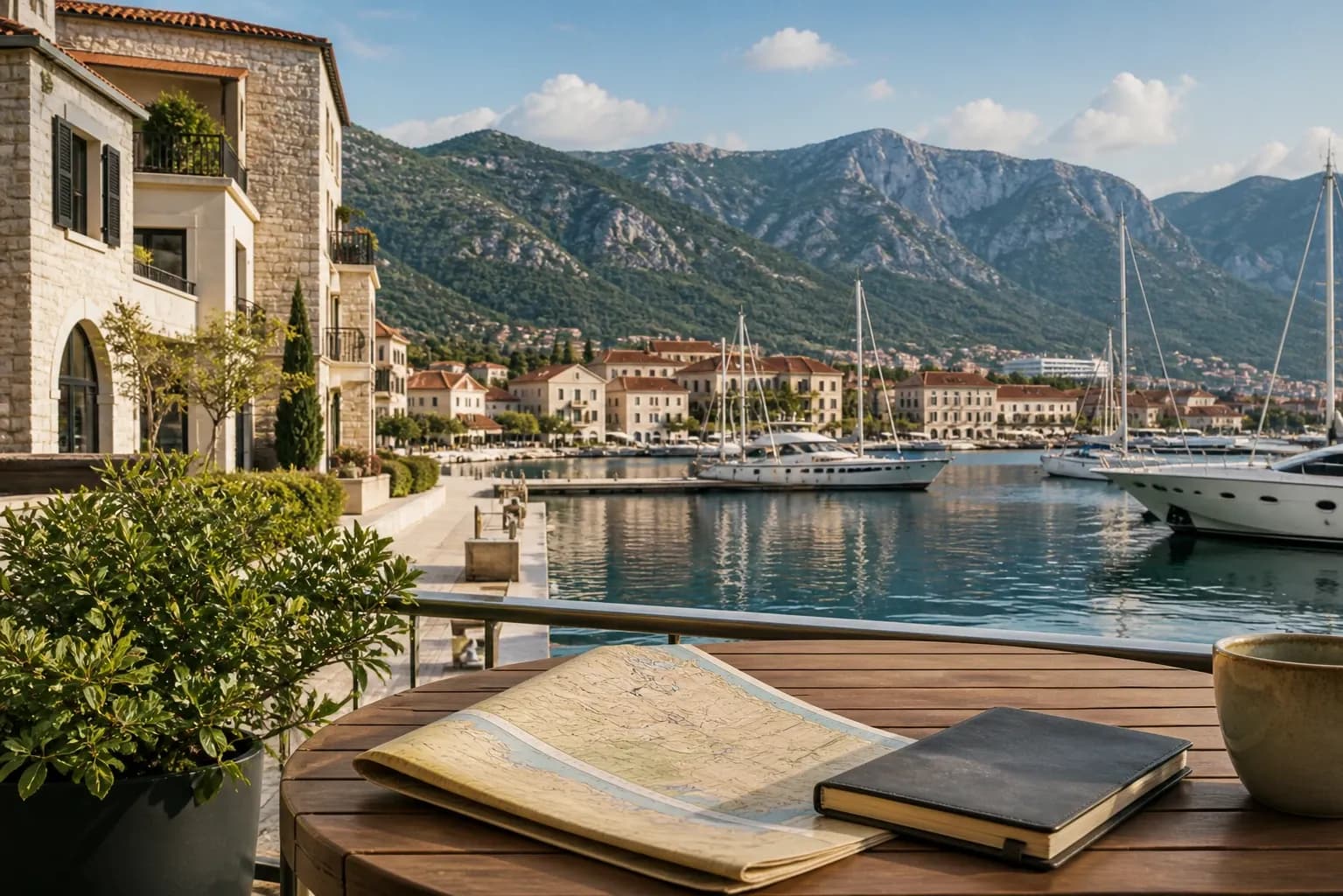
Montenegro in 48 hours: how to plan a scouting trip before buying a second home?
Montenegro can be an interesting destination for an investor looking for a second home, but a 48-hour reconnaissance should serve for selection, not a purchasing decision. The article shows how to evaluate Tivat, Luštica Bay, Kotor, Dobrota, Perast, and Prčanj in terms of logistics, parking, microclimate, services, maintenance costs, rental potential, documents, and risks before buying.


Article summary
The most important conclusions from the article in 30 seconds.
Montenegro can be an interesting destination for an investor looking for a second home, but a 48-hour reconnaissance should serve for selection, not a purchasing decision. The article shows how to evaluate Tivat, Luštica Bay, Kotor, Dobrota, Perast, and Prčanj in terms of logistics, parking, microclimate, services, maintenance costs, rental potential, documents, and risks before buying.
Montenegro can act as a lifestyle hedge in a Polish investor's portfolio: an asset combining private use, exposure to the tourism market, and diversification outside Poland. 48 hours on-site is not enough for a final purchase decision, but it is enough to filter out locations unsuited to your strategy. In Tivat, Luštica Bay, Kotor, Dobrota, Perast, and Prčanj, you need to look not only at the view, but also at logistics, microclimate, parking, services, maintenance costs, documents, and the actual tenant profile.
Montenegro is a European Union candidate country, as confirmed by the European Commission, and a member of NATO since June 5, 2017, as confirmed by NATO. This is an important background for an investor, but it is not an independent argument for purchasing a specific apartment. Geopolitical status, marina development, premium tourism, and lower tax burdens than in parts of Western Europe can improve market perception. However, the exact address, legal status, rental model, Service Charge, resale liquidity, and whether the location functions off-season remain the deciding factors for the quality of the investment.
This article guides you through a 48-hour reconnaissance in Montenegro as it should look from the perspective of someone who isn't just going to look at the Adriatic. The goal is to gather field data that is not visible in a developer's brochure: travel time, noise, condition of common areas, sun exposure, availability of services, differences between new projects and older buildings, and rental signals visible in marinas, restaurants, and service points.
—
Strategic 48-Hour Plan: Tivat, Luštica Bay, and the Bay of Kotor
Day 1: Tivat, Porto Montenegro, and Luštica Bay
The first day should start in Tivat, because this town best shows how Montenegro is building a premium segment around the marina, airport, and mixed-use projects. Porto Montenegro is a good benchmark, but not because every apartment in the area automatically has high liquidity. Its analytical value lies in allowing you to check how a managed environment operates: the marina, retail, restaurants, hotels, short-term rental, owner services, and everyday convenience away from the beach.
In Porto Montenegro, it is worth walking the same route at different times of day. In the morning, check logistics: traffic upon arrival, parking availability, cleanliness of common areas, delivery pace, and visibility of maintenance crews. In the afternoon, you will see sun exposure, shade, wind, and whether the terrace has actual utility. In the evening, the client profile becomes visible: whether day-trippers, marina residents, second-home owners, yacht crews, hotel guests, or local residents dominate. For ROI, this difference is greater than the distance to the sea itself.
The second point of the day should be Luštica Bay. This is a different model than strict Tivat: more planned, dispersed, based on a master plan, a marina, residential districts, and year-round infrastructure. The Official Luštica Bay Website describes the project as a town by the water with a marina and several districts, and the Luštica Bay offer at PlanoGroup can be treated as a starting point for comparing available options. On-site, checking the view from the balcony is not enough. You need to compare finished buildings with stages under construction, ask about the Service Charge, rental rules, parking, beach access, maintenance costs for common areas, and who actually manages the owner after handover.
Three questions are crucial for the investor. First: is the project useful off-season, or does it function mainly within a short holiday window? Second: is the infrastructure already ready, or is it yet to be built and part of a future promise? Third: will the purchased apartment compete with hundreds of similar units in the same project, or does it have a differentiator that defends the price upon rental and resale?
The practical task for the first day is simple: after each location, write down five ratings on a 1-5 scale: access, parking, quality of common areas, access to services, and utility off-season. Do not judge emotions yet. First, build a comparable table, because this is what will later help distinguish an apartment that is good for tourism from an asset that fits a second-home strategy.
Day 2: Heritage Loop - Kotor, Dobrota, Perast, and Prčanj
The second day is best dedicated to the so-called heritage loop: Kotor, Dobrota, Perast, and Prčanj. This route shows the other face of the Bay of Kotor: old buildings, narrower roads, a greater role for conservation, a different pace of life, and a completely different demand structure than in Tivat. Kotor has a strong tourist magnet, and the Natural and Culturo-Historical Region of Kotor is on the UNESCO list. For an investor, this means recognition, but also limitations and greater caution during renovations, adaptations, and development.
In Kotor and the surrounding area, you need to pay attention to what sales offers leave out: availability of parking spaces, width of the access road, distance to everyday services, noise level from tourist traffic, humidity in older buildings, and the possibility of technical modernization of the unit. Old stone houses can have high character value, but their renovation requires different calculations than buying an apartment in a managed investment. Documents, the opinion of a local lawyer, verification of permits, and a realistic CAPEX budget are necessary.
Dobrota offers a different perspective. A wide promenade, a longer waterfront, and better access to services can favor longer stays and rentals, but the specific address still determines the result. Prčanj tends to be more intimate, but narrow roads, afternoon shade, and lower parking availability can limit tenant convenience. Perast has strong recognition, but its scale and spatial limitations mean the purchase must be analyzed through the lens of conservation, guest service, and resale liquidity.
The most important criterion of the second day is: who will be the user of this address? A short-term renter looks for different conveniences than a second-home owner who comes a few times a year and wants peace, parking, easy access to a shop, and technical care in their absence. Kotor can generate strong tourist traffic, Tivat can better combine a marina and logistics, and Luštica Bay may suit an investor who prefers a managed ecosystem. None of these answers is universal.
After the second day, you should have a short shortlist, not a purchase decision. 48 hours serve to eliminate false assumptions: that a view always means liquidity, that proximity to the sea replaces parking, that old stone always yields a higher resale price, or that a project with a marina automatically ensures stable rentals. Only after this selection is it worth moving on to documents, negotiations, and the financial model.
—
Infrastructure and Logistics: What to Check On-Site Beyond Aesthetics?
Audit of "Hidden" Costs and Living Convenience
The most expensive mistakes in a second home often do not start with the purchase price, but with ignoring everyday utility. Therefore, during reconnaissance, you must perform a walkability test: walk on foot from the potential apartment to a grocery store, pharmacy, restaurant, marina, bus stop, or guest pick-up point. If the route is convenient only in a brochure and in practice requires a car for every activity, the model of rental and private use will be different.
The second test concerns noise. In Tivat, you need to check flight paths to the airport, traffic on main roads, construction sites, music from venues, and technical noise in common areas. In the Bay of Kotor, you must also contend with echoes from the mountains and narrow communication routes. It is best to return to the building three times: in the morning, in the afternoon, and in the evening. Only then can you see whether the location has a residential, tourist, or party rhythm.
The third area is utilities and technical stability. In the older parts of the Bay, ask about water, sewage, humidity, winter heating, summer air conditioning, internet, system pressure, and repair history. In new projects, ask about the Service Charge, the scope of technical maintenance, the renovation fund, emergency procedures, guarantees, and who contacts the administration when the owner is in Poland. A high standard of common areas is only valuable when the cost of maintaining it makes sense in a net model.
Alternative transport also matters. Tivat is convenient when flight connections are good, but the investor should also check access to Podgorica and Dubrovnik. This is important for the owner, the tenant, and a potential future buyer. If the apartment requires complex logistics upon every arrival off-season, demand may narrow down to shorter holiday stays.
On-site, take photos of utility meters, stairwells, facades of neighboring buildings, parking spaces, garbage cans, access roads, and the view from the windows at different times of day. Note the exposure: whether the apartment is sunny, whether it falls into shade in the afternoon, whether the terrace can be used in summer, or whether the unit may require extra heating in winter. In a narrow bay, microclimate differences can be greater than the differences between cities on a map.
It is also worth separating one-off costs from operational ones. Property transfer tax in Montenegro currently has progressive rates of 3%, 5%, and 6%, as described by ePorezi, and income and corporate tax rates in many categories fall within the 9-15% range, as synthetically shown by PwC Tax Summaries. However, this does not exempt you from an individual tax consultation. The investor should work on their own model: price, tax, notary, lawyer, equipment, Service Charge, insurance, operator, repair reserve, and vacancy periods.
—
Rental Potential and Microclimate: How to Read Market Signals?
Demand Signal Detection and Seasonality Analysis
Rentals in Montenegro must be read through local signals, not solely through nightly rate promises. The presence of hotel and resort brands is important because it shows where hospitality capital sees potential. One & Only Portonovi in Boka Bay is an example of a project that increases the international recognition of the region. However, this does not mean every nearby apartment will automatically achieve high occupancy. It is a sign of environmental quality, not a guarantee of ROI.
The first test of demand is the off-season. Check which restaurants, cafes, shops, and services operate in November, February, or March. A location that looks strong in July may have a much weaker rhythm in transitional months. For a second home, this is not always a problem if the goal is primarily private use. For rental and resale liquidity, however, it matters, because the annual result depends on how long the asset has real utility.
The second test is the marina. In Tivat, Luštica Bay, and Portonovi, it is worth asking about yacht traffic, occupancy of berths, guest profile, events, resident services, and seasonality. The point is not to treat a single conversation at the marina office as a market report. The point is to see whether demand stems from real infrastructure or just holiday atmosphere.
The third test is the microclimate. In the Bay of Kotor, shade, humidity, and exposure can be decisive. An apartment with a view may have lower utility if it quickly loses the sun in winter, requires intensive heating, and generates a risk of humidity. Conversely, a unit further from the first line may work better for long-term rentals if it has parking, convenient access, services, and a stable technical standard.
Tivat and Kotor serve different guest profiles. Tivat more often combines a marina, airport, shopping, restaurants, and convenience for people who want to spend time in a managed environment. Kotor relies more on history, the recognition of the old town, and intense tourist traffic. Tivat may be more convenient for marina-related rentals and second homes, while Kotor may work better for short tourist stays. However, the outcome depends on the specific address, parking, building condition, and rental management.
In your financial model, do not enter brochure rates as a certainty. Gather comparable rental offers, check availability calendars, ask the operator about costs, commission, private use rules, required equipment standards, and liability for damages. Only then calculate gross yield and net yield. For a premium investor, the net result after costs is more important than a high declared nightly rate in the peak season.
—
From Trip to Portfolio: How to Turn Observations into an Investment Decision?
Shortlist, Due Diligence, and ROI Model
Upon returning to Poland, do not start by browsing more offers. First, organize your notes. A good shortlist should contain a maximum of 2-3 microlocations and a few specific investment hypotheses: Tivat for liquidity and convenience, Luštica Bay for a managed project, Kotor/Dobrota for a combination of history and tourist traffic, Prčanj or Perast for a more private second home. Each hypothesis should have its own risks.
Next, proceed to due diligence. For the secondary market, the basis is the List nepokretnosti (Real Estate Extract). You need to check the owner, encumbrances, mortgages, compliance of square footage, land status, building permit, and occupancy permit. For older buildings, the legality of modernization, the housing association, the condition of the roof, installations, and repair history must also be verified. For the primary market, developer documents, the schedule, finishing standards, delay penalties, payment rules, guarantees, and the post-handover management model are important.
It is worth comparing your own observations with existing PlanoGroup materials. The article How to buy property in Montenegro? A complete guide organizes the purchasing process, the text Property prices in Montenegro helps embed the location in a broader price context, and Buying property in Montenegro step by step expands on formalities and transaction costs. These contents do not replace individual analysis, but they help avoid missing basic questions.
The ROI model should be calculated in three variants: cautious, baseline, and positive. In each, enter the exact same cost structure: purchase price, property transfer tax or VAT included in primary market prices, notary, lawyer, translator, registration fees, equipment, Service Charge, utilities, insurance, operator commission, cleaning, textile replacement, technical reserve, rental marketing, and vacancies. If the project is off-plan, add the cost of time: capital may be tied up before rental begins.
The exit strategy is just as important as the entry. Ask the question: to whom will you sell this apartment in 5-10 years, and why will this buyer choose this exact address? An investor looking for a second home may have different criteria than a buyer focused on short-term rentals. Montenegro's potential EU membership can improve market perception, but it will not replace local liquidity, document status, and asset management quality.
—
How PlanoGroup Can Help After the Reconnaissance?
If you are planning a 48-hour reconnaissance trip to Montenegro, it is worth preparing it as a mini due diligence rather than a regular city break. PlanoGroup can help select locations, plan the route, prepare questions for the developer or seller, compare offers, analyze documents with a local lawyer, and build a post-purchase cost model.
The greatest value of consulting appears after returning from the field. That is when emotions are fresh, but they need to be translated into numbers: a ranking of microlocations, risk comparison, document checklist, transaction budget, potential rental model, and management plan for the owner's absence. This is the moment when good reconnaissance becomes a real investment filter.
FAQ
Is 48 hours enough to evaluate a location?
It is enough for an initial selection, but not for a purchase decision. In 48 hours, you can compare Tivat, Luštica Bay, Kotor, Dobrota, Perast, and Prčanj, and check logistics, parking, services, daily rhythm, and microclimate. However, you cannot complete legal due diligence, confirm all operational costs, or build a reliable ROI model in that time. Reconnaissance should result in a shortlist and a list of documents to verify.
When is the best time to make such a trip?
It is worth seeing the location outside the main peak as well as during periods of higher traffic, because it is then easier to assess seasonality, traffic jams, and operating services.
What should I bring for apartment viewings?
Prepare a list of criteria, a phone for photos and notes, a power bank, an offline map, a simple evaluation table, and questions about the Service Charge, parking, internet, utilities, insurance, rental rules, and booking conditions. It is worth taking photos not only of the view, but also of stairwells, utility meters, facades, neighboring buildings, the access road, and parking spaces. Upon return, these photos are often more important than marketing materials.
Do Tivat and Kotor serve the same guest profile?
Not entirely. Tivat is more often associated with a marina and travel convenience, Kotor with the tourist traffic of the old town, and the outcome depends on the specific address.
How to combine a trip with investment analysis?
After each location, record your observations in the same structure: access, services, seasonality, rental competition, costs, technical risks, legal questions, and potential tenant profile. Do not mix awe at the view and operational data in a single evaluation. First build the table, then return to emotions. This makes it easier to reject a location that is good for a weekend, but weak as a portfolio asset.
Can a foreigner buy property in Montenegro without a company?
In typical cases, the purchase of an apartment or house by a foreigner is possible without setting up a company, although restrictions may apply to agricultural, forestry, or strategic land. You must always check the specific legal status of the property and current regulations. For larger projects, plots, or unusual assets, the purchase structure may require additional legal analysis.
What costs must be included in the ROI model?
The minimum includes the purchase price, tax or VAT included in primary market prices, notary costs, lawyer, translator, registration fees, equipment, Service Charge, utilities, insurance, rental operator, cleaning, repairs, marketing, equipment replacement, and vacancy periods. If the apartment is bought off-plan, you must add the risk of delays and the time during which capital does not generate income. ROI without these items is just a simplified sales indicator.

Author
Patrycja Kordys
BOARD MEMBER | SALES DIRECTOR
For nearly 17 years, she has been associated with the premium real estate market. She gained her experience working with international clients—particularly German and English speakers—ensuring the highest standard of service and communication. After years of working on the Costa del Sol, she now focuses on the dynamically developing market of Oman, where she supports clients in discovering new investment opportunities and lifestyles. She combines professionalism with a natural ease in building relationships, ensuring that the purchasing process is smooth and stress-free.

Related articles
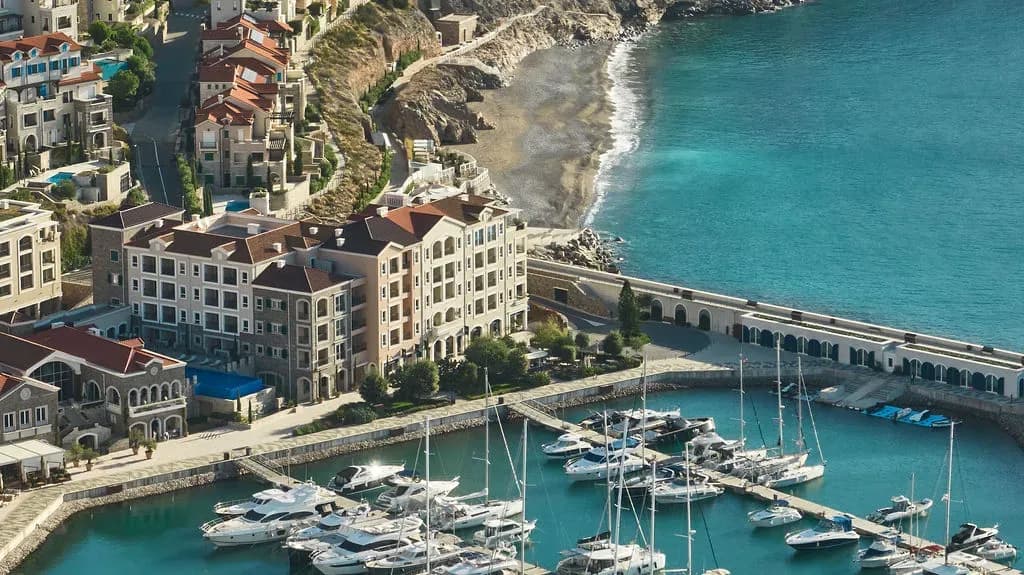
How to buy real estate in Montenegro? A complete guide
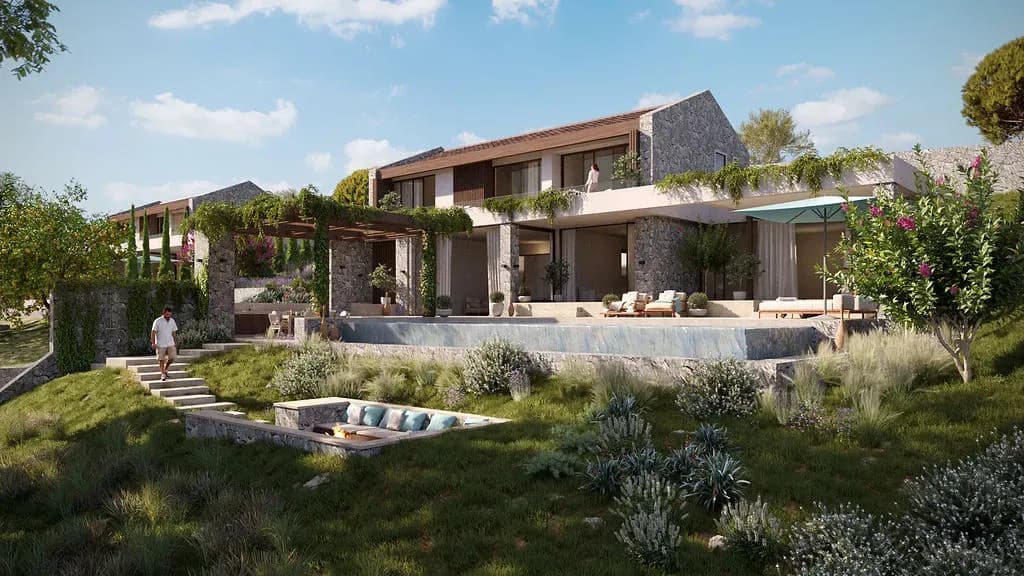
Real estate prices in Montenegro – how much does an apartment cost and is it worth investing?
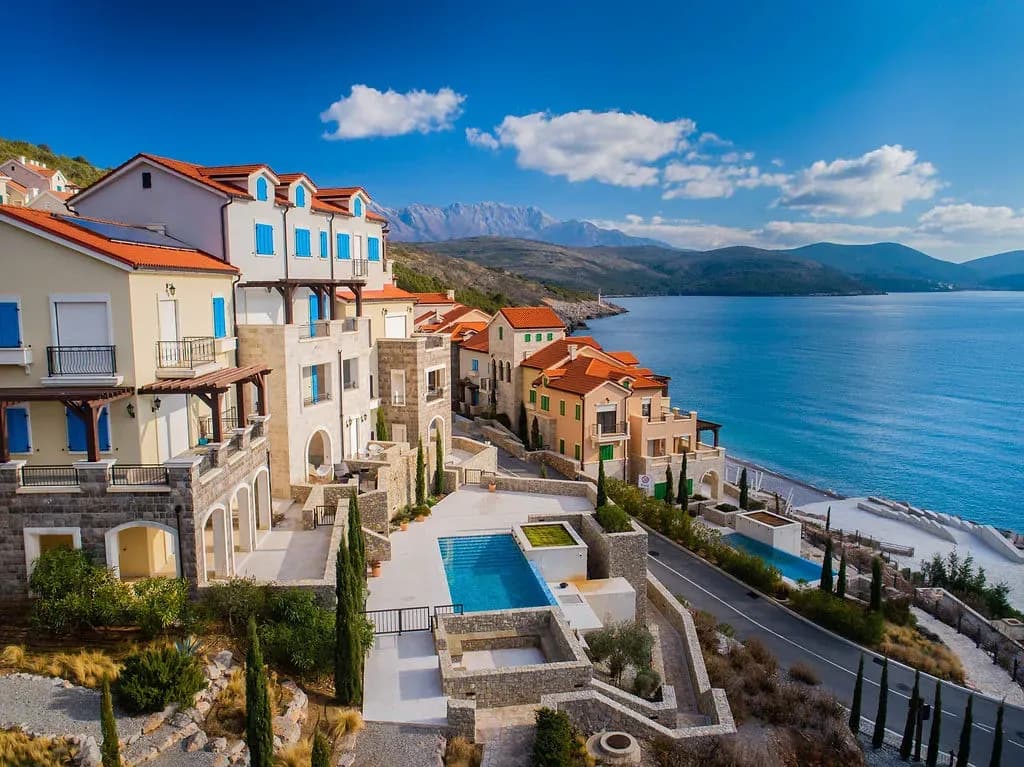
Buying property in Montenegro step by step – what does the process look like at the notary?