


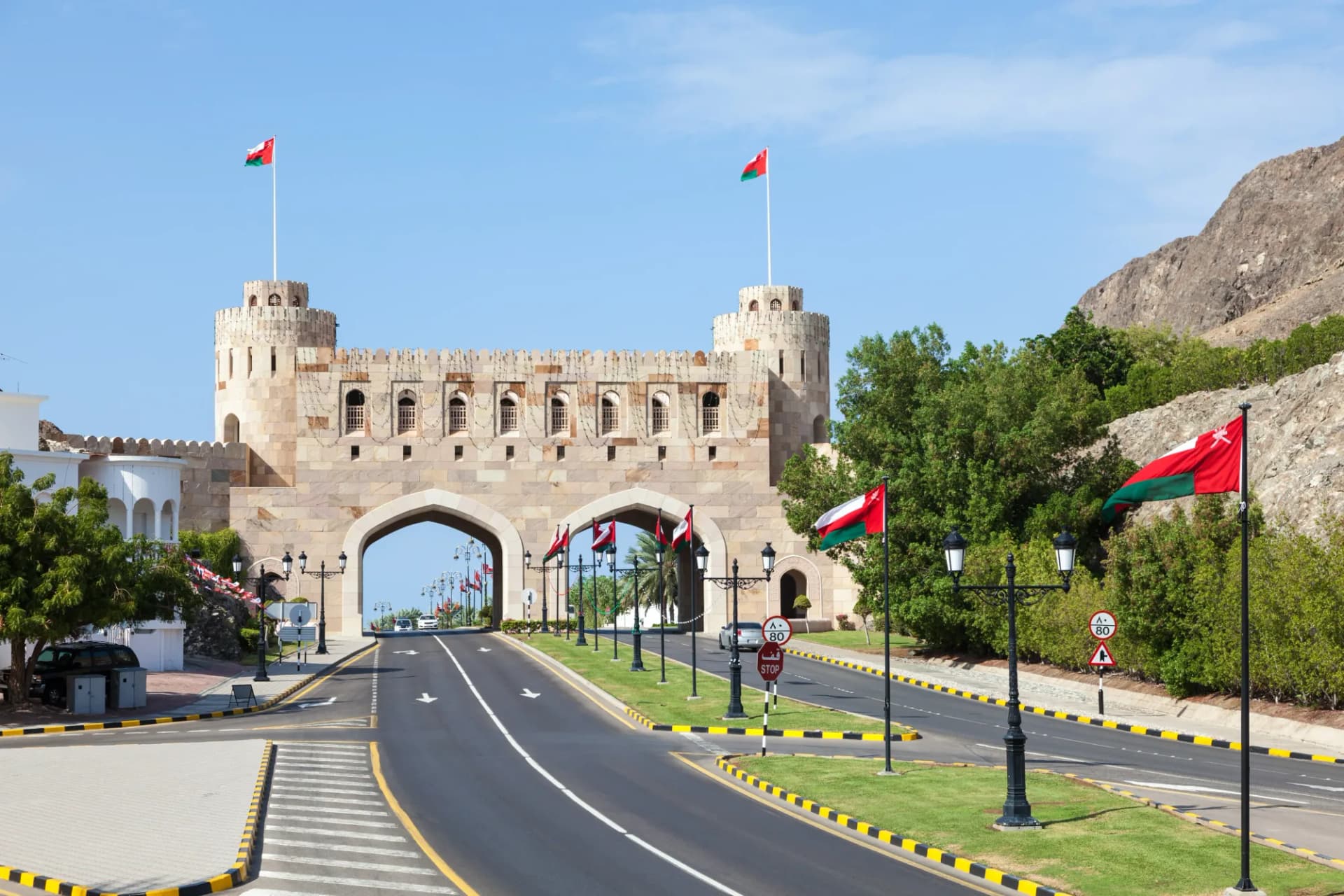
Greater Muscat Structure Plan 2040 and the real estate market in Oman: how to read the city plan before buying an apartment
The Greater Muscat Structure Plan forecasts the population of Oman's capital to grow to 2.7 million residents and the number of jobs to double by 2040. The city's development focuses on five strategic zones, connecting business, tourism, and logistics functions via a new metro network. Investments in Integrated Tourism Complex (ITC) areas allow foreigners to obtain full property ownership and a residency visa. A key factor influencing the capital value of apartments is their integration with planned transport infrastructure and economic hubs.


Article summary
The most important conclusions from the article in 30 seconds.
The Greater Muscat Structure Plan forecasts the population of Oman's capital to grow to 2.7 million residents and the number of jobs to double by 2040. The city's development focuses on five strategic zones, connecting business, tourism, and logistics functions via a new metro network. Investments in Integrated Tourism Complex (ITC) areas allow foreigners to obtain full property ownership and a residency visa. A key factor influencing the capital value of apartments is their integration with planned transport infrastructure and economic hubs.
Why should a city development plan interest someone buying an apartment in Oman? In mature markets, property valuation depends not only on the building's standard, the view, and the address, but also on whether a given location is situated within a real corridor of infrastructure, jobs, services, and housing demand. In Muscat, the point of reference is the Greater Muscat Structure Plan (GMSP), which is the spatial and economic plan for Oman's main metropolitan area through 2040.
The GMSP translates the goals of Oman Vision 2040 into concrete urban decisions: where the population should grow, where job centers should be established, how public transport should run, and which areas should be densified versus those that should be protected or developed more cautiously. For an investor, this means that purchasing an apartment in Muscat should not be evaluated solely through the prism of square footage and entry price. Equally important are: the GMSP zone, access to future transport hubs, the tenant profile, the Integrated Tourism Complex (ITC) status, the developer's quality, service charges, and the realistic horizon for capital appreciation.
According to the GMSP, Greater Muscat had approximately 1.4 million residents in 2022, and this is expected to reach approximately 2.7 million by 2040. In the same timeframe, the number of jobs is expected to grow from approximately 890,000 to approximately 1.83 million. This is not a single price forecast or a slogan from a sales brochure. It is the urban context that allows one to assess where sustainable rental demand might emerge, and where an investor risks purchasing an asset that is years ahead of the infrastructure.
This article analyzes how to read the GMSP from the perspective of a real estate investor: which Muscat zones have different economic functions, how infrastructure affects ROI, when off-plan might make sense, how to assess risk, and how to combine city plan analysis with the legal verification of a project. For broader market context, it is worth comparing this analysis with the PlanoGroup article on why Muscat is the most stable real estate market in the Gulf, and when evaluating the purchase process, also with the guide on whether and how a foreigner can buy property in Oman.
—
Why is the Greater Muscat 2040 development plan a key indicator for an investor?
Urbanization as a driver of capital value growth
Speculative buying is usually based on the assumption that the price will rise because the market is trendy and supply is limited. An investment based on spatial planning starts with a different question: will the location be better connected, more densely populated, richer in services, and closer to workplaces in the future than it is today? The GMSP allows this question to be asked in an organized manner because it divides Greater Muscat into zones with clearly described functions, population targets, economic clusters, and infrastructure needs.
The most important difference is that the GMSP is not a residential investment brochure. It is a document that describes the future layout of the city: transport development, densification of selected areas, protection of environmental lands, location of public services, the role of waterfronts, wadi parks, business centers, and knowledge districts. For an apartment buyer, this means the ability to separate a project integrated into the city's logic from a project that sells only a visualization.
The population growth from approximately 1.4 million residents in 2022 to approximately 2.7 million in 2040 means pressure on housing, schools, services, healthcare, transport, and common spaces. However, not every square meter will benefit to the same extent. The GMSP indicates that greater population concentration is to occur closer to City and Central areas, rather than solely through further urban sprawl. This is significant for an investor because high resale liquidity and stable rentals appear more often where the density of functions grows, not just the number of buildings.
From the point of view of capital appreciation, the attractiveness of a project therefore depends on several layers. The first is legal status: whether a foreigner can buy the unit as freehold, most often in an ITC zone. The second is the urban layer: whether the project lies within the reach of planned job centers, services, and transport. The third is the operational layer: whether the service charge, building management, and tenant profile allow for maintaining net profitability. Only by combining these elements can one arrive at a sensible ROI assessment.
Step by step: how an investor should use the GMSP before buying
- Determine the exact location of the project on the map and assign it to one of the five GMSP zones: Muscat City, Muscat Central, Al Amerat Garden Suburb, Muscat Metro, or Barka Town.
- Check if the project lies within an ITC area or another legally permitted purchase model for foreigners. Ask the developer for a document confirming the land status and the possibility of transferring ownership to a foreign investor.
- Compare the project location with maps of LRT, BRT, commuter rail corridors, TOD hubs, and planned job centers. Mere proximity to a major road is not enough; for rentals, access to work, services, and transport is more important.
- Assess whether the project benefits from the city plan at the moment of receiving the keys or only in a distant horizon. If the infrastructure is to be built after the building is delivered, account for the transition period in your rental assumptions.
- Ask the developer about the construction schedule, escrow account, projected service charge, rental management model, history of previous completions, and the standard of maintenance for common areas.
- Compare the project with offers in the same zone, not just across all of Muscat. The price per square meter in Muscat Central should be compared with other projects in the business zone, not with a resort far from job centers.
In practice, PlanoGroup can act as an analytical filter: checking whether the project fits into the GMSP logic, whether it has a status available to a foreign investor, and whether the projected rental profile fits the investment goal. It is not about replacing due diligence, but about organizing the questions an investor should ask before paying a reservation fee.
—
Which Muscat development zones have the greatest investment potential?
Characteristics of the five pillars of the Greater Muscat Structure Plan
The GMSP divides Greater Muscat into five zones. Each has a different urban and economic profile, which is why there is no single universal answer to the question of where to buy an apartment. An investor should first decide whether they are looking for stable long-term rentals, exposure to business and MICE, off-plan potential, a second-home asset, or land related to future urbanization.
Muscat City is the historical and tourist core of the city. It includes areas related to Muttrah, Ruwi, Old Muscat, waterfronts, resorts, and coastal villages. The GMSP describes here the regeneration of Muttrah, Ruwi, Muscat Old City, Al Ghubra Waterfront, and the development of tourism, cultural, and mixed-use functions. For an investor, this means demand based on tourism, services, partly on lifestyle rentals, and on proximity to places with a recognizable urban function. In this zone, projects that not only offer a view but also have access to services and transport routes are particularly important.
Muscat Central is the "missing middle" of the GMSP and the future main business area. The plan points here to Airport City, the Ghala Business and Finance Cluster, Muscat Central Waterfront, Madinat Al Irfan, Al Mouj, and the connection with the Oman Convention & Exhibition Centre. This is a zone where rental demand may be more strongly linked to high-level employees, the business sector, finance, MICE, the airport, and corporate services. For an apartment investor, this means the possibility of building a strategy for long-term or mid-term rentals for expats and management staff.
Al Amerat Garden Suburb has a different character. The GMSP describes it as a suburban zone with the planned Al Amerat tunnel, wadi park, centers for education, sports, skills, and light manufacturing. The potential of this zone is more dependent on improving accessibility and developing local services. For a residential investor, this may be an area with a lower entry threshold but one requiring a more careful assessment of the time it takes for infrastructure to reach full utility.
Muscat Metro includes, among others, Al Mabella, Al Khoud, Hail, As Seeb, and Sultan Haitham City. The GMSP defines it as a "city within a city" and links it to the rapid transport axis, Sultan Qaboos University, Knowledge Oasis Muscat, GU-Tech, knowledge and innovation zones, the As Seeb waterfront, and densification around LRT corridors. From an investor's point of view, this is a zone where the tenant profile can combine knowledge sector employees, students, technical staff, families, and people looking for a better connection to the city.
Barka Town serves as the economic and food supply base for the metropolis. The GMSP describes it as a "food basket and green lung," with a role for agriculture, fishing, Khazaen Economic City, logistics, the port, and future rail connections. This is not naturally the first choice for an investor looking for a premium apartment in the center of rental demand, but it may be significant for investors analyzing land, logistics, a longer urbanization horizon, and exposure to economic development outside the Muscat core.
Step by step: how to compare zones before choosing a project
- Define the purchase goal: long-term rental, second home, resale after completion, capital protection, exposure to off-plan, or investment land.
- For each analyzed offer, write down the GMSP zone, the nearest economic cluster, planned transport, and the main type of rental demand.
- Compare the price per square meter only with projects of a similar profile. An apartment in a business zone does not compete with a resort unit in the same way.
- Check if there are anchor projects nearby: Madinat Al Irfan, Oman Convention & Exhibition Centre, Airport City, Al Mouj, Knowledge & Innovation Corridor, Ruwi regeneration, or As Seeb TOD.
- Assess exit liquidity. A unit near a future employment center may have a different secondary buyer than a unit in a holiday zone.
- Compare the project with real offers, e.g., Marriott Residences Aida for exposure to AIDA, The Sustainable City Yiti for the Yiti area, or LA VIE Residences in the context of Madinat Al Irfan.
In ITC zones, the legal risk for a foreigner is usually easier to manage than in projects that are not open to global investors. However, this does not automatically mean a good investment. ITC status is a starting point, not a complete answer. Equally important are: real infrastructure, schedule, management, and the price-to-projected-demand ratio.
—
What does job growth mean for the long-term rental market?
Correlation between economic diversification and rates of return
The GMSP assumes employment growth in Greater Muscat from approximately 890,000 jobs in 2022 to approximately 1.83 million in 2040. This is one of the most important numbers for a residential investor because sustainable long-term rental demand is not created solely by tourism. It is created where people work, where companies open offices, where transport exists, and where daily life does not require constant commuting across half the city.
The plan indicates a change in the structure of the economy. In 2022, a large part of employment was concentrated in construction, trade, and manufacturing, and many jobs were lower-paid. By 2040, the GMSP predicts a stronger share of sectors such as business and finance, knowledge and innovation, ICT, green manufacturing, logistics, and business tourism. For the rental market, this means a change in the tenant profile: foreign specialists, management staff, knowledge sector employees, expat families, and people associated with economic projects in the Central and Metro zones may become more important.
According to the GMSP, Muscat Central is to become the main business hub, served by multimodal transport. This is significant for premium rentals because corporate tenants more often choose a predictable location: close to the office, airport, services, restaurants, healthcare, schools, and event facilities. The Oman Convention & Exhibition Centre and Madinat Al Irfan reinforce this logic because they generate demand not only for tourism but also for business and conferences.
Muscat Metro, in turn, focuses part of the knowledge and innovation potential. The GMSP points to the connection of Knowledge Oasis Muscat, Sultan Qaboos University, GU-Tech, Innovation Park, and the Al Khoud and As Seeb areas. In the long term, this may create demand for housing in projects well-connected to universities, incubators, and workplaces. Here, ROI analysis should include not only rent but also the future liquidity of the unit for knowledge sector employees.
For an investor, it is important to distinguish between rental yield and capital appreciation. In a finished project in a mature location, current cash flow and vacancy levels carry more weight. In an off-plan project in a growth zone, a larger part of the investment thesis may consist of future value growth, but this requires greater discipline: payment stages, schedule, quality of the contractor, and confirmation that key infrastructure is not just a marketing promise.
Step by step: how to check rental demand around a project
- Identify the nearest job clusters described in the GMSP: CBD/Ghala, Airport City, Madinat Al Irfan, Al Mouj, Knowledge & Innovation Corridor, Ruwi, Rusayl, Al Misfa, KEC.
- Ask the developer what tenant profile they assume in the financial model: expat families, corporate employees, short-term rentals, MICE, second home, students, or the service sector.
- Compare the commute to workplaces during rush hour, not just the distance in kilometers. In Muscat, the quality of the connection matters more than the map alone.
- Check if there are schools, medical services, retail, recreational spaces, and public transport nearby. A long-term tenant evaluates daily convenience, not just lobby standards.
- Ask for data regarding the projected service charge and maintenance costs. A higher gross rent may not translate into a higher net ROI if operating fees are poorly calculated.
- Compare the offer with the current real estate portfolio in Oman, e.g., with PlanoGroup offers in Oman and projects in Muscat that have a different tenant profile.
Job growth is more important for a long-term investor than seasonal growth in tourist traffic because it stabilizes demand throughout the year. Tourism can strengthen short-term rentals, but work, education, services, and mobility determine whether an apartment has real utility off-season.
—
Do Muscat Metro and new infrastructure guarantee price growth?
The Transit-Oriented Development mechanism in Omani conditions
Infrastructure does not guarantee price growth by itself. However, it can significantly change the function of a location if it is linked to building density, workplaces, services, and real demand for movement. The GMSP describes the development of public transport as one of the mechanisms to counteract urban sprawl and improve accessibility. The plan includes LRT, BRT, commuter rail, TOD hubs, feeder routes, park and ride, and connections with the future GCC Rail.
The strongest element is the planned rail infrastructure. The GMSP indicates 55 km of LRT/Metro corridor by 2040, 42 stations, expected daily boardings at the level of 300,000, and the potential for over 450,000 daily boardings upon full implementation of transport and land-use strategies. The document also emphasizes that the railway is to create an urban spine, an axis along which city densification is possible.
For an investor, this means that property value may rise not because a station appears on the map, but because a better structure of life is created around the station: more services, shorter commutes, higher density, better rental liquidity, and a more predictable daily life. The GMSP provides, among other things, for the reduction of parking requirements for projects located close to mass transport: within a radius of 200 m, 500 m, and 800 m from stations, there are various levels of reduction. This indicates that the plan treats access to transport as a real factor in district design.
However, the risk is overhype. An investor should not assume that every plot along a planned transport corridor will automatically rise in price. One must distinguish between three situations: a project near existing infrastructure, a project near an approved and funded section, and a project near a concept requiring further decisions. Each of these situations has a different risk profile.
The GMSP itself indicates that rail infrastructure requires cost-benefit analyses, feasibility studies, corridor securing, and refinement of the role of individual lines. This is important information: the plan provides direction but does not replace schedule verification. An investor should therefore look at Muscat Metro as a factor strengthening the investment thesis, not as an independent guarantee of growth.
Step by step: how to verify the impact of transport on ROI
- Determine if the project lies near an LRT, BRT, commuter rail, TOD hub, or just a main road. These categories do not have the same investment value.
- Check the walking distance to the planned station or hub. In your analysis, use walking time, not a radius on a map. A barrier in the form of a road, wadi, or lack of sidewalk can change the assessment of the location.
- Ask the developer whether the sales documentation indicates a specific infrastructure project or just a general narrative about city development.
- Compare the date of key handover with the projected stage of infrastructure. If the unit is ready before the transport, account for lower occupancy in the first years.
- Assess whether services, retail, education, healthcare, and public spaces are planned around the station. A TOD without mixed functions has a weaker impact on rentals.
- In your ROI calculation, prepare two scenarios: a base one without transport impact and a scenario with improved accessibility. The difference between them will show how much of a premium you are paying for the future.
- Muscat Metro and transport infrastructure may be one of the most important investment factors until 2040, but only in locations where transport connects with employment, services, and density. For a foreign investor, this means the necessity of working on maps, schedules, and numbers, not on the general belief that the metro raises prices.
—
How to check if a chosen project lies in a safe investment zone?
Legal and strategic verification of an investment apartment
For a foreign investor in Oman, one of the most important concepts is the Integrated Tourism Complex (ITC). In practice, this is a category of projects where foreigners can purchase real estate on terms permitted for non-Omani investors. From the point of view of a buyer from abroad, ITC status is the first filter: without clear legal confirmation, it makes no sense to move on to analyzing the view, finishing, or potential rent.
The GMSP indicates that the number of Integrated Tourism Complexes is to grow: in Muscat from 4 to 8, and in South Al Batinah from 0 to 3. The document links ITCs with a broader strategy of tourism, MICE, waterfronts, resorts, and new economic zones. This is important because an ITC is not just a residential format. It is a tool for attracting capital, tourism, services, and foreign property users.
However, one must separate two things: the right to purchase and the quality of the investment. A project may have a formula available to foreigners, but it still requires an assessment of the developer, schedule, service charge, management standard, resale liquidity, and connection to the GMSP. ITC status lowers some legal risks but does not eliminate market risks.
There is also an important difference between projects available to foreign investors and local projects or those intended mainly for citizens of Oman and the GCC. A global investor should check whether they can acquire the unit as freehold, whether there are resale restrictions, whether the property can support obtaining residency, and what documents are required for the transfer of ownership.
In the GMSP, one can also see the role of large projects and entities associated with the development of strategic city areas. Madinat Al Irfan, Airport City, Al Mouj, Ghala CBD, Muscat Central Waterfront, Muttrah regeneration, Ruwi regeneration, or Yiti function as elements of a larger plan, not isolated points on a map. For an investor, this means the necessity of checking whether a given project has a real functional neighborhood, not just a general reference to Oman Vision 2040.
Step by step: documents and questions before buying
- Ask for a document confirming ITC status or another legal title enabling purchase by a foreigner. Do not rely on the seller's verbal declaration.
- Verify whether the unit is sold as freehold, what rights the owner has, and whether there are restrictions on resale or rental.
- Ask about an escrow account for an off-plan project: where it is maintained, what payments go into the account, and what conditions trigger subsequent tranches.
- Ask for a template of the sales contract, payment schedule, description of the service charge, property management plan, and rules for using common areas.
- Check if the project is located in a GMSP zone consistent with your strategy: business, tourism, knowledge, resort, logistics, or mixed-use.
- Ask what infrastructure stages will be ready upon key handover and which are dependent on city plans at a later date.
- Compare the offer with the PlanoGroup guide on purchasing property in Oman as a foreigner and prepare a list of questions for a lawyer and the developer.
A controlled investment zone is not just a place where a foreigner can buy a unit. It is also a location whose function is understandable: who will live there, where they will work, how they will get there, what services they will have within reach, and why another buyer would buy this property in a few years.
—
Buying in a mature location vs. an emerging market: what to choose?
Strategies for building a real estate portfolio in Oman
An investor in Oman can choose two main approaches. The first is purchasing in a more mature location, where there is recognition, infrastructure, services, and easier rent assessment. The second is entering an off-plan project or an emerging location, where part of the potential results from the future implementation of the GMSP. Both strategies can make sense, but they respond to different goals and require different risk tolerances.
Mature locations, such as Al Mouj, Muscat Bay, or selected areas of Muscat City, offer greater demand clarity. An investor can assess the existing environment, management standard, competition, level of services, and real commute times. Often the entry threshold is higher, but operational risk is sometimes easier to understand. For an investor focused on more stable cash flow and less dependence on future infrastructure stages, such a variant may be more rational.
Emerging locations, such as areas associated with Madinat Al Irfan, Ghala CBD, Muscat Central Waterfront, Yiti, or selected projects in Muscat Metro, require a different analysis. Here, part of the investment thesis is based on capital appreciation: the investor buys before the city's functions are fully formed. The risk is time, infrastructure delays, competitive supply, and uncertainty regarding the pace of absorption by tenants.
For example, a project near Madinat Al Irfan may be logical for an investor who understands the role of Muscat Central as a zone for business, MICE, and transport. However, it is not enough to know that the area appears in the GMSP. One must check if the given building has a sensible schedule, whether the entry price reflects the stage of risk, and whether the target tenant will actually have a reason to live there.
In turn, a resort project in AIDA, Yiti, or Muscat Bay can serve as a second home and a short-term or mid-term rental asset. In such a case, ROI assessment must account for seasonality, management standard, common area costs, rental rules, and competition within the same bay or masterplan. A natural point of comparison may be offers such as Marriott Residences Aida, The Great Escape, or Zen Residences in Muscat Bay.
Step by step: how to calculate ROI for a finished unit and off-plan
- For a finished unit, determine the total price, transaction costs, projected gross rent, vacancies, service charge, management costs, and maintenance reserve.
- Calculate net yield, not just gross rent. In the premium segment, the difference between revenue and net result can be significant.
- For an off-plan project, write out the payment schedule and the moment when the unit will start generating revenue. Capital frozen for several years has an opportunity cost.
- Compare the project's price premium with its location relative to the GMSP. If the price already assumes the full success of infrastructure, the margin of safety is smaller.
- Ask the developer about the projected service charge and how it is calculated. A low purchase price may be corrected by high maintenance costs.
- Prepare a base, cautious, and optimistic scenario. Do not treat value growth as a certainty; write down what events must occur for capital appreciation to be real.
- Check if PlanoGroup can provide management after purchase or point to a rental operator. For an investor from abroad, the lack of local support may be a greater risk than the entry price itself.
Building a portfolio in Oman does not have to mean choosing one extreme. Some investors combine property in a more mature area with exposure to an off-plan project in a growth zone. Such an approach, however, requires discipline: every property in the portfolio should have a different function and clearly described risk.
—
What risks lurk for the investor and how to avoid them?
Realistic assessment of threats in the context of state strategy
The biggest mistake an investor can make is confusing a strategic plan with a guarantee of a specific project's outcome. The GMSP provides a strong context, but it does not mean that every apartment in Muscat will bring the expected ROI. The plan shows the city's direction, and the investment decision must go lower: to the plot, the developer, the contract, costs, and real demand.
- The first risk is entering too early into an area without developed infrastructure. The GMSP indicates growth zones, but not every stage will be implemented at the same time. Buying in the middle of the future may mean several years of lower rent, weaker liquidity, and the necessity of adding value through patience. Such a purchase may be justified only if the entry price compensates for the time risk.
- The second risk is over-reliance on developer materials. Visualizations often show a finished city, but an investor should ask about elements that affect usage from day one: access roads, parking, sidewalks, retail, services, management, security, technical inspections, and the schedule of subsequent stages. In an off-plan project, the difference between a finished building and a finished district is fundamental.
- The third risk concerns the service charge. In premium projects, common areas, pools, receptions, gardens, marinas, gyms, and security build the property's attractiveness but generate costs. If the service charge is poorly managed or grows faster than rents, net yield falls. An investor should look at the property as an operational asset, not just as a unit.
- The fourth risk is a mismatch between the product and the tenant. A resort apartment should not be calculated the same way as a unit near a business center. A location for MICE, expats, and finance sector employees has different seasonality than a second home in a bay. If the rental model does not fit the GMSP zone, the ROI on paper may be unrealistic.
- The fifth risk is a lack of diversification. An investor who buys several units in one phase of the same project takes on the risk of the developer, location, schedule, and supply in one package. A more sensible approach may be combining different profiles: business zone, resort project, finished unit, and off-plan, depending on capital and horizon.
Step by step: risk checklist before reservation
- Check the developer's history: previous projects, completion dates, quality of workmanship, management after handover, and owner reviews.
- Ask for legal documentation: ITC status, land title, contract template, freehold rules, payment schedule, and escrow account.
- Compare the service charge with similar projects. Ask what the fee covers, who manages it, and how it will be updated after handover.
- Analyze competitive supply in the same GMSP zone. A large number of similar units delivered at the same time may lower rents.
- Assess infrastructure on the day of key handover. List which elements already exist, which are under construction, and which are only planned.
- Ask about the exit strategy: to whom will you sell the unit in 5-7 years and why would that person choose this project instead of the competition?
- If you are buying remotely, determine who will represent your interests on-site: technical inspection, rental, service, contact with administration, and reporting.
Risk does not need to be avoided at all costs. It needs to be priced. The GMSP helps understand which risks result from the natural cycle of city development and which are risks of a specific project. This distinction is the basis of a professional investment decision.
—
PlanoGroup support in analyzing a project in Muscat
If you are analyzing the purchase of an apartment in Muscat, the starting point should not be a list of amenities, but a map of risk and utility: ITC status, location in a GMSP zone, access to transport, tenant profile, service charge, schedule, developer, and management plan after purchase.
PlanoGroup can help in comparing projects on the primary market in Oman, verifying basic investment documents, assessing ROI potential, and matching the location to the purchase goal. It is particularly important to distinguish whether you are buying an asset for long-term rental, a second home, resale after completion, or exposure to capital appreciation in a growth zone.
A well-conducted analysis does not eliminate uncertainty, but it allows you to avoid decisions based solely on a sales presentation. In the case of a market as strongly linked to urban planning as Muscat, the investor's advantage comes from the ability to read the city plan, not from reacting quickly to the next offer.
—
FAQ
Why does the Muscat development plan matter when buying an apartment?
The Greater Muscat Structure Plan shows where residents, jobs, services, public transport, waterfronts, parks, and economic zones are to be concentrated by 2040. For an investor, this means the ability to assess whether an apartment is located in a location that has a chance to benefit from urban function. The quality of the building itself is not enough if demand for daily use—rental, work, education, retail, and mobility—does not emerge around it.
Is every Greater Muscat zone good for an investor?
No. Each zone has a different function and a different risk profile. Muscat Central is more strongly linked to business, the airport, MICE, and the future CBD. Muscat City combines tourism, history, regeneration, and waterfronts. Muscat Metro has exposure to transport corridors, knowledge, and Sultan Haitham City. Al Amerat requires an assessment of accessibility and infrastructure implementation time. Barka Town is economically and logistically important, but it does not have to be the first choice for a premium apartment for rent. An investor should match the zone to the purchase goal.
Is it worth buying in a location that is only just about to develop?
It may make sense if the entry price accounts for time risk and the project has confirmed legal status, a good developer, and a logical link to the GMSP. Buying in an emerging location is based more on capital appreciation than on immediate cash flow. Before deciding, you must check the infrastructure schedule, masterplan stage, competitive supply, service charge, and the realistic profile of the future tenant. If these elements are unclear, the risk may outweigh the potential premium.
What numbers should I compare before choosing a project in Muscat?
The most important are: price per square meter, total purchase cost, payment schedule, projected gross rent, vacancies, service charge, management cost, net yield, time to job center, walking distance to services and transport, and planned supply of similar units in the same zone. In an off-plan project, it is worth adding the opportunity cost of capital and a scenario of handover delay. Comparison should take place within similar locations, not the entire Oman market.
Will Muscat's population growth automatically raise apartment prices?
Not automatically. Population growth from approximately 1.4 million to approximately 2.7 million residents creates pressure on housing and services, but prices also depend on supply, location, project quality, transport accessibility, maintenance costs, and secondary market liquidity. Locations where population growth combines with employment, services, and transport make the most investment sense. The number of residents alone is not enough if the project is poorly connected to the city's daily life.
How does ITC status affect property purchase by a foreigner?
Integrated Tourism Complex status is one of the most important legal filters for a foreign investor. It allows you to assess whether a foreigner can purchase a unit in a given project and what rights are associated with ownership. However, the investor should remember that ITC status does not replace investment analysis. You still need to check the developer, documents, escrow account, service charge, schedule, and the project's location relative to GMSP zones.
Does a project near a future LRT line always have better ROI potential?
Not always. Proximity to an LRT or TOD hub is valuable when transport is linked to services, workplaces, density, and real pedestrian access. If the station is behind a road barrier or the infrastructure is to be built long after the building is handed over, the impact on ROI may be delayed. The investor should check the planning stage, walking distance, schedule, and urban functions around the station.

Author
Mariusz Cieślukowski
CEO / FOUNDER
Co-founder of PlanoGroup and the person responsible for the development of the entire group. He built a brand based on quality, trust, and effectiveness, developing it in the Spanish market and subsequently expanding operations to further investment destinations. Today, he is developing PlanoGroup - a project that responds to the needs of clients who are looking not only for real estate but also for new opportunities for living, investment, and relocation. He specializes in trend analysis and building investment strategies in foreign markets - including Spain, Oman, and emerging locations such as Montenegro.

Related articles

Economy in Oman – stable growth and new opportunities for investors
Return on Investment in Oman – Which Properties Earn the Most? Market Analysis 2025

Why is Muscat the most stable real estate market in the Gulf? Analysis 2020–2025