



Real Estate Investment in Saudi Arabia: The 2026 Market
The real estate market in Saudi Arabia in 2026 should not be assessed solely through the prism of media-hyped projects. For an investor from Poland, three elements are more significant: the buyer's actual legal status, the location permitted for foreign ownership, and the quality of the developer's documentation. REGA, or the Real Estate General Authority, is organizing the market through the licensing of entities, the development of registries, and digital verification tools. This reduces some transactional risks but does not replace independent due diligence. The investor must still verify the title deed, the project license, the escrow account, and the terms of the sales agreement. Riyadh and Jeddah have different investment profiles. Riyadh bases its demand on corporate relocation, the public sector, management staff, and infrastructure development. Jeddah is closer to the second-home segment, Red Sea tourism, and mixed-use development projects. In both cities, ROI and yield should be calculated conservatively, after deducting the RETT tax, management costs, service charges, vacancy periods, and the risk of delays.


Article summary
The most important conclusions from the article in 30 seconds.
The real estate market in Saudi Arabia in 2026 should not be assessed solely through the prism of media-hyped projects. For an investor from Poland, three elements are more significant: the buyer's actual legal status, the location permitted for foreign ownership, and the quality of the developer's documentation. REGA, or the Real Estate General Authority, is organizing the market through the licensing of entities, the development of registries, and digital verification tools. This reduces some transactional risks but does not replace independent due diligence. The investor must still verify the title deed, the project license, the escrow account, and the terms of the sales agreement. Riyadh and Jeddah have different investment profiles. Riyadh bases its demand on corporate relocation, the public sector, management staff, and infrastructure development. Jeddah is closer to the second-home segment, Red Sea tourism, and mixed-use development projects. In both cities, ROI and yield should be calculated conservatively, after deducting the RETT tax, management costs, service charges, vacancy periods, and the risk of delays.
Saudi Arabia entered 2026 with a real estate market that is simultaneously more open and more formal than it was a few years ago. This is an important distinction. The mere fact that a foreigner can apply to purchase certain properties does not imply the free-market model known from selected freehold zones in Dubai. In the KSA, an investor must go through status qualification, location analysis, document verification, and compliance with administrative procedures.
Vision 2030 creates demand through the development of infrastructure, tourism, the service sector, and housing projects. However, it is not a sufficient argument for purchase on its own. For an investor, what matters is whether a given unit has a clean legal title, whether an off-plan project holds a Wafi license, whether payments are directed to an escrow account, and whether the financial plan accounts for RETT, service charges, and property management costs.
This article organizes the topic from the perspective of a premium B2C investor from Poland: an entrepreneur, someone diversifying capital outside of Poland, or an HNW individual. The goal is not to promise profit, but to demonstrate the market mechanisms, risks, and procedures that determine the security of a transaction.
—
New legal framework: The role of REGA and the foreign ownership law in 2026
Regulatory transformation: From restrictions to regulated opening
The Saudi real estate market is transitioning from a model of restricted access to one of controlled opening. The difference is fundamental: a foreign investor does not operate in a legal vacuum, but within a system designed to indicate who can buy, where they can buy, and what conditions must be met before registering ownership. Therefore, the first step is not choosing an apartment, but analyzing the legal basis for the acquisition.
The Non-Saudi Real Estate Ownership Law should be treated as a qualification framework, not a blanket approval for any purchase. Its practical significance depends on regulations, maps of permitted zones, the buyer's status, and the purpose of the acquisition. A residential unit for a private individual is analyzed differently than a commercial property for a company, and differently still than a purchase by an entity conducting investment activities with foreign capital.
REGA as a market control point
REGA acts as a regulator that influences market quality by licensing broker activities, supervising services, developing market indicators, and publishing verification tools. The official REGA portal also outlines the program for real estate ownership by non-KSA citizens and services related to registries, leasing, and off-plan projects. For an investor, this means the ability to verify whether the entity participating in the transaction operates within a regulated system.
In practice, one must ask not only for the developer's name but also for the license number, project status, registration form, progress reporting rules, and history of previous investments. If a project is sold before completion, it should be evaluated not just as a product, but as a regulated process: with a payment schedule, escrow account control, and clear conditions for releasing funds to the developer.
Market digitalization: Ejar, Najiz, and data transparency
The Ejar system organizes part of the rental market, and platforms linked to ownership registration, including Najiz, increase the importance of transactional data. For an investor, this is significant because the asking price is not the same as the transaction price. Valuation should be based on a comparison of real rental rates, vacancy periods, liquidity in a given district, and maintenance costs.
Digitalization limits the scope for sales based solely on project descriptions. If data on rentals, licenses, transactions, and land status are available, an investor should collect them before signing reservation documents. In the absence of data, one should adopt conservative assumptions and calculate a base-case scenario, not a promotional one.
Impact of regulations on price stability
Centralized supervision does not eliminate market cycle risk, but it can reduce some operational risks: dishonest brokerage, unclear listings, sales without proper approvals, or speculative pressure in immature locations. This is precisely why an investor should not treat the KSA as an "easy" market. It is a market of growing scale, but one that requires good documentation and local oversight.
Key takeaway for the investor: In Saudi Arabia in 2026, the greatest value lies not in the promise of growth itself, but in the project's compliance with the registry, license, and actual demand. REGA regulations are a starting point, not a substitute for legal analysis.
—
Investor segmentation: Who can actually purchase property in the KSA?
Legal classification of buyers and residency requirements
The most common mistake an investor makes is asking: "Can a foreigner buy property in Saudi Arabia?" The question should be: what is the buyer's status, what type of asset do they want to acquire, in what location, and for what purpose? The answers lead to different documentation modes, different approval paths, and different risk assessments.
Premium Residency, Iqama, and non-resident
A Premium Residency holder has a different position than a person with a standard Iqama, and a non-resident has yet another. The Saudi Premium Residency Center publishes information on residency programs that may be relevant to buyer qualification. However, one should not confuse the right to apply for residency with an automatic right to purchase any property.
In the analysis, one must separate three concepts: the right of residence, the right to acquire property, and the right to subsequently rent or resell. Each may stem from a different document. An investor should check whether their status allows for purchase in the chosen zone, whether administrative approval is required, whether the purchase provides a basis for a specific type of residence, and whether there are restrictions on the use of the premises.
Non-resident and investment approval
For a non-resident, it is essential to determine whether the transaction requires a path through MISA or another body indicated in the implementing regulations. MISA is the appropriate point of reference for foreign investments, especially when the purchase is linked to business activity, a company, or a larger commercial project. This is not a formality to be left for the end of the process. If approval is required, it must be accounted for before transferring significant funds.
For private purchases, the investor should request written confirmation that their status is sufficient for the specific property. When purchasing through a company, one must check the investment license, shareholding structure, share capital, representative powers, and the method of ownership registration. In the case of an SPV, the mere registration of the company does not guarantee the right to acquire every asset.
SPVs and commercial investments
A special purpose vehicle (SPV) can be useful for larger transactions, but it requires an analysis of costs, taxes, accounting, and reporting obligations. It is worth comparing a private purchase with an SPV purchase in terms of investment purpose, succession, financing, and planned resale. For commercial investments, one must additionally determine whether the facility can be used in accordance with the business plan and whether a separate operating license is required.
Territorial restrictions
Mecca, Medina, border zones, and areas with special status should be analyzed separately. One must not assume that just because a project is marketed as open to foreigners, ownership registration will be automatic. The investor should demand confirmation of the zone, the legal basis for the sale, and the registration path.
Key takeaway for the investor: The right to acquire property in the KSA depends on a combination of the buyer's status, location, asset type, and purpose of acquisition. Only after this qualification can one proceed to discussions about price, ROI, and payment schedules.
—
Location analysis: Riyadh, Jeddah, and the dynamics of Giga-projects
Business potential of the capital vs. the Red Sea market
Riyadh and Jeddah do not compete for the same buyer profile. Riyadh is an administrative and corporate hub, where demand may stem from company relocations, government projects, metro development, international events, and a growing number of professionals. Jeddah has a different character: a port, a gateway to the west coast, tourism, yachting, trade, and Red Sea projects.
Riyadh: corporate leasing and utility demand
In Riyadh, an investor should examine not only the price per meter but also the distance from transport hubs, offices, international schools, hospitals, service centers, and staff relocation areas. For corporate leasing, the building management standard, parking access, security, quality of common areas, and the ability to handle repairs quickly are important.
Projects in areas developed by large entities may have better liquidity but require price-of-entry control. If the valuation assumes rapid capital appreciation, the investor should check whether the growth is already priced in. A conservative variant should include a lower yield, a longer vacancy period, and project completion delays.
Jeddah: second home and seasonal leasing
Jeddah bases part of its demand on its seaside, commercial, and tourist functions. For an investor, this means different rental seasonality, a different group of tenants, and greater importance of waterfront location, access to recreational infrastructure, and the quality of short-term rental management. In this segment, it is not enough to calculate the average nightly rate. One must compare occupancy in and out of season, operator costs, booking platform fees, cleaning, equipment maintenance, and local licensing requirements.
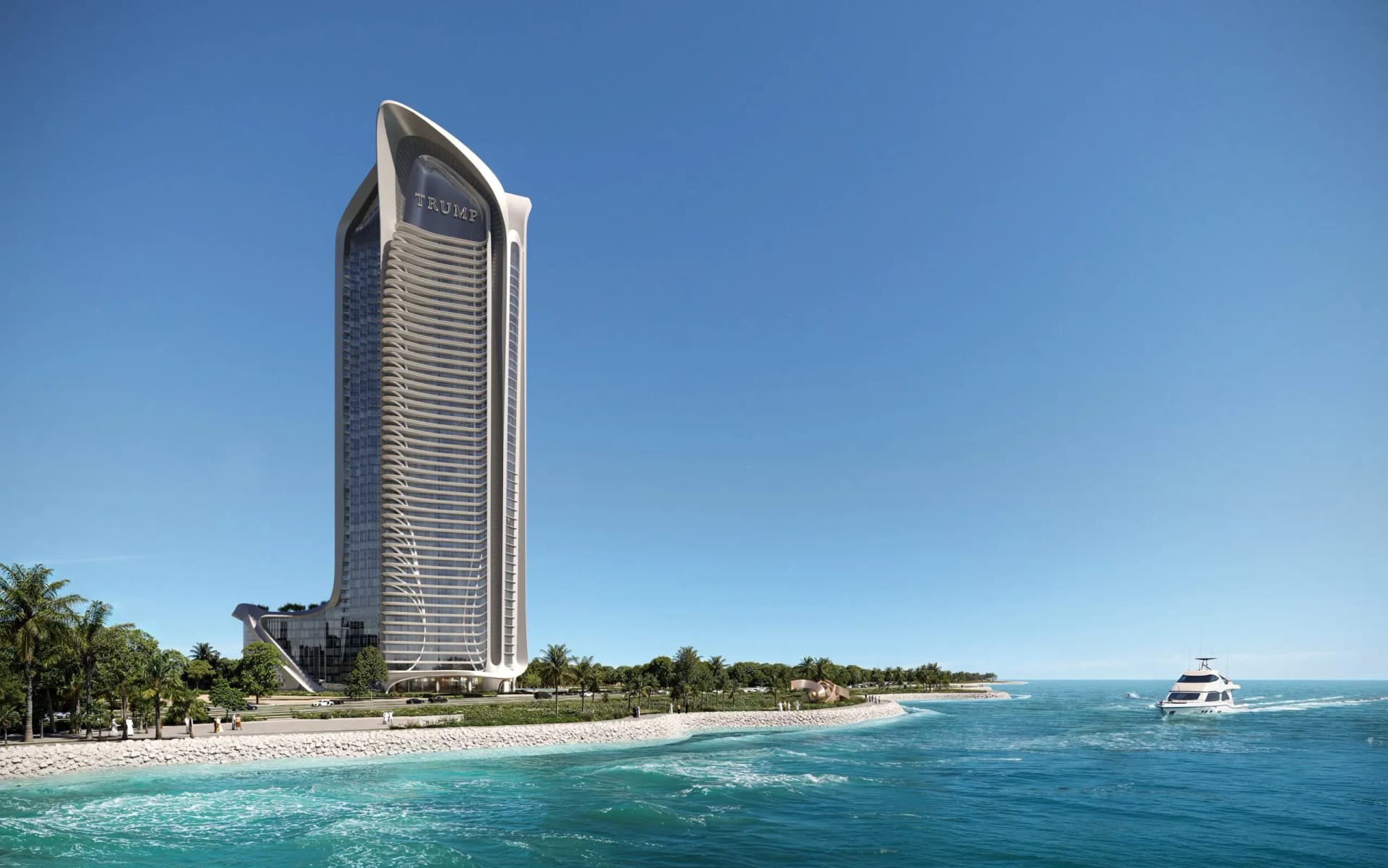
Against this background, it is worth checking specific projects, but without automatically accepting the developer's assumptions. Trump Tower Jeddah can be analyzed as an example of a seaside product in Jeddah, while Neptune Villas shows a different profile: a larger unit in Riyadh, closer to the family and relocation segment. Linking to offers does not replace analysis; it is intended to facilitate the comparison of asset types.
Giga-projects: impact on demand, but not at any price
NEOM, Red Sea Global, Diriyah, and Jeddah Central build global market visibility, but an investor should not transfer the narrative of one project to the entire KSA map. A Giga-project may improve infrastructure, tourist demand, and regional recognition, but it does not mean that every residential unit in the vicinity has the same risk profile.
The most important questions are: is the project in the operational phase or still under construction, who will be the actual tenant, does the secondary market have liquidity, and can the purchased property be rented without restrictions? For off-plan projects, one must separate the potential for appreciation from schedule risk.
ROI, yield, and comparative metrics
ROI in the KSA must be calculated on a net basis. The model should include: purchase price, RETT, registration costs, finishing, furniture, service charges, operator commission, vacancy period, insurance, technical service, and a repair reserve. Gross yield is useful for a quick comparison, but it should not be the deciding factor for a purchase.
A good point of reference is the real estate market in Saudi Arabia 2025 described on the PlanoGroup blog, but when making a purchase decision, historical data must be supplemented with current availability, project pricing, and real contract terms. It is also worth comparing market reports from JLL market dynamics and REGA data, if available for a given location.
Key takeaway for the investor: Riyadh and Jeddah can serve different functions in a portfolio. Riyadh is closer to corporate and administrative demand, Jeddah closer to the seaside and second-home market. In both cases, the project name alone is not enough to evaluate the investment.
—
Risks and due diligence: RETT tax, Wafi license, and market traps
Financial and technical verification before entering the market
The KSA market provides access to large-scale projects but requires strict control of costs and documents. An investor who only calculates the purchase price and declared ROI overlooks elements that determine the financial outcome. In Saudi Arabia, due diligence should cover ownership rights, project status, taxes, payment schedules, escrow accounts, and the compliance of the property's use with the investor's plan.
RETT: 5% as an entry cost
The Real Estate Transaction Tax is a cost that must be included in the calculation from day one. The 5% rate affects the break-even point and payback period, especially with a shorter investment horizon. The ZATCA portal for taxes and fees should be used to verify current rules before a transaction, as taxes and procedures can change implementation details.
Example: if an investor buys a property for $1,000,000, the RETT alone can mean a $50,000 entry cost before registration, equipment, service charges, and rental management costs appear. In the financial model, one must check what price increase or net rental income is needed to recover this cost.
Wafi and escrow accounts for off-plan projects
Purchasing off-plan without confirming the Wafi license and escrow account rules is one of the greatest risks. The investor should ask for the license number, construction schedule, name of the bank managing the account, the mechanism for releasing funds, and progress reporting. It is also worth checking whether the contract includes penalties for delays, withdrawal conditions, a description of the finishing standard, and the handover procedure.
REGA indicates services related to projects sold off-plan, including inquiries about licensed projects. This should be part of the checklist. If an advisor, broker, or developer cannot provide verification data, the investor should stop the process.
White Land Tax and supply pressure
The White Land Tax, or taxation of undeveloped land, has an indirect impact. It may influence land owners' decisions and the pace of project launches. For an investor, it is important whether the developer has real control over the land, financing, and the ability to build, or if they are merely selling a vision based on future price increases.
The analysis should check the Sak (title deed), land encumbrances, compliance with the master plan, building permits, sales licenses, and the authority of the persons signing the documents. For a mixed-use development project, one must additionally assess whether the commercial, hotel, and residential functions have separate schedules and whether a delay in one part will not limit the utility of the unit.
Investment red flags
The most common warning signs are: lack of a license number, unclear title deed, payments outside of an escrow account, pressure for a quick reservation transfer, ROI promises without comparative data, lack of a clear service charge plan, imprecise finishing standards, lack of a handover procedure, and overly broad power of attorney for the selling party.
It is worth comparing transaction mechanics with markets the investor may know better. An article comparing Dubai and Oman helps understand the differences in taxes, freehold availability, and maintenance costs. The KSA has a different profile: greater scale potential, but a higher weight of local procedures.
Key takeaway for the investor: Due diligence in the KSA is not about checking a sales brochure. It is about confirming the right to sell, the right to buy, the flow of funds, taxes, the schedule, and real rental demand.
—
Step-by-step project verification: Investor manual
Safe purchasing procedure in the Saudi system
The purchasing process in Saudi Arabia should be conducted in stages. Each stage has different questions, documents, and control points. Skipping one step may not reveal a problem immediately, but it may surface during ownership registration, fund withdrawal from an escrow account, unit handover, or the first attempt to rent.
Step 1: Verify buyer status
First, determine whether you are buying as a private individual, resident, non-resident, Premium Residency holder, or company. Check your passport, residency status, identification number, investment license for corporate purchases, and any MISA requirements. Ask a legal advisor whether the location is available for your buyer category and whether it requires approval before reservation.
Investor action: request written qualification of buyer status for the specific project. Do not accept a general answer like "foreigners can buy." Ask for the legal basis, the competent authority, and the documents required before signing the Sales and Purchase Agreement.
Step 2: Check the developer and project license
Before paying the reservation fee, check the developer in REGA registries and verify the history of completed projects. Ask for the Wafi license, project number, land status, construction schedule, escrow account bank, and progress reporting. For projects carried out by large entities such as ROSHN or PIF-affiliated companies, check which company is the party to the contract and who is actually responsible for execution.
Investor action: request a copy of the license, confirmation of the escrow account, current schedule, technical prospectus, floor plan, finishing standard, and contract template. Compare data with the official registry, not just sales material.
Step 3: Analyze the Sales and Purchase Agreement
The SPA should clearly define the price, currency, payment terms, indexation conditions, completion date, consequences of delays, handover procedure, scope of finishing, assignment rules, withdrawal conditions, and dispute resolution method. For off-plan purchases, one must check whether the payment schedule is linked to construction stages, not just calendar dates.
Investor action: mark all obligations of the buyer and developer in the contract. Ask who bears the RETT, when ownership registration occurs, what documents you will receive after each payment, and whether you can sell the rights from the contract before project completion.
Step 4: Calculate net result, not declared ROI
Compare the price per meter, payment plan, market rent, gross yield, net yield, service charge, equipment cost, operator fees, taxes, repair reserve, and vacancy period. If the developer shows an ROI projection, ask for the source of rental rates, occupancy period, comparable transactions, and cost assumptions.
Investor action: prepare three scenarios. A cautious variant should include completion delays, lower rent, and higher maintenance costs. A base variant should be based on market data. An upside variant may show capital appreciation but should not be the sole basis for the decision.
Step 5: Prepare post-purchase management
The purchase does not end the process. You must determine who will take over the unit, check for defects, sign the protocol, organize equipment, sign contracts with suppliers, register the rental, and handle the tenant. For corporate leasing in Riyadh, the speed of technical service is important. For seasonal leasing in Jeddah, the operator, occupancy calendar, and quality of standard maintenance are more significant.
Investor action: before purchasing, ask about service charges, community regulations, short-term rental restrictions, the scope of operator services, revenue reporting, and repair costs. If you are planning a passive investment, a local partner should be selected before handover, not after the first problem appears.
Key takeaway for the investor: A safe process in the KSA is sequential. First, buyer status, then developer and license, then the contract, financial model, and management. Price is only important after confirming these elements.
—
Portfolio strategy: Saudi Arabia vs. Dubai and Oman
Comparison of Gulf markets: Where to allocate capital in 2026?
Saudi Arabia, Dubai, and Oman have different roles in an investor's portfolio. Dubai is a high-liquidity market with an extensive freehold system and a broad base of international tenants. Oman offers a lower entry threshold in selected ITC projects and a more relaxed second-home profile. The KSA provides exposure to a market of large scale and regulatory changes, but requires higher tolerance for procedures and more thorough legal control.
Dubai: liquidity and a mature freehold model
Dubai is easier for a foreign investor to understand because it has recognizable freehold zones, a long history of international transactions, and a developed rental market. However, valuations in selected locations are heavily dependent on supply, developer marketing, and the global capital cycle. An investor comparing the KSA with Dubai should look at exit liquidity, not just yield.
When analyzing alternatives, you can check PlanoGroup offers in Dubai, but the decision should not be based on choosing a city "the easy way." Dubai may be right for an investor who expects a simpler ownership model and better rental predictability. The KSA may be more suitable for someone willing to accept more procedures in exchange for exposure to market development.
Oman: ITC, GMSP, and second-home profile
Oman has a different logic. The Integrated Tourism Complex (ITC) allows foreigners to purchase in specific projects with ownership rights and often with additional residency benefits. The Greater Muscat Structure Plan (GMSP) influences the direction of Muscat's metropolitan development, and projects in tourist zones combine residential, recreational, and short-term rental functions.
For some investors, Oman is a natural point of reference because it offers a lower barrier to entry and less volatility than the most overheated parts of Dubai. It is worth comparing PlanoGroup offers in Oman and projects such as The Sustainable City - Yiti, especially if the investor is looking for an asset linked to tourism, family, golf, or seasonal stays.
Saudi Arabia: scale potential and the cost of bureaucracy
The KSA differs from Dubai and Oman in the scale of its public program and the stage of market development for foreigners. This can create space for capital appreciation, but it also increases the importance of implementing regulations, registries, licenses, and local advice. The investor must accept that some procedures may be less familiar than in Dubai, and locations permitted for foreigners may require careful verification.
In a portfolio, the KSA can serve as growth exposure, Dubai as a liquid market, and Oman as a stabilizing market in the second-home and ITC segment. This division does not imply an automatic recommendation. It means that each market should have its own goal: rental income, capital protection, private use, exposure to tourism, or resale potential.
How to compare three markets with one model
The comparison should include: entry price, taxes, transaction costs, service charges, freehold or foreign ownership rules, access to financing, rental market, secondary market sales time, currency risk, and residency requirements. Only then can ROI be compared between countries.
Key takeaway for the investor: Saudi Arabia does not replace Dubai or Oman. It is a separate market that can complement a portfolio if the investor accepts more analytical work and has local support for documents, registration, and management.
—
Conversation with PlanoGroup
If you are considering diversifying your portfolio with the Saudi market, start by verifying buyer status, location, and project documentation. The PlanoGroup team can help organize the analysis: from comparing locations, through checking the Wafi license and escrow account, to assessing maintenance costs and rental potential.
It is worth starting with a neutral consultation, during which you will define your budget, investment goal, exit horizon, and regulatory risk tolerance. Then, you can compare the KSA with Dubai and Oman to see if Saudi Arabia truly fits your portfolio. Contacting PlanoGroup is the simplest path to discussing available projects, documents, and the due diligence model.
—
FAQ
Will every foreigner be able to purchase property in Saudi Arabia?
The right to acquire property depends on residency status, the specific location, and current approvals from the Ministry of Investment, with some areas like Mecca remaining excluded.
Why is Vision 2030 important for the real estate market?
Saudi Vision 2030 is important because it influences infrastructure, employment, tourism, company relocation, and housing demand. The program creates the macroeconomic background for the development of Riyadh, Jeddah, and Red Sea projects. However, it should not be treated as a standalone purchase argument.
Do Riyadh and Jeddah have the same investment profile?
No, Riyadh is a key business hub with demand for corporate leasing, while Jeddah is evolving toward luxury tourism and the vacation property segment.
Which documents are critical for the initial analysis of a project in the KSA?
At the beginning, you should check the land title deed, project status, developer license, any Wafi license, escrow account number, the Sales and Purchase Agreement template, payment schedule, building permits, finishing standard, and handover procedure. When purchasing through a company, corporate documents, investment license, and representative powers are added.
Is Saudi Arabia riskier than Dubai?
The risk has a different character. Dubai is a market more familiar to foreign investors, with a longer history of freehold zones and greater liquidity. Saudi Arabia in 2026 is a market with a larger scale of regulatory changes, which may provide room for value growth, but requires more careful verification of buyer status, location, and documents.

Author
Mariusz Sawicki
MEMBER OF THE MANAGEMENT BOARD
He combines experience from the financial and real estate sectors, which allows him to support clients in making informed and well-thought-out investment decisions. He views real estate purchases not only through the lens of emotions, but primarily through data, security, and potential. He specializes in investment analysis and risk assessment, particularly in emerging markets such as Oman. In his work, he focuses on specifics, transparency, and a partnership-based approach.

Related articles
Saudi Arabia Real Estate Market 2025 – where is value growing and why?

What does the property purchasing process look like for foreigners in Saudi Arabia?

Why is Muscat the most stable real estate market in the Gulf? Analysis 2020–2025