


Real Estate Investment in Saudi Arabia: A Guide
Saudi Arabia is not a monolithic market. In practice, an investor chooses between three exposure profiles: Riyadh as a corporate demand market, Jeddah as a coastal, trade, and tourism market, and Vision 2030 projects as exposure to long-term value growth. Riyadh is of the greatest importance for an investor focused on long-term leasing and liquidity resulting from corporate relocations. Jeddah is more dependent on supply in the coastal strip, pilgrimage traffic, the port, and the quality of hotel operators. Giga-projects require greater caution, as the project name is no substitute for an audit of infrastructure, work schedules, or the legal status of the land. For a Polish investor, Saudi Arabia may make sense as part of an international portfolio, but not as the only destination outside of Poland. In a portfolio, it is worth balancing it with markets that have a different risk profile, such as Oman, which is based on the Integrated Tourism Complex (ITC), the Greater Muscat Structure Plan (GMSP), and more predictable purchasing frameworks in selected zones. A good starting point for comparing assets is also the primary market offering in Saudi Arabia and a parallel analysis of what the primary market looks like in Oman.


Article summary
The most important conclusions from the article in 30 seconds.
Saudi Arabia is not a monolithic market. In practice, an investor chooses between three exposure profiles: Riyadh as a corporate demand market, Jeddah as a coastal, trade, and tourism market, and Vision 2030 projects as exposure to long-term value growth. Riyadh is of the greatest importance for an investor focused on long-term leasing and liquidity resulting from corporate relocations. Jeddah is more dependent on supply in the coastal strip, pilgrimage traffic, the port, and the quality of hotel operators. Giga-projects require greater caution, as the project name is no substitute for an audit of infrastructure, work schedules, or the legal status of the land. For a Polish investor, Saudi Arabia may make sense as part of an international portfolio, but not as the only destination outside of Poland. In a portfolio, it is worth balancing it with markets that have a different risk profile, such as Oman, which is based on the Integrated Tourism Complex (ITC), the Greater Muscat Structure Plan (GMSP), and more predictable purchasing frameworks in selected zones. A good starting point for comparing assets is also the primary market offering in Saudi Arabia and a parallel analysis of what the primary market looks like in Oman.
Saudi Arabia is today one of the most demanding real estate markets in the Gulf region. It is not a market that can be judged solely through the prism of asking prices, developer visualizations, or slogans about Vision 2030. For an investor from Poland, three layers of analysis are essential: real tenant demand, the regulatory status of foreign ownership, and the liquidity of the exit strategy.
The KSA market differs from Dubai and Oman in its pace of change, the role of the state, and the structure of demand. Riyadh relies on institutional demand, administration, corporate relocations, and a shortage of high-quality residential products for management staff. Jeddah operates on a different logic: port, trade, religious tourism, the Red Sea coast, and mixed-use development projects. Giga-projects, such as NEOM, Red Sea Global, or Qiddiya, are a separate asset class altogether: they resemble real estate venture capital more than a classic apartment purchase for stable rent.
This guide shows how to read the Saudi Arabian market without simplifications. It covers the Regional Headquarters program, Premium Residency, freehold and usufruct models, off-plan risks, the importance of escrow accounts, Service Charge, yield, ROI, and Capital Appreciation. In the text, I also refer to Oman and Dubai, because only by comparing several jurisdictions can one assess the role KSA can play in an investor's portfolio.
—
Riyadh: Portfolio foundation based on institutional demand
Riyadh is the most important city for an investor seeking exposure to demand generated by employment, administration, and corporate relocation. Unlike typical vacation cities, demand in Riyadh does not start with lifestyle. It starts with the need to be present near public institutions, corporate headquarters, financial centers, international schools, hospitals, and transport infrastructure.
The Regional Headquarters program has changed how international companies view KSA. If an enterprise wants to handle public contracts and regional operations from Saudi Arabia, a presence in Riyadh becomes a logical business move for many capital groups. For the real estate market, this means demand for Grade A offices, serviced apartments, villas in well-managed compounds, and apartments near business districts.
The mechanics of demand in Riyadh
Residential demand in Riyadh has several sources. The first is local demographics and internal migration to the capital. The second is management staff relocated by foreign companies. The third is professionals employed in infrastructure, consulting, and technology projects. The fourth is expat families, who evaluate property based on access to schools, private medical care, compound security, transport, and the quality of building management.
In practice, it is not enough to ask a developer about square footage and price per m². You must determine whether the product matches the profile of the tenant who will actually appear in a given part of the city. A compact apartment near business centers may have different liquidity than a large villa on the outskirts, even if both properties are in Riyadh. Yield depends not only on rent but also on vacancy periods, management costs, Service Charge, transfer taxes, and the quality of the rental operator.
It is also worth separating purchase demand from rental demand. In the investment segment, a corporate tenant does not buy the promise of city growth. They rent a product that shortens commute times, meets safety standards, allows for cost accounting, and does not require daily management by the employee.
Districts, infrastructure, and location logic
In Riyadh, location should be analyzed in relation to three systems: workplaces, transport infrastructure, and daily services. Northern districts and areas linked to new development axes may be interesting, but an investor should not treat the district name itself as proof of asset quality. Distances to office centers, access to main arteries, planned metro stops, commute time to the airport, and the availability of international schools are what matter.
When analyzing projects such as Neptune Villas in Riyadh, it is worth separating two questions. First: does the product meet the needs of a premium tenant, e.g., a management family? Second: at the entry price, Service Charge, and property holding horizon, does the ROI remain rational after accounting for vacancies and management costs?
The type of construction is also important in Riyadh. An apartment in a mixed-use development may offer greater rental liquidity if it is connected to services, parking, and management. A villa may have a higher entry threshold but cater to a different tenant profile. The family segment does not always compete with the one- or two-bedroom apartment segment.
How to verify Riyadh step by step
- Check the legal status of the property. Ask for the title deed, plot number, land ownership documents, building permits, and confirmation of whether the project can be acquired by a foreigner under the given legal status.
- Ask the developer about the payment protection mechanism. For off-plan purchases, check if funds are directed through an escrow account, which entity supervises the account, and what the conditions for fund return are in case of delays.
- Compare the price per m² with real rental rates. Do not base this solely on asking rents. Compare them with closed transactions, the property's exposure time, and the tenant profile.
- Assess the Service Charge. Ask for a forecast of fees for common area maintenance, management, security, pool, gym, parking, and the repair fund. A high fee can lower yield despite high nominal rent.
- Verify transport. Check the distance to main roads, planned metro stations, the airport, and office centers. Do not calculate commute time solely based on a map without considering rush hours.
- Assess exit liquidity. Ask if the developer or operator has a history of reselling similar units and if there are restrictions on contract assignment before handover.
- Check rental management. Determine who will handle the tenant, rent collection, technical inspections, repairs, and relations with building administration.
Investment risks in Riyadh
The biggest risk is not the growth of supply itself, but the growth of supply in the same price segment. If several projects deliver similar apartments with similar square footage and price, competition may appear faster than the assumed rent growth. An investor should analyze not just the city, but the micro-market and supply structure within a radius of a few kilometers.
The second risk is over-reliance on the assumption that every project will benefit from the Vision 2030 program. In practice, the benefit is captured by locations linked to real demand. Being in Riyadh alone does not guarantee corporate rental.
The third risk is an incomplete budget. The purchase price is the entry point, but the full cost includes taxes, transaction fees, Service Charge, potential furnishing, rental management commissions, and a reserve for vacancies. Only after accounting for these costs can one discuss yield and ROI.
—
Jeddah: Investment in logistics, trade, and the leisure economy
Jeddah has a different profile than Riyadh. It is a port, a gateway to the western coast, a hub for pilgrimage traffic, and a city with a strong commercial function. For an investor, this means greater exposure to seasonality, tourism, coastal projects, and the quality of public space. Demand here is not exclusively corporate. Second homes, serviced apartments, short-term rentals, branded residences, and properties located along transit routes leading to the port, airport, and waterfront are important.
In the case of Jeddah, the revitalization of the coastline and projects linked to Jeddah Central play a central role. According to Saudi institutions, the project is intended to increase the importance of the city center as a tourist, residential, and service area. However, for an investor, this does not mean an automatic increase in value for every unit by the water. Value growth requires the consistency of three elements: location quality, scale of demand, and real infrastructure progress.
Waterfront, branded residences, and second homes
Jeddah is a natural candidate for an investor who wants to analyze property through the prism of the Red Sea coast. An apartment by the Corniche, a project with a hotel operator, or a unit in a mixed-use development may perform differently than a classic city apartment. Access to the beach or marina, the quality of common areas, the view, building management, and short-term rental rules are essential.
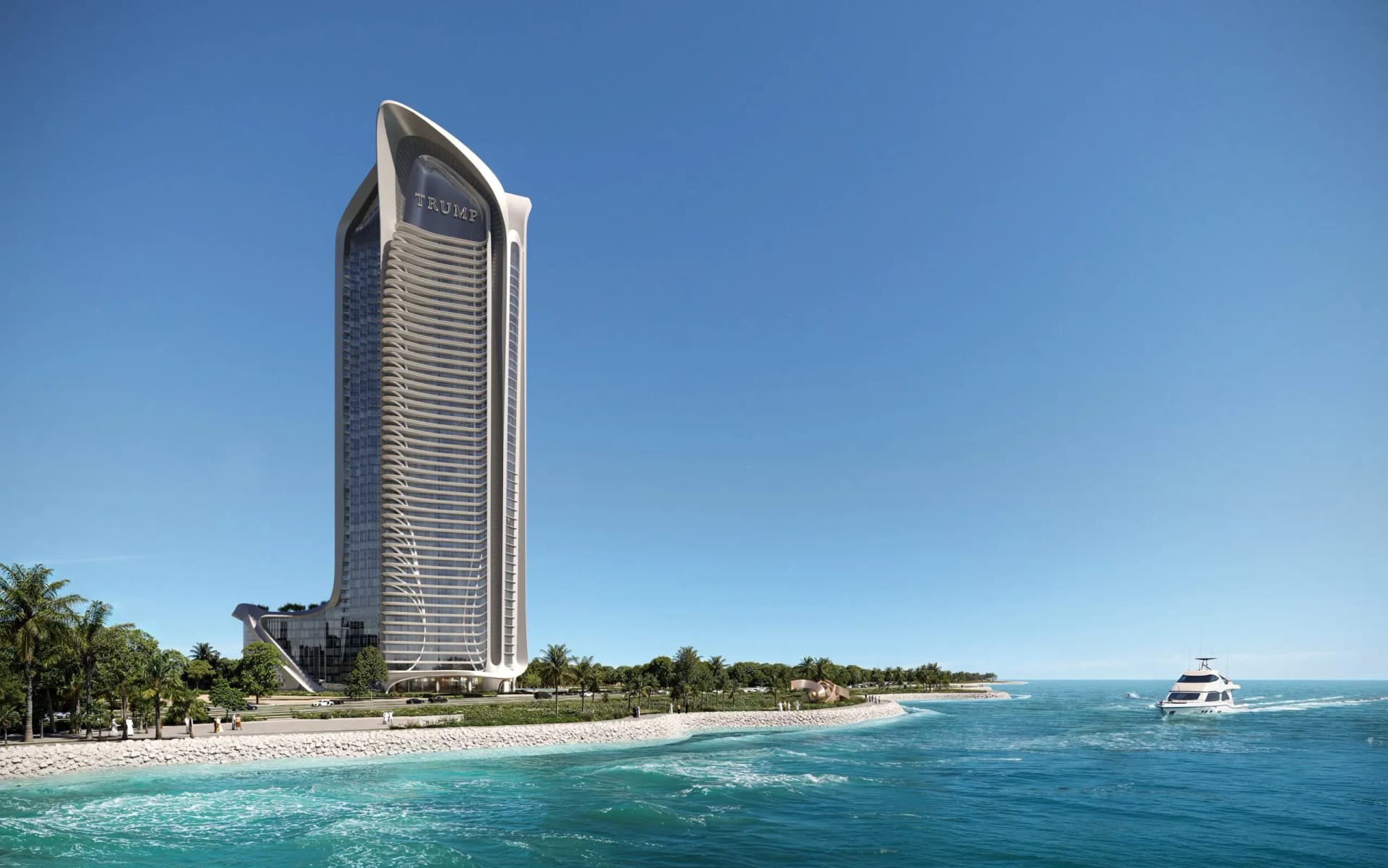
An example of a product worth analyzing through this matrix is Trump Tower Jeddah. The project's recognition alone cannot be the main investment argument. An investor should compare the entry price, payment schedule, completion date, finishing standard, Service Charge plan, rental rules, and potential resale liquidity. For branded residences, the agreement with the operator has additional significance: its duration, owner obligations, commissions, rules for using the unit, and restrictions on independent rental.
Jeddah may be more susceptible to changes in perception than Riyadh. If the waterfront revitalization is carried out on schedule, properties in well-chosen spots may benefit from Capital Appreciation. If infrastructure is delayed or the supply of similar apartments is too high, profitability may be lower than expected.
Logistics and demand independent of tourism
Jeddah should not be analyzed solely as a vacation city. The port, trade, pilgrimage traffic support, and service facilities create demand that partially stabilizes the market. For an investor, however, it is important to separate tourist rental from business rental. The former requires an operator, marketing, guest service, cleaning, seasonal price control, and compliance with local regulations. The latter requires a good location relative to companies, the port, the airport, and services.
In the short-term rental model, ROI should be calculated conservatively. It is not enough to assume a high daily rate. You must account for occupancy, seasonality, operator commission, cleaning costs, equipment replacement, taxes, platform fees, and a reserve for periods without rental. In the long-term rental model, contract stability and tenant quality count, but the potential for rent growth may be lower.
How to verify Jeddah step by step
- Check the waterfront development plan. Ask for documents showing the investment's relationship to planned roads, the promenade, the marina, public transport, and service facilities.
- Verify the operator. For branded residences, ask for the operator agreement, a description of service standards, a fee table, owner booking rules, and rental restrictions.
- Assess demand sources. Separate tourist, pilgrimage, business, and local demand. Each has different seasonality and price sensitivity.
- Compare coastal projects with urban development. Compare price per m², square footage, view, parking, common area quality, completion date, and projected Service Charge.
- Ask about short-term rental licenses. Check if the unit can be rented in the model you assume in your ROI calculation.
- Assess the risk of delays. For off-plan projects, check the general contractor, construction milestones, the escrow account, and contractual penalties.
- Examine secondary market liquidity. Ask if similar units were resold before and after handover and what the average sales time was.
Investment risks in Jeddah
Jeddah may provide exposure to value growth linked to the waterfront, but it simultaneously requires careful supply control. The segment of apartments with sea views is sensitive to price, view quality, and distance from actually operating services. Units located a few streets away may have different liquidity than projects directly linked to the promenade or an operator.
The second risk is confusing tourist traffic with profitable rental. More traffic in the city does not automatically mean high occupancy for a specific unit. Sales channels, service standards, location, and operating costs are what decide.
The third risk is regulatory change. An investor should track short-term rental rules, the admissibility of foreign ownership in a given zone, and registration requirements. A good supplement is an overview of the property purchase process in Saudi Arabia, which clarifies the status of residents, non-residents, and Premium Residency holders.
—
Vision 2030 projects: NEOM and Red Sea Global as real estate venture capital
Vision 2030 projects are the most publicized part of the Saudi market, but they should not be treated like ordinary apartments in a finished district. NEOM, Red Sea Global, Qiddiya, or Diriyah create new maps of demand, but many elements of these projects depend on infrastructure, public decisions, hotel operators, construction phasing, and the scale of funding. These are assets with higher information risk.
In practice, an investor should view giga-projects as a project portfolio. Some locations may become a market with real residential and tourist demand. Some may remain niche for a long time. Some will require a multi-year horizon before a liquid secondary market appears.
Why project branding is not enough
A project name may attract attention, but it does not replace infrastructure analysis. An investor should determine whether access roads, utilities, an airport, access to services, a hotel operator, a handover schedule, and community operating rules exist at a given stage. Without these elements, it is difficult to assess whether the property will perform after handover or remain an asset waiting for the surroundings to develop.
In projects linked to the NEOM project, the distinction between the urban vision and the execution stage of a specific component is of particular importance. An investor is not buying the entire narrative about the city. They are buying a unit, the right to use common areas, a specific schedule, and exposure to a specific phase of the project.
The same principle applies to Red Sea areas. Red Sea Global may strengthen the region's image, but the investor must check which hotels are operating, which are under construction, which have signed operators, and what the real transport accessibility is. The earlier in the project cycle the purchase occurs, the greater the role of due diligence.
Special zones, freehold, and usufruct
In Saudi Arabia, regulations regarding foreign ownership are changing gradually. For an investor from Poland, it is important not to assume automatic freehold in every location. In some cases, full ownership rights may be possible, in others, usufruct rights, and in others, the purchase may require a specific residency status, license, or acting through a company.
Premium Residency and the property owner path can be part of a strategy, but they should not be treated as a marketing add-on. If an investor is considering residency, they must check the current requirements on the Premium Residency Center website, the minimum property value threshold, permissible asset types, financing requirements, and documents confirming the source of funds.
For off-plan projects, the investor should ask about the escrow account, developer registration status, sales permit, assignment procedure, delay rules, and the possibility of withdrawing from the contract. High project recognition does not exempt one from verifying the contract.
How to analyze giga-projects step by step
- Determine the project phase. Check if you are buying a unit in an operating part, under construction, or in the planning phase. Each phase has a different risk profile.
- Verify contractors and operators. Ask for the names of the general contractor, hotel operator, management company, and entities responsible for common areas.
- Check utilities and transport. Confirm access to water, energy, roads, the airport, public transport, and daily services.
- Assess the sales contract. Pay attention to the payment schedule, escrow account, delay penalties, assignment rights, deposit refund conditions, and the language for dispute resolution.
- Compare benchmarks. Do not compare the price only with other Vision 2030 projects. Compare it also with Riyadh, Jeddah, Dubai, and Oman to assess the alternative cost of capital.
- Assess liquidity. Ask who the buyer on the secondary market will be: a local buyer, an expat, a fund, a second-home tourist, or another foreign investor.
- Build scenarios. Calculate ROI for a base, delayed, and conservative scenario. Include the lack of rental for the first months after handover.
Liquidity and valuation risk
The biggest risk of giga-projects is liquidity. In a mature city, an investor can check transaction history, rents, sales time, and tenant profiles. In a new project, some of this data does not exist. Valuation is then based on assumptions, not a confirmed secondary market.
The second risk is the concentration of supply in a similar standard. If many units are handed over in a short time, owners may compete on rental price, equipment packages, and operator commission. The third risk is dependence on state decisions. Projects funded or coordinated by large public entities have scale, but an individual investor should assess which elements affect their unit directly.
This is why Vision 2030 projects should be treated in a portfolio as exposure to Capital Appreciation, not as a guaranteed source of current cash flow from day one.
—
Decision matrix: Selection criteria and risk parameters
The decision to buy property in Saudi Arabia should start with the investor's goal, not with the choice of project. A different product fits cash flow, another for Capital Appreciation, another for a second home, and yet another for a residency strategy. If the goal is not clearly defined, the investor will easily compare assets that should not compete with each other.
The simplest matrix includes five questions: what is the capital's goal, what is the horizon, what exit liquidity does the investor accept, what legal status does the purchase have, and who will manage the asset after handover?
Cash flow, Capital Appreciation, and horizon
Riyadh is more logical for an investor who wants to build income from corporate rental and accepts an urban product. Jeddah may be more interesting for an investor who assumes value growth in the coastal strip and can work with seasonal rental or an operator. Giga-projects are most dependent on Capital Appreciation and a longer horizon.
A five-year horizon requires greater caution with projects in the early phase. The investor must know if a secondary market will appear during that time. A ten-year horizon allows for accepting greater infrastructure uncertainty, but only if the portfolio as a whole has sufficient liquidity.
ROI should be calculated after costs, not before. The calculation must include the purchase price, taxes, transaction fees, Service Charge, furnishing costs, management commission, vacancies, repairs, and potential financing costs. Only then does net yield say anything about the quality of the investment.
Due diligence of market data
An investor should use several types of data. Reports from consulting firms help understand the market direction but do not replace local transaction analysis. Asking prices show the aspirations of sellers. Transaction prices show the willingness of buyers to pay. Rental data shows if the unit can perform operationally. Vacancy data shows how high the risk of not having a tenant is.
In practice, it is worth preparing a comparison sheet for at least three projects. Columns should include price per m², square footage, construction stage, payment schedule, handover date, legal status, Service Charge, possible rent, conservative rent, vacancy, management cost, and resale scenario. Such a sheet quickly shows whether the investor is buying a real advantage or just a narrative.
Additionally, it is worth comparing KSA with other markets. The article on the Saudi Arabia real estate market 2025 shows the context of growth, and a comparison of Dubai and Oman helps assess the difference between a mature market, a stable market, and a market in a phase of rapid economic restructuring.
Legal and tax aspect
The legal status of the purchase must be confirmed before paying the deposit. The investor should know whether they are acquiring freehold, usufruct, a share in a company, the right to a unit in a project covered by special rules, or an indirect instrument. Each structure affects inheritance, resale, financing, and the possibility of obtaining residency differently.
Documents to check include the title deed, building permit, permission for sale to foreigners, developer agreement, community regulations, Service Charge plan, payment schedule, escrow account documentation, and assignment conditions. For an investment linked to Premium Residency, one must additionally confirm whether the property meets the program's requirements and whether its financing does not exclude a given path.
One should also not overlook the property transfer tax and administrative costs. Even if tax rates are lower than in some European markets, the costs of transaction handling, registration, and management can significantly change the net result.
KSA vs. Oman: when stability is more important than growth pace
Oman has a different investment logic than Saudi Arabia. In Integrated Tourism Complex (ITC) projects, a foreigner can analyze a purchase through more orderly legal frameworks, often with freehold rights in specific zones. The Greater Muscat Structure Plan (GMSP) organizes the capital's development and helps read urban directions. In KSA, the scale of change is greater, but so is the number of regulatory variables.
If an investor has a low risk appetite, needs a more stable legal environment, and wants to understand the management model after purchase more quickly, Oman may be the first step. If an investor accepts greater volatility and a longer horizon, KSA can play the role of a part of the portfolio focused on value growth. A good supplement to this decision is an analysis of Muscat's stability in 2020-2025, especially when compared with Riyadh and Jeddah.
—
Portfolio integration: When does Saudi Arabia make sense?
Saudi Arabia makes sense when the investor knows what role they assign to it in the portfolio. It should not be chosen just because it is a "loud" market. It should be chosen when a specific project fits the investor's goal, horizon, risk profile, and liquidity.
A barbell strategy can be useful: part of the capital goes to more stable markets, such as Oman or selected assets in Montenegro, and part to a market with higher volatility, such as Riyadh, Jeddah, or selected Vision 2030 projects. Such an arrangement allows separating assets generating more predictable cash flow from assets focused on Capital Appreciation.
Entry threshold and product selection
The entry threshold in KSA depends on the city, square footage, and standard. An investor should be wary of a seemingly low entry price if the unit requires a high finishing cost, has a high Service Charge, or is in a project with uncertain liquidity. On the other hand, a more expensive product may be rational if it meets a real supply shortage in a given segment.
In practice, selection should start with three filters. First, legal status and the admissibility of acquisition by a foreigner. Second, the property's ability to generate rent or value growth within a specific horizon. Third, the quality of management after purchase. Without the third element, even a good unit can become an asset requiring constant operational control.
Management after purchase
Property management in KSA is particularly important because an investor from Poland operates in a market that is geographically, linguistically, and legally distant. It is necessary to determine who will be responsible for finding a tenant, signing the contract, rent collection, inspections, technical service, Service Charge settlements, and communication with building administration.
In corporate rental, tenant credibility, contract length, settlement currency, deposit, scope of responsibility for repairs, and the rental termination procedure count. In short-term rental, one must add marketing, guest service, cleaning, equipment replacement, and platform settlements. In branded residences, there is the relationship with the operator and the rules for the owner's use of the unit.
The investor should ask for a sample management agreement and a cost simulation. If the manager shows only gross revenue, the calculation is incomplete.
Investor decision roadmap
- Define the goal: cash flow, Capital Appreciation, second home, residency, or currency diversification.
- Choose a city consistent with the goal: Riyadh for corporate demand, Jeddah for the coast and trade, giga-projects for exposure to value growth.
- Check the legal status of the purchase: freehold, usufruct, zone permitted for foreigners, Premium Residency, or company structure.
- Compare projects in a sheet. Include price per m², payment schedule, Service Charge, handover date, operator, projected rent, and resale scenario.
- Conduct due diligence of documents. Verify the title deed, permits, developer agreement, escrow account, land status, and assignment rules.
- Build a financial model. Calculate net ROI, net yield, vacancies, management costs, taxes, and repair reserves.
- Secure management after purchase. Determine the operating entity, responsibilities, reporting, and settlement frequency.
- Only after these steps should you sign a reservation or developer agreement.
Investment conclusion
KSA is a market for an investor who can separate narrative from data. Riyadh can serve as exposure to corporate demand. Jeddah can be a market for the coast, services, and tourism. Vision 2030 projects can provide exposure to value growth but require a longer horizon and a larger risk reserve.
The most rational approach consists of comparing Saudi Arabia with other Middle Eastern directions, not making a decision under the influence of a single project. This is why an investor should simultaneously analyze local offers, regulatory policy, rental data, and alternative markets such as Oman or Dubai.
—
PlanoGroup investment consultation
If you are analyzing entering the Saudi Arabian market, the first stage should not be booking a unit, but a strategy audit. It is worth checking whether Saudi Arabia is to play the role of a corporate rental market, coastal exposure, a second-home purchase, or an asset focused on value growth in your portfolio.
PlanoGroup can help compare Riyadh, Jeddah, and selected Vision 2030 projects with alternatives in Oman, Dubai, and Montenegro. Such analysis includes ownership structure, entry cost, possible yield, off-plan risk, management after purchase, and resale liquidity. The starting point can be a review of current projects from the primary market, followed by a conversation about which assets fit your horizon, budget, and risk tolerance.
FAQ
Is Riyadh better for long-term rental than Jeddah?
Riyadh is characterized by higher demand from the business and administrative sector, while profitability in Jeddah depends to a greater extent on tourism and coastal infrastructure.
Are Vision 2030 projects suitable for an individual investor?
They can be suitable, but only for an investor who understands the risk of the early project phase. Giga-projects require checking infrastructure, construction schedules, operators, land status, ownership rights, escrow accounts, and secondary market liquidity. A purchase in such a project should not be treated like buying a finished apartment in an operating district.
An individual investor should have a longer horizon, a liquidity reserve, and readiness for delays. In return, they can gain exposure to Capital Appreciation, but they should not assume high cash flow immediately after handover. For Vision 2030 projects, a conservative financial scenario is more important than an optimistic one.
What data needs to be collected before choosing a location in KSA?
The minimum includes transaction prices, asking prices, actually achieved rents, vacancy levels, Service Charge, legal land status, payment schedule, handover date, information about the operator, and resale rules. It is also worth collecting data on infrastructure: roads, metro, airport, schools, hospitals, port, promenade, or tourist facilities.
Data should be compared at the micro-location level. The average for Riyadh or Jeddah does not say much about a specific project. It is important whether the unit matches the tenant profile, whether the project has an advantage over neighboring supply, and whether operating costs do not eat up the assumed yield.
Should an investor from Poland start with KSA or with Oman or Dubai?
It depends on the risk profile. Dubai has a more mature freehold market, greater liquidity, and a longer history of foreign transactions. Oman has calmer investment frameworks, ITC projects, and lower media pressure. Saudi Arabia has a larger scale of change and a larger number of regulatory variables, but it can offer exposure to value growth in cities and projects that are only just building their position.
For an investor starting diversification outside of Poland, it is often reasonable to compare three markets before choosing. KSA can be a good part of a portfolio if the investor already has more stable assets or accepts a longer horizon. If the priority is a simpler legal model and less volatility, Oman or selected projects in Dubai may be a starting point.
What is the biggest trap when analyzing projects in Saudi Arabia?
The biggest threat is buying property solely based on marketing materials without verifying the physical progress of construction and the legal status of land ownership.

Author
Mariusz Sawicki
MEMBER OF THE MANAGEMENT BOARD
He combines experience from the financial and real estate sectors, which allows him to support clients in making informed and well-thought-out investment decisions. He views real estate purchases not only through the lens of emotions, but primarily through data, security, and potential. He specializes in investment analysis and risk assessment, particularly in emerging markets such as Oman. In his work, he focuses on specifics, transparency, and a partnership-based approach.

Related articles

What does the property purchasing process look like for foreigners in Saudi Arabia?
Saudi Arabia Real Estate Market 2025 – where is value growing and why?

Why is Muscat the most stable real estate market in the Gulf? Analysis 2020–2025