


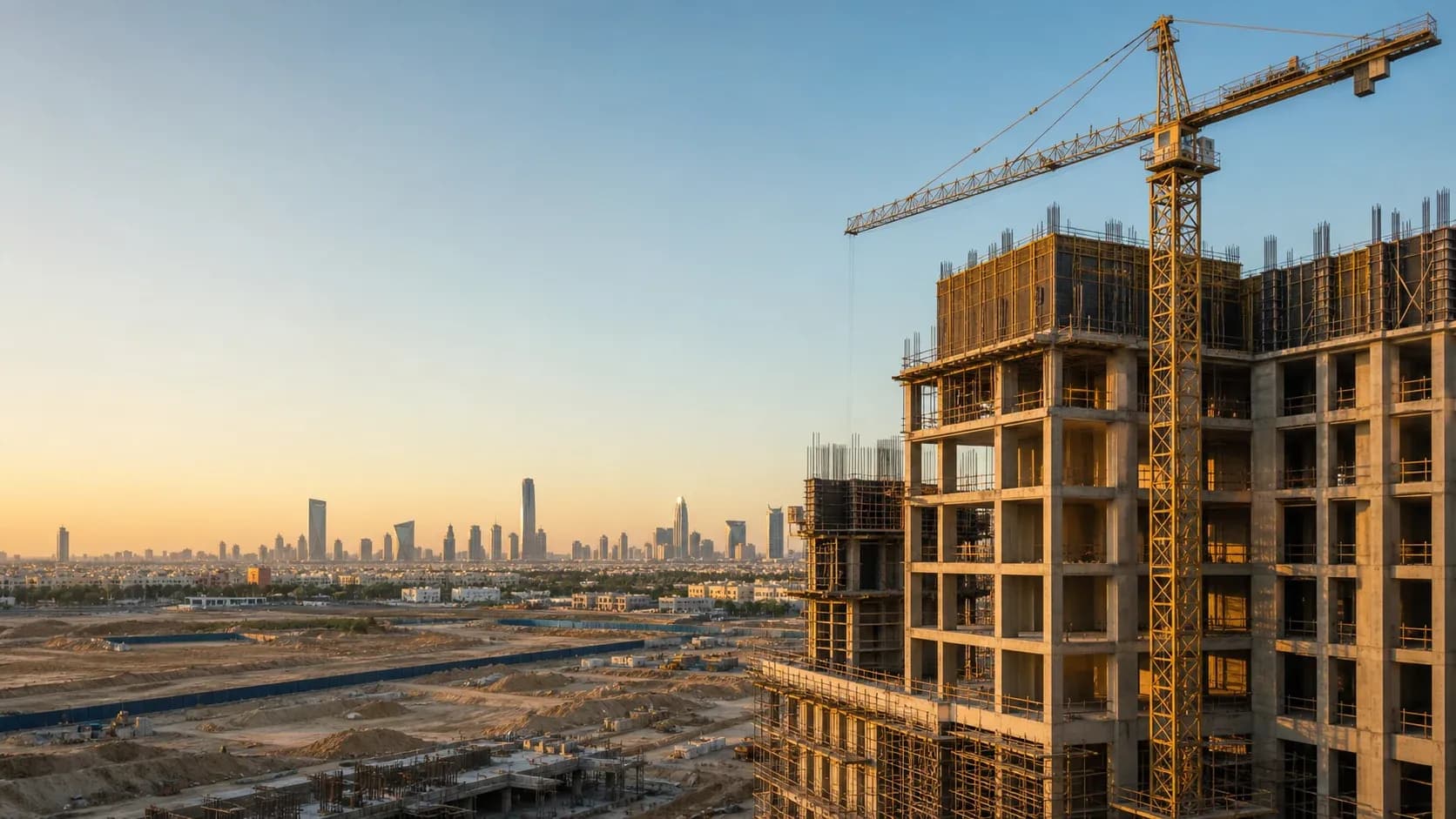
Off-plan property purchase in Saudi Arabia: an investor's guide
Purchasing off-plan real estate in Saudi Arabia should be analyzed as a legal and financial process rather than as a choice from a developer's catalog. First, check the active Wafi license for the specific project and the sales stage. Next, confirm the escrow account, the compliance of the bank details with the license, and the payment schedule in the SPA. Separately, verify the right of a foreigner to acquire property in a given zone, as Wafi does not confirm the buyer's eligibility. Gather documents regarding the land, the developer, the escrow, the handover, and refunds, and then hand them over to a lawyer in the KSA. When the license is missing, the contract does not describe delays, or the transfer is to go outside the designated project account, the reservation should be put on hold. Vision 2030 can be the context of the analysis, but it does not replace the due diligence of a specific unit.


Article summary
The most important conclusions from the article in 30 seconds.
Purchasing off-plan real estate in Saudi Arabia should be analyzed as a legal and financial process rather than as a choice from a developer's catalog. First, check the active Wafi license for the specific project and the sales stage. Next, confirm the escrow account, the compliance of the bank details with the license, and the payment schedule in the SPA. Separately, verify the right of a foreigner to acquire property in a given zone, as Wafi does not confirm the buyer's eligibility. Gather documents regarding the land, the developer, the escrow, the handover, and refunds, and then hand them over to a lawyer in the KSA. When the license is missing, the contract does not describe delays, or the transfer is to go outside the designated project account, the reservation should be put on hold. Vision 2030 can be the context of the analysis, but it does not replace the due diligence of a specific unit.
Saudi Arabia is attracting investors' attention with the scale of its urban transformation and the role of Vision 2030, but purchasing an off-plan property should not begin with visualizations or a declared ROI. For a buyer from outside the KSA, three independent questions are crucial: whether the project has the proper off-plan license, whether payments are directed to an escrow account assigned to the project, and whether a specific buyer can acquire a specific right to a property in a given zone. An affirmative answer to one of them does not confirm the others.
In 2026, the process is additionally sensitive to regulatory changes regarding foreign ownership. Wafi and REGA are organizing a portion of off-plan sales, but they do not replace the review of the SPA agreement, land status, construction schedule, or buyer qualification. A safe approach relies on working with license numbers, banking documents, registry confirmations, and written responses. This guide outlines the sequence of checks that allows separating verifiable data from sales narrative.
—
What is Wafi in KSA and why is it crucial for security?
Off-plan sales licensing system
Wafi is the official Saudi platform for off-plan property sales and leasing, operating under the supervision of the Real Estate General Authority (REGA). Its function is not to recommend investments or assess the future price of a unit. Wafi defines the framework in which the developer and the project can conduct property sales before construction is completed. Therefore, the most important thing for the investor is to distinguish between two elements: the status of the developer-company and the license assigned to a specific project and its sales stage.
Regulatory source: Wafi - off-plan sales and lease (REGA).
The list of licensing requirements explains why a well-known developer brand alone is not enough. The documentation includes, among others, a commercial register entitling the company to development activities, a legal relationship with the land owner, approved architectural and engineering designs, agreements with a consultant and an auditor, a feasibility study, an SPA template with a specified handover date, and an escrow account agreement with a bank licensed in the Kingdom. The investor does not have to decide on their own whether each document meets the requirements of KSA law, but should know that they have the right to request data that allows a lawyer and advisor to check the project's consistency.
Wafi also distinguishes between project marketing and proper off-plan sales. Under a marketing license, collecting reservation amounts is subject to restrictions: the developer must disclose the current status and plans, the reservation amount cannot exceed 5% of the unit's value, and the received funds must go to the designated escrow account. One should not automatically conclude from this that every offer mentioning Wafi is ready for signing an SPA. It is necessary to determine what license the project holds, its number, scope, and validity date, and what exactly it entitles the holder to on the date of payment.
The practical sequence of checks is simple. First, ask for the Wafi license number and the full name of the project in the language used in the registry. Second, compare this data with the entry on the REGA/Wafi platform, rather than solely with the agent's presentation. Third, check the consistency of the developer's name, land, unit, and bank account with the project described in the SPA. Fourth, keep copies of search results and the developer's responses in the transaction folder. If any of this information cannot be received in writing, the reservation stage should be suspended until clarified.
—
How to check an off-plan project license?
Digital and formal verification
The starting point is searching for the project on the official Wafi/REGA platform. The check should concern not only the marketing name, but also the license identifier, entity name, and location. In projects with similar names, it is easy to confuse the phase, special purpose vehicle (SPV), or building. Therefore, in correspondence with the developer, it is worth requesting a single project fact sheet containing: the license number, the developer's legal name, location, unit number or identifier, escrow account, license validity date, and handover schedule.
Next, it is necessary to separate the project check from the check of the buyer's rights. As of January 22, 2026, the updated real estate ownership system for non-Saudi individuals applies in the KSA. REGA indicates the Saudi Properties portal as the official path for this procedure. The law provides that the geographical scope, types of rights, foreign participation limits, and usufruct periods are determined according to appropriate rules and zones. In practice, this means that a Wafi license is not confirmation that a Polish investor can purchase any unit in the project. The right to sell off-plan and the foreigner's qualification are two separate tests.
Regulatory source: REGA - Non-Saudi property ownership system.
Do not base your decision on the phrase "foreign ownership available" in a brochure. Ask for the indication of the zone and the legal basis of the acquisition, and then verify it in Saudi Properties and with a local lawyer who will assess the buyer's status and type of right. A resident in the KSA, a non-resident investor, and a foreign company may go through different administrative paths. In the case of the holy cities, additional restrictions apply; one must not assume that the model used in Riyadh or Jeddah can be transferred without verification to Mecca or Medina.
Before making a reservation, take four actions. Access the registry using the license number, not just the name of the development. Save a screenshot or file confirming the active status and the date of the check. Compare the entry with the SPA draft, offer, and payment instructions. Finally, send a list of discrepancies to the developer and ask for a written response. If information appears about suspended sales, a license change, or a change of entity, do not try to resolve the problem with a verbal assurance. Demand a document and an update to the agreement.
—
How does escrow work for off-plan in Saudi Arabia?
Investor capital protection mechanisms
The escrow account is designed to separate buyers' money from the developer's regular operational turnover. It is not a guarantee of profit, timely handover, or resale price. However, it is one of the fundamental mechanisms through which an investor can verify whether funds are going into the system assigned to a specific project, rather than to the account of a company, agent, or intermediary entity.
See also: Escrow accounts in the GCC: Oman, Dubai, and Saudi Arabia.
Wafi requires an escrow account agreement concluded by the developer with a bank licensed in the KSA in the licensing documentation. Under a marketing license, reservation funds are to be paid into the indicated escrow account. From the buyer's perspective, the most important thing is therefore not the mere presence of the word "escrow" in the presentation, but the consistency of four elements: the recipient's name, the project name, the account number, and the provisions of the SPA. Bank details sent solely via a messenger app, an account in the name of an individual, or a general account without a clear link to the project require clarification before making a transfer.
In the SPA, the payment schedule should be clear and possible to relate to construction milestones or contract events. Check whether an installment is described by a date, a percentage of the price, and the condition of its exigibility. Compare the schedule with the handover date, delay conditions, consequences of non-payment by the buyer, and the refund procedure. Do not assume that the disbursement of funds from escrow automatically protects against every scenario of insolvency or project cancellation. The consequences of these situations result from project documents, regulator rules, and local law, and therefore require the opinion of a lawyer operating in the KSA.
Minimum checks before payment include: written escrow account details for a given project, confirmation of compliance with the license, payment terms in the SPA, work status, and the bank's name. Additionally, ask to indicate what progress report or technical consultant document is the basis for settling stages. If the developer cannot explain the relationship between the construction report, the next installment, and the project account, operational risk increases regardless of the location's quality.
Also note whether the agreement provides for a change of the escrow account and in what form the buyer will be notified of it. Do not update bank details based solely on an email message: request a document signed by an authorized entity and confirm the change in the context of the project license. It is good practice to check whether the transfer description in the bank instructions contains the project identifier and unit number. This makes it easier to later prove the purpose of the payment and compare it with the SPA schedule.
—
KSA vs. Dubai: Comparison of the off-plan process
Differences in regulatory maturity and procedures
Comparing the KSA with Dubai makes sense only when comparing elements of the process, not catalog prices alone. In Dubai, an off-plan investor typically works with DLD/RERA, Oqood registration, a project number, and the escrow system. In the KSA, Wafi, REGA, the project license, the escrow agreement, and the current foreigner ownership path are crucial. In both jurisdictions, the project, developer, cash flow, and SPA must be verified. However, the way an investor should confirm the right of acquisition and the maturity of data available for a specific transaction differ.
In Saudi Arabia, the status of foreigners and zones requires special caution. The current legal framework describes the possibility of acquiring property rights by non-Saudi individuals in areas specified by relevant decisions, and the Saudi Properties portal is meant to handle the verification of the procedure. This is not a model where a neighborhood name or a developer's declaration replaces verification. In Dubai, it is essential to confirm the freehold zone and project registration; in the KSA, the same level of control must be expanded to include the exact conditions applicable to a given buyer.
See also: Real Estate Investment in Saudi Arabia: A Guide.
The method of evaluating the payment plan also differs. A payment plan without classic interest is not free financing, but an obligation to pay subsequent installments. Compare the reservation amount, the deadline for each tranche, the moment of handover, possible assignment conditions, and transaction costs. Do not assume that a project in the KSA will have a lower price per square meter or higher value growth than a project in Dubai. The thesis of future growth requires a separate analysis of supply, infrastructure, tenant demand, financing availability, and resale conditions.
For an investor, the safest approach is a matrix of questions applied in both markets. Does the project have an active license number? Who manages the escrow account? Does the agreement describe penalties and refunds? What document confirms the right to the property upon completion? What condition must be met to make an assignment? Answers must be obtained for a specific unit, not the entire master plan. The context of Dubai is well complemented by the PlanoGroup article on choosing between an off-plan and ready property, but it should not be treated as legal documentation for the KSA.
See also: Dubai: Off-plan or ready properties? Model comparison.
—
What documents to show a lawyer before reservation?
Due diligence table and legal audit
A lawyer should not receive just a folder with renders and a price offer. Before making a reservation, provide them with one organized package: the project license, developer details, documents concerning land or land rights, escrow conditions, the SPA draft, the payment schedule, and information on the foreigner's qualification. Ensure that on every document it is possible to link the project, entity, unit, and date. Discrepancies in naming are a signal for an additional question, not an error to be ignored.
The table below is used to gather data and decisions. It does not replace legal opinion or a technical audit. Its purpose is to reveal deficiencies before paying the booking fee and to indicate which document requires confirmation by the regulator, bank, developer, or lawyer.
| Organ | No. / data | Document | Question to the developer | Proof | Risk | Decision |
|---|---|---|---|---|---|---|
| REGA / Wafi | License number | Project entry | Does the license cover this stage? | Result in the registry | Missing or discrepancy | Pause |
| Developer | Legal name | Commercial register | Who is a party to the SPA? | Current copy | Other entity than in the offer | Explain |
| Grunt | Title / agreement | Land document | Who has the right to develop land? | Copy and legal opinion | Unclear land title | Pause |
| Escrow | Bank and account | Escrow agreement | Does the account relate to the project? | Bank confirmation | General account or intermediary | Don't overpour |
| SPA | Venue, price, dates | Draft SPA | Handover, chores, return? | Version for review | Vague clauses | Correct / rate |
| Progress of work | Phase I Report | Consultant's report | What triggers the next installment? | Current report | No report | Further condition |
| Saudi Properties | Zone and path | Printout / opinion | Can a foreigner acquire a right? | Portal and lawyer | No qualifications | Do not book |
Saudi Arabia is capturing investors' attention with the scale of its urban transformation and the role of Vision 2030, but purchasing a property under construction should not start with renderings or a declared ROI. For a buyer from outside KSA, three independent questions are crucial: whether the project has the proper off-plan license, whether payments are directed to an escrow account assigned to the project, and whether the specific buyer can acquire the specific right to the property in a given zone. An answer to one of these does not confirm the others.
In 2026, the process is additionally sensitive to regulatory changes regarding foreign ownership. Wafi and REGA are streamlining part of the off-plan sales, but they do not replace the examination of the SPA agreement, land status, construction schedule, or buyer qualification. A safe approach relies on working with license numbers, bank documents, registry confirmations, and answers provided in writing. This guide shows the sequence of checks that allows separating verifiable data from the sales narrative.
—
What is Wafi in KSA and why is it crucial for security?
Off-plan sales licensing system
Wafi is the official Saudi platform for off-plan real estate sales and leasing, operating under the supervision of the Real Estate General Authority (REGA). Its function is not to recommend investments or assess the future price of a property. Wafi establishes the framework in which the developer and the project can conduct sales of real estate before construction is completed. For the investor, the most important thing is therefore to distinguish between two elements: the status of the developer-entrepreneur and the license assigned to a specific project and its sales stage.
Regulatory source: Wafi - off-plan sales and lease (REGA).
The list of licensing requirements explains why a well-known developer brand alone is not enough. The documentation includes, among others, a commercial register authorizing development activity, a legal relationship with the landowner, approved architectural and engineering designs, agreements with a consultant and an auditor, a feasibility study, an SPA template with a specified handover date, and an escrow account agreement with a bank licensed in the Kingdom. The investor does not have to decide on their own whether each document meets the requirements of KSA law, but they should know that they have the right to request data that allows a lawyer and advisor to check the consistency of the project.
Wafi also distinguishes project marketing from proper off-plan sales. With a marketing license, collecting reservation amounts is subject to restrictions: the developer must disclose the current status and plans, the reservation amount cannot exceed 5% of the unit's value, and the funds received must go to the indicated escrow account. One should not automatically conclude from this that every offer with the Wafi name is ready for an SPA to be signed. It is necessary to determine what license the project has, what its number, scope, and validity date are, and what exactly it entitles to on the day of payment.
The practical sequence of checks is simple. First, ask for the Wafi license number and the full name of the project in the language used in the register. Second, compare this data with the entry on the REGA/Wafi platform, and not solely with the agent's presentation. Third, check the compliance of the developer's name, land, unit, and bank account with the project described in the SPA. Fourth, keep copies of search results and the developer's responses in the transaction folder. If any of this information cannot be received in writing, the reservation stage should be suspended until clarified.
—
How to check an off-plan project license?
Digital and formal verification
The starting point is searching for the project on the official Wafi/REGA platform. The check should concern not only the marketing name, but also the license identifier, entity name, and location. In projects with similar names, it is easy to confuse the stage, special purpose vehicle (SPV), or building. Therefore, in correspondence with the developer, it is worth asking for a single project sheet containing: the license number, the developer's legal name, location, unit number or identifier, escrow account, license validity date, and handover schedule.
Next, it is necessary to separate the project check from the check of the buyer's rights. Since January 22, 2026, the updated real estate ownership system for non-Saudi individuals has been applied in KSA. REGA indicates the Saudi Properties portal as the official path for this procedure. The law provides that the geographical scope, types of rights, limits of foreign participation, and usufruct periods are determined according to appropriate rules and zones. In practice, this means that the Wafi license is not a confirmation that a foreign investor can purchase every unit in the project. The eligibility to sell off-plan and the qualification of a foreigner are two separate tests.
Regulatory source: REGA - non-Saudi property ownership system enters into force.
Do not base your decision on the phrase "foreign ownership available" in a brochure. Ask for the zone and legal basis of the acquisition to be indicated, and then verify it in Saudi Properties and with a local lawyer who will assess the buyer's status and type of right. A person living in KSA, a non-resident investor, and a foreign company may go through different administrative paths. In the case of holy cities, additional restrictions apply; one should not assume that the model used in Riyadh or Jeddah can be transferred without verification to Makkah or Madinah.
Before making a reservation, take four actions. Access the registry with the license number, not just the estate name. Save a screenshot or file confirming the active status and the check date. Compare the entry with the SPA project, the offer, and the payment instructions. Finally, send a list of discrepancies to the developer and ask for a written response. If information appears about suspended sales, a license change, or a change of entity, do not try to solve the problem with a verbal assurance. Demand a document and an update of the contract.
—
How does escrow work for off-plan in Saudi Arabia?
Investor capital protection mechanisms
The escrow account is meant to separate buyers' money from the developer's regular operational turnover. It is not a guarantee of profit, timely handover, or resale price. However, it is one of the basic mechanisms through which an investor can check whether funds are to go to a system assigned to a specific project, rather than to the account of a company, agent, or intermediary entity.
See also: Escrow accounts in the GCC: Oman, Dubai, and Saudi Arabia.
Wafi requires in the licensing documentation an escrow account agreement concluded by the developer with a bank licensed in KSA. With a marketing license, reservation funds are to be paid into the indicated escrow account. From the buyer's perspective, the most important thing is therefore not the mere presence of the word "escrow" in the presentation, but the compliance of four elements: the recipient's name, the project name, the account number, and the SPA provisions. Bank details sent solely via a messenger app, an account in the name of an individual, or a general account without a clear connection to the project require clarification before making a transfer.
In the SPA, the payment schedule should be clear and possible to relate to construction stages or contract events. Check whether an installment is described by a date, a percentage of the price, and the condition of its exigibility. Compare the schedule with the handover date, delay conditions, consequences of non-payment by the buyer, and the refund procedure. Do not assume that the release of funds from escrow automatically secures every scenario of insolvency or project cancellation. The consequences of these situations result from project documents, regulator rules, and local law, and therefore require the opinion of a lawyer practicing in KSA.
Minimum checks before payment include: written escrow account details for the given project, confirmation of compliance with the license, payment terms in the SPA, work status, and the bank's name. Additionally, ask to indicate which progress report or technical consultant document is the basis for settling stages. If the developer cannot explain the relationship between the construction report, the next installment, and the project account, operational risk increases regardless of the location's quality.
Also record whether the contract provides for a change of the escrow account and in what form the buyer will be notified of it. Do not update bank details based solely on an email message: ask for a document signed by an authorized entity and confirm the change in the context of the project license. It is good practice to check whether the transfer description in the bank instructions contains the project identifier and unit number. This makes it easier later to prove the purpose of the payment and compare it with the SPA schedule.
—
KSA vs. Dubai: Comparison of the off-plan process
Differences in regulatory maturity and procedures
Comparing KSA to Dubai makes sense only when comparing process elements, not catalogue prices alone. In Dubai, an off-plan investor typically works with DLD/RERA, Oqood registration, a project number, and an escrow system. In KSA, the key elements are Wafi, REGA, the project license, the escrow agreement, and the ongoing ownership path for a foreigner. In both jurisdictions, the project, developer, cash flow, and SPA must be verified. However, what differs is the way the investor should confirm the right of purchase and the maturity of data available for a specific transaction.
In Saudi Arabia, the status of the foreigner and zones requires special caution. The current legal framework describes the possibility of acquiring property rights by non-Saudi individuals in areas defined by appropriate decisions, and the Saudi Properties portal is to handle the verification of the procedure. This is not a model where a neighborhood name or a developer's declaration replaces a check. In Dubai, it is important to confirm the freehold zone and project registration; in KSA, the same level of control must be extended to the exact conditions applicable to a given buyer.
See also: Real Estate Investments in Saudi Arabia: A Guide.
The method of evaluating the payment plan also differs. A payment plan without classic interest is not free financing, but an obligation to pay subsequent installments. Compare the reservation amount, the deadline of each tranche, the moment of handover, possible assignment conditions, and transaction costs. Do not assume that a project in KSA will have a lower price per square meter or higher value growth than a project in Dubai. The thesis of future growth requires a separate analysis of supply, infrastructure, tenant demand, financing availability, and resale conditions.
For an investor, the safest approach is a matrix of questions applied in both markets. Does the project have an active license number? Who runs the escrow account? Does the contract describe penalties and refunds? What document confirms the right to the property upon completion? What condition must be met to make an assignment? Answers must be obtained for a specific unit, not for the entire master plan. The Dubai context is well complemented by the PlanoGroup article on choosing between an off-plan and a ready property, but it should not be treated as legal documentation for KSA.
See also: Dubai: Off-plan or ready real estate? Model comparison.
—
What documents to show a lawyer before reservation?
Due diligence table and legal audit
A lawyer should not receive only a folder with renders and a price offer. Before reservation, hand over one organized package: the project license, developer details, land documents or land rights, escrow conditions, the draft SPA, the payment schedule, and information on foreign qualification. Make sure that on every document it is possible to link the project, entity, unit, and date. A discrepancy in naming is a signal for an additional question, not an error to be ignored.
The table below serves to gather data and decisions. It does not replace legal advice or a technical audit. Its task is to reveal gaps before paying the booking fee and indicate which document requires confirmation by the regulator, bank, developer, or lawyer.
After filling out the table, ask the lawyer to evaluate three SPA clauses: delays and penalties, standards and project changes, and refunds and contract termination. Attach correspondence regarding post-handover costs, including Service Charge, management, taxes, and administrative fees. In KSA, the 15% VAT rate should not be mechanically repeated as a real estate purchase cost. ZATCA points to a 5% Real Estate Transaction Tax (RETT) on real estate transactions, while the application and settlement must be confirmed for the specific transaction structure and buyer status.
Tax source: ZATCA - Real Estate Transaction Tax (RETT).
Act in sequence: gather documents into a version-controlled folder, hand over the SPA draft to a lawyer specializing in KSA law, ask for a written assessment of the foreigner's right of purchase, and only then confirm the reservation. No "pre-launch" term justifies skipping this process.
In the legal assessment, it is worth immediately separating confirmed information from commercial assumptions. Confirmed data are the license number, contract, date, bank name, scope of rights, and registry entry. Assumptions are the planned rental price, the launch date of neighboring infrastructure, future resale value, and communications about limited supply. The lawyer should receive both sets, but only the first can be the basis for assessing the transaction's compliance with the law and the contents of the SPA.
Before reservation, also determine the party that will bear the costs of translation, notarization, registration, tax, and banking operations. Do not enter any item as "to be determined later" if its amount or the obliged entity affects cash flow. In the contract, indicate the governing language version, the method of serving notices, the applicable law, and the terms of pursuing claims. These elements do not replace the Wafi license, but they determine whether the buyer can exercise their rights when the transaction deviates from the plan.
—
When not to sign a reservation? Red flags
Early-stage warning signs
The first red flag is the lack of an active, verifiable Wafi license or a discrepancy between the registry entry and the offer. Information that the document "is in progress" is not enough. The investor must know whether the seller has current authorization for this sales stage and what the relationship is between the license, the project, and the specific unit. The second flag is pressure to make a transfer before providing escrow account details or before making the SPA draft available.
The process should also be interrupted when payment instructions do not indicate an account assigned to the project, when the recipient is an individual, or when the transfer description does not allow linking the payment to the unit. Doubts should also be raised by unclear rules for refunding the booking fee, the lack of a construction schedule, an unspecified handover date, and provisions that allow the developer to unilaterally and broadly change the project, size, or standard without the buyer's clear right to withdraw.
Risk is also increased by the lack of land documents, the developer's contract with the landowner, or the basis for using the property. In a project based on a large master plan, check what exactly the unit price includes and what remains an infrastructural promise. A road, metro station, marina, park, or retail section may be important for demand, but they are not contractual parameters unless they result from project documentation and the schedule.
If several questions remain unanswered, do not try to compensate for risk with an attractive price. Note the gaps in the due diligence table, assign an owner to each task, and set a condition for further discussion: a document, a registry entry, or a lawyer's response. Canceling a reservation is the right decision when the license, escrow, purchase rights, or refund rules cannot be confirmed. This is a decision to limit risk, not a missed opportunity.
An additional red flag is inconsistencies between document versions. When the offer states one area, the SPA draft another, and the payment schedule does not indicate the total price or unit details, ask for a correction before signing. Treat the lack of described post-handover costs in a similar way. Service Charges, management, insurance, finishing, taxes, and transaction fees do not have to have a final value at the construction stage, but the method of their calculation and responsibility for payment should be understood.
One should also not equate a recognizable brand with full risk limitation. The developer may have experience, but the investor is buying a specific project, a specific unit, and a specific contract. Each of these elements requires its own control.
—
Questions for the developer you must ask
Investor questionnaire
The most valuable questions are not "is the project safe?", but refer to a document, date, and responsible entity. Ask the developer for email responses or attachments that can be forwarded to a lawyer. Oral answers can help understand the process, but they do not replace SPA provisions or registry entries.
1. What is the number and type of the Wafi license for this project and its validity date?
2. Which REGA/Wafi entry confirms the developer's name, location, and sales stage?
3. Which bank runs the escrow for the project and what account name should appear on the transfer instructions?
4. Which document connects the specific unit to the project, license, and escrow account?
5. What is the handover date in the SPA, what are the delay conditions, and what rights does the buyer have?
6. Is the payment schedule linked to construction stages, a technical report, or another event described in the contract?
7. Are the location and right to the unit available to a non-GCC buyer; what path in Saudi Properties should be used?
8. Will the developer share the land document or the contract with the landowner?
9. What are the anticipated Service Charges, management costs, administrative fees, and the rules for updating them after handover?
10. What taxes and transaction fees apply to this specific transaction, who settles them, and at what stage?
11. When is an assignment possible before construction completion, what percentage of the price must be paid beforehand, and is the developer's consent required?
12. How does the refund procedure work if the contract is not concluded, the project is delayed, or the buyer loses the ability to purchase?
Compare the answers with the SPA provisions and registry data. When the developer uses terms such as "zone available to foreigners," ask for a document or a reference to the official procedure, not another presentation. When a declaration about the planned completion date is made, ask for a schedule and information on what the contract provides for in the event of a date change. When a lower entry cost is mentioned, calculate the full cash flow: reservation, installments, RETT or other fees, currency costs, liquidity reserve, finishing, and post-handover costs. Only such a set of data allows making a decision without relying on general market assurances.
—
FAQ
Is Wafi needed for every purchase in KSA?
The Wafi program is mandatory exclusively for off-plan real estate sales and leasing, while ready properties are subject to other legal procedures.
What is the minimum set of documents the developer should show?
The minimum includes project license data, developer data, the land document or the basis of disposing of it, escrow account data, the SPA draft, the payment schedule, and the handover date. For a foreign buyer, a separate verification of the right of purchase in a given zone is also necessary. The complete set of documents should be handed over to a local lawyer before payment.
Can a foreigner buy every off-plan project in Saudi Arabia?
No. The updated ownership framework for non-Saudi individuals is based on specific zones, types of rights, and procedures. Wafi confirms the off-plan process element, not the qualification of every buyer. Residency status, location, and the type of acquired right must be verified via the current Saudi Properties path and with a KSA lawyer.
Is Vision 2030 enough as an investment argument?
The Vision 2030 strategy creates a favorable market foundation, but every investment requires separate verification of the license, operating costs, and local demand dynamics.
When to cancel an off-plan reservation in KSA?
Cancellation is necessary in situations where there is no active Wafi license, unclear capital refund rules, or a lack of protection of payments in a certified escrow account.

Author
Mariusz Sawicki
MEMBER OF THE MANAGEMENT BOARD
He combines experience from the financial and real estate sectors, which allows him to support clients in making informed and well-thought-out investment decisions. He views real estate purchases not only through the lens of emotions, but primarily through data, security, and potential. He specializes in investment analysis and risk assessment, particularly in emerging markets such as Oman. In his work, he focuses on specifics, transparency, and a partnership-based approach.

Related articles

Escrow account in the GCC: Oman, Dubai and Saudi Arabia

Real Estate Investment in Saudi Arabia: A Guide

Dubai: Off-plan or ready-to-move-in properties? A comparison of models