


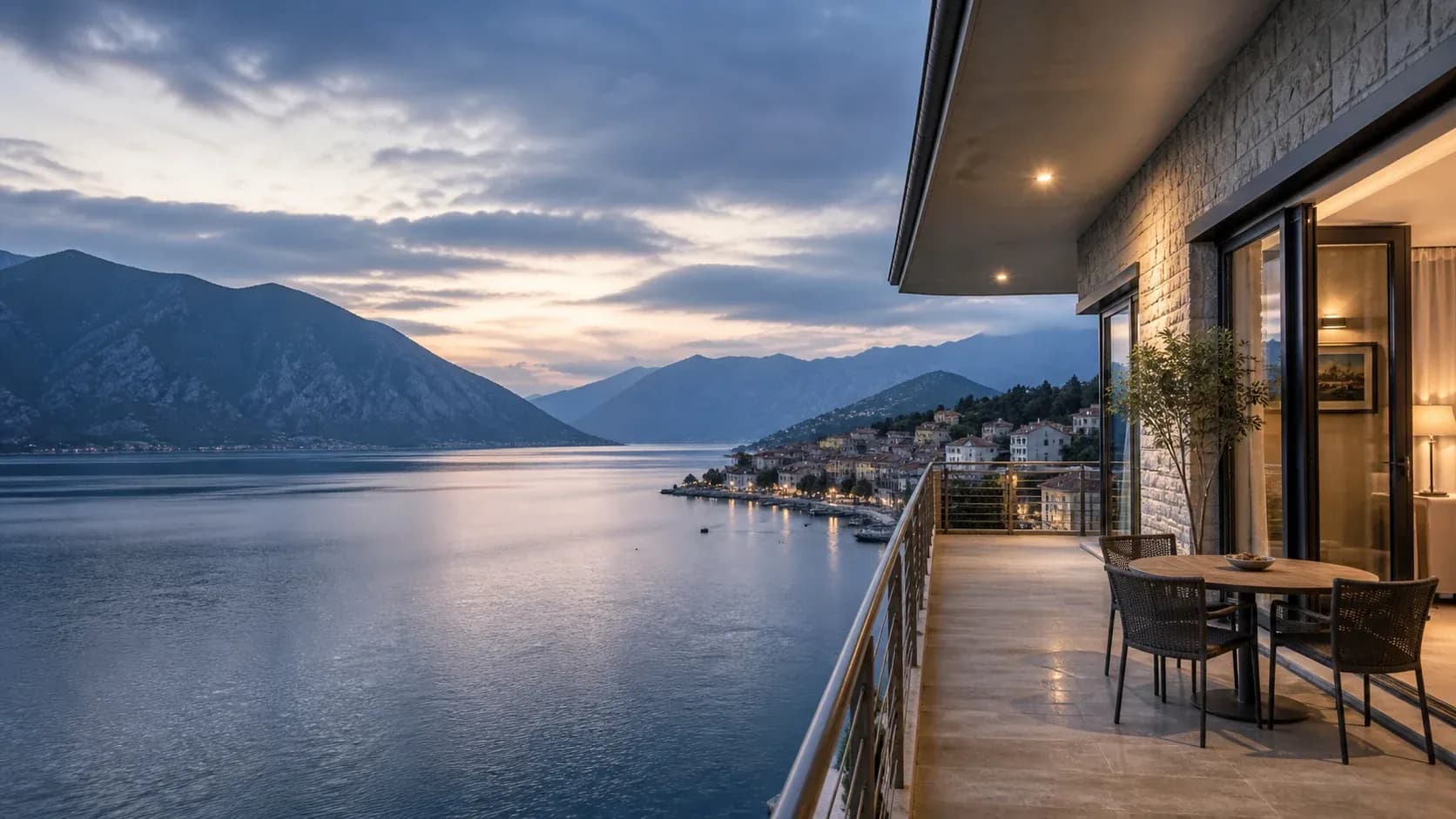
Real estate profitability in Montenegro in the off-season: how to evaluate a year-round rental?
The profitability of an apartment in Montenegro in the off-season does not depend primarily on how high the summer daily rate is. The outcome is determined by the annual cash flow model: the length and profile of demand, air connectivity, the standard of year-round use, fixed costs, the operator's ability to change the rental model, and the risk of vacancy. In summer, the property can operate on a short-term basis, but from autumn onwards, the investor should calculate a medium-term or annual variant and verify whether the property actually meets the needs of a winter tenant. The analysis requires comparing a specific micro-location, project documents, and market data, rather than repeating the declared yield. The article shows how to check these elements before purchase.


Article summary
The most important conclusions from the article in 30 seconds.
The profitability of an apartment in Montenegro in the off-season does not depend primarily on how high the summer daily rate is. The outcome is determined by the annual cash flow model: the length and profile of demand, air connectivity, the standard of year-round use, fixed costs, the operator's ability to change the rental model, and the risk of vacancy. In summer, the property can operate on a short-term basis, but from autumn onwards, the investor should calculate a medium-term or annual variant and verify whether the property actually meets the needs of a winter tenant. The analysis requires comparing a specific micro-location, project documents, and market data, rather than repeating the declared yield. The article shows how to check these elements before purchase.
Evaluating the rental of an apartment on the Adriatic is easy to do through the prism of July and August. However, this is a mental shortcut that distorts cash flow. The owner does not finance the Service Charge, insurance, utilities, loan installments, or the operator's work exclusively for eight weeks of summer. Therefore, before buying, one must calculate a full twelve months: the high season, transitional months, and the period when tourist demand is lower and the property must meet the needs of a different tenant.
In Montenegro, the investment result outside the season is shaped primarily by the micro-location, the quality of year-round infrastructure, transport accessibility, technical standards, and management strategy. The same view of the bay may have a different value for a guest staying for three nights in July and a different one for someone working remotely for three months in winter. Therefore, the investor should separate income potential from sales declarations and build their own model of revenues, costs, and vacancies.
—
Seasonality in Montenegro: How to Divide the Year into Financial Blocks?
Division into High Season, Shoulder Season, and Winter Period
Short-term rental is usually of the greatest importance in the summer months, but this does not mean that the rest of the year is homogeneous. For the financial model, it is worth separating at least three blocks: the high season, transitional months, and winter. In the first, the visibility of the offer, the speed of service, and the maximization of revenue from available nights matter. In the second, the market more often rewards a good price-to-quality ratio, flexible stay rules, and efficient communication with the airport. In winter, the burden of analysis shifts from weekend tourism to medium-term stays, annual rental, or minimizing vacancies.
One should not enter a single "average rate" for the entire year into the model. It is safer to break down revenues into separate assumptions for each month: the number of available nights, expected occupancy, gross rate, channel commission, cleaning, operator remuneration, and potential discounts for longer stays. Tourist traffic data should be confronted with observations of a specific municipality; MONSTAT publishes tourist statistics, but accommodation market statistics do not replace data from comparable apartments or a local operator's report.
Changing the rental model should not happen automatically on October 1st. The owner, together with the operator, should determine a deadline after which the short-term calendar is closed for single nights, and the offer goes to a recipient looking for a stay of two, three, or six months. The decision must take into account the flight schedule, demand from previous seasons, the costs of re-preparing the premises, and the risk that abandoning short-term reservations will not bring a long-term tenant.
What to Verify Instead of Seasonal Intuition
Before buying, ask for the monthly occupancy history and average length of stay for comparable properties, ideally from at least two full years. Check whether the result applies to an apartment of a similar standard, number of bedrooms, parking, view, and distance from services. Ask the operator how many reservations outside of summer were canceled and how long the property remained vacant between stays. This data is more important than the highest offer visible on the booking portal.
In the colder months, the property must also be viewed through the prism of the weather. Bura winds, precipitation, humidity, and the shadow cast by the mountains do not have the same value for the entire coast, but they can change the comfort of using the terrace, the path to the garage, or the temperature inside. A winter visit provides information that a July photo session will not show.
Monthly Calendar of the Owner's Decisions
A good calendar does not end with entering the summer season. For each month, set the date by which the operator reports reservations, the moment of price changes, the discount limit, and the condition for transitioning to the medium-term offer. Also record who makes the decision to lower the price and whether the owner accepts it in advance. Without this, the property may be listed in the holiday model for too long, even though the market is already looking for stays of several months.
Compare results at the net level and channel level. Direct booking, a stay from a platform, and a rental acquired by a local intermediary have a different commission, a different service cost, and a different cancellation risk. In the monthly control card, record the number of inquiries, the number of confirmed reservations, the length of stay, the average vacancy time, and the cost of acquiring a guest. After one full year, such a set creates material for model correction, rather than just the impression that "nothing happens in winter."
—
Profile of the Winter Tenant: Who Generates Demand from October to May?
Digital Nomads, Expats, and Yacht Crews
In winter, the offer should not be directed to an anonymous "tourist." First, the user of the premises must be named. This could be a remote worker, a specialist implementing a project in the region, an expat, a family waiting for the completion of their own home, or a maritime industry worker. Montenegro provides a path for temporary residence for digital nomads working electronically for a foreign company or their own company not registered in the country. The residence status alone does not guarantee demand for a specific apartment, but it shows that the remote work segment should be analyzed as a separate tenant profile.
For such a user, the view and the beach are an addition, not the basis of the decision. The value of the property is more often determined by a stable internet connection, heating, an ergonomic workspace, a washing machine, a full kitchen, an elevator, parking, the possibility of registration, and clear utility billing rules. It is worth checking whether the operator can confirm the internet parameters in writing and whether the building has an out-of-season emergency repair procedure.
In Tivat and near yacht infrastructure, it is worth separately inquiring about demand related to crews, service, and operational facilities. However, it must not be assumed based solely on the presence of the marina. Data from local intermediaries is needed: tenant profile, typical length of stay, budget, and requirements regarding location, parking, and equipment.
Apartment Design for Medium-Term Stays
An apartment intended for year-round use should be designed as a functional apartment, not just as a holiday flat. A layout with a separate bedroom and workspace may have a different demand profile than a studio of the same surface area. Before buying, check the table dimensions, number of sockets, Wi-Fi coverage in every room, quality of blackout, wardrobe capacity, and the possibility of storing the tenant's belongings for several months.
When comparing designs, it is worth separating common elements from the features of the private property. The marina, restaurants, or concierge can support year-round use, but the investor must know the actual operating hours, fees, and rules of use out of season. In this context, it is useful to compare second home rental assumptions with the operator's regulations and owner usage rules.
See also: second home as an investment and rental management.
How to Check if the Building Meets Year-Round Needs
The description of the ideal tenant should be turned into a list of building requirements. Determine whether the entrance is convenient with luggage, whether the elevator works out of season, whether parcels can be safely collected, and whether the administrator has an emergency duty officer. Ask about the rules for using the garage, bicycle storage, and who lets in the repairman when the owner is in Poland. For someone renting for several months, such matters are often more important than terrace equipment.
Verify demand through conversations with several independent sources: a short-term operator, a long-term rental broker, and the building manager. If each indicates a different tenant profile, do not average the answers — determine which channel the data comes from and what type of premises it applies to. Ask for a sample contract and a list of the most frequent questions asked by winter tenants. Thanks to this, the equipment, regulations, and settlement model can be prepared before the first off-season period.
—
Cash Flow Modeling: Real Numbers Out of Season
Calculation of Net Revenue, Not Declared Yield
The model should be built from gross revenue, but decisions should be made based on net cash flow. For each month, record: the number of available days, assumed occupancy, rate, revenue from additional services, platform commission, operator commission, cleaning, laundry, utility consumption, and repair reserve. Then add fixed costs: Service Charge or community fees, tax, insurance, accounting, internet, bank fees, and CAPEX for equipment.
Calculate the cost of private use of the premises separately. An owner's week at the peak of the season is not neutral: it reduces the number of nights available for sale and sometimes requires additional cleaning and calendar blocking. If the apartment is in a rental pool, the contract should explain the method of revenue sharing, payment deadlines, costs of exclusion from the pool, equipment standard, renovation rules, and the right to inspect reports.
A pessimistic scenario is not a market forecast. It is a model stress test. You can assume a working occupancy of 20–30% in January and February solely as an assumption for the sensitivity test, and then check whether the project maintains liquidity after deducting all costs. If the model only works with a full calendar in July, it is not a year-round model.
Location Comparison Table
The table below organizes the criteria that must be confirmed with the operator and during an on-site visit. It does not replace the study of specific rates or building due diligence.
| Location | Access in winter | Source of demand | Tenant profile | Length of stay | Vacancy risk |
|---|---|---|---|---|---|
| Budva | Check flights TIV/TGD | Municipal services and tourism | Short and medium-term guests | Confirm with the operator | Higher without winter plan |
| Kotor | Compare TIV/TGD and the commute | Cultural tourism and off-peak stays | Couples and individual guests | Confirm with the operator | Service and season dependent |
| Tivat | Check the current TIV schedule | Marina and mobile work | Crews, expats, mobile workers | Confirm with the operator | Segment-dependent |
| Luštica Bay | Check data usage and connections | Resort infrastructure | Second home and longer stays | Operator rules | Operator and cost dependent |
Budva, Kotor, Tivat, and Luštica Bay should not be compared using a single yield figure. Budva may have a stronger commercial component and a more developed rental base, Kotor benefits from tourist recognition, Tivat is connected to the marina economy, and a resort project may offer its own infrastructure and management model. In each case, however, check the same set of facts: real winter accessibility, the source of demand, the number of comparable units, rental terms, parking, maintenance costs, and vacancy risk.
Related reading: a guide to the primary market in Montenegro.
—
Infrastructure and Logistics: Why Does Podgorica Beat Tivat in December?
Air Access and Life After the Season
Do not assume that a route available in July will operate in December. The official Tivat Airport flight schedule is seasonal and may change; before buying, check the actual routes for the dates when the unit is expected to attract tenants. Compare Tivat with Podgorica and, if it matters for your target group, with airports in the region. What counts is not only the number of routes, but also frequency, travel time, arrival times, and transfer cost.
Distance from the airport should be assessed under real winter conditions. Drive the route at the same time of day when a tenant would arrive with luggage, and check parking and taxi availability. For a stay of several months, shops, pharmacies, a clinic, a school, workspace, and year-round restaurants are just as important. The answer "everything is close in summer" says nothing about how the location functions in January.
Off-Season City Test
During a winter visit, carry out a simple service audit. Mark open shops, a pharmacy, a petrol station, restaurants, a gym, a parcel locker or courier point, and a stop on the map. Visit the building after dark; check the lighting on the approach, whether the lift works, the humidity in the garage, and how waste collection is handled. If the model assumes medium-term rental, also ask about the internet connection, HVAC service, and the administrator's response time.
Access as an Operating Cost, Not a Travel Detail
Winter accessibility needs to be priced in. In the rental calculation, include the transfer cost, travel time, possible delays, and an alternative route in case a flight is cancelled. For a three-night guest, an additional connection may reduce the likelihood of booking. For a tenant staying several months, it may not be decisive, but everyday functionality then becomes more important: shopping, offices, healthcare, school, a place to work, and the quality of the road to the building.
Compare not only the airports, but also the character of each town. Tivat may be convenient for a segment that wants to be close to the marina and the bay. Podgorica may better suit someone who needs year-round urban services. None of these assumptions is universal; they need to be tested for a specific building, stay period, and tenant source market. In practice, a useful test is to plan a trip from Warsaw or Berlin during a week in January, and then follow the entire route to the apartment door.
The operator's working rhythm also matters. Ask whether they have someone to receive guests after a late arrival, whether they use self check-in, how emergency key handover works, and who responds when the internet stops working in the evening. Check whether the building has key boxes, monitoring, and stable entrance lighting. These are not spectacular details, but they directly affect reviews and operating costs.
During the visit, prepare two maps: an arrival map and a daily-life map. The first covers the airport, the road, parking, refuelling, and shopping after arrival. The second covers a pharmacy, supermarket, winter-open restaurants, walking options, transport, and a service point. If the location does not pass these two tests without additional explanations, assume a higher vacancy risk or a higher tenant acquisition cost.
—
Technical Property Parameters: Red Flags During a Winter Viewing
Insulation, Heating, and Quality of Workmanship
A seaside property may look good during the season and perform worse in winter. Check ventilation, traces of moisture in the corners, the condition of the joinery, wall insulation, terrace drains, and the air-conditioning service history. Ask for the heating system specification, appliance manuals, and indicative utility bills from the colder period. A multi-split system, underfloor heating, and a pellet stove all have different costs, servicing requirements, and user comfort; do not choose based only on the name of the device.
In the Bay of Kotor, sun exposure becomes especially important. Take a photo of the view from the living room around noon, but repeat the observation in a winter month or use a shading analysis. The mountains may limit sunlight for some units, which affects comfort, humidity, and heating costs. Also check construction noise: outside the season, it may be more noticeable than during summer tourist traffic.
Off-Season Inspection Checklist
On site, verify the temperature and smell in the unit after it has been closed, the operation of heating and air conditioning, signs of condensation, internet speed, phone coverage, drains, noise, entrance lighting, the condition of the garage, open services, and the route from the airport. Take photos, ask for a service report, and write down questions for the developer or owners' association. These steps reduce risk, but do not eliminate it; they should become part of the transaction documentation and management plan.
When assessing protection for the unit, also see property insurance abroad.
Documents and Measurements Worth Requesting
A viewing should end with a list of evidence, not just an impression. Ask for the specification of windows, insulation, and heating, the HVAC manual, inspection reports, warranty scope, and the owners' association rules for breakdowns. If the building is new, check the procedure for reporting defects after handover and the deadline for removing them. If the unit has already been used, ask about repairs related to moisture, leaks, ventilation, and terrace drains.
It is worth taking simple measurements on the day of the viewing: the temperature near windows and in corners, the noise level with the window open and closed, internet speed, and the time it takes for the room to heat up. The results are not a construction expert opinion, but they help decide whether a technical opinion is needed. Do not accept the answer "this is normal by the sea" without documentation and an indication of who bears the cost of any repair.
Also check the externally exposed elements. The terrace, railings, joinery, roof, parking spaces, and facade installations are exposed to moisture and salt. Pay attention to drains, slopes, cracks, the condition of joints, and corrosion. If the parking space is in a garage, inspect it during rainfall or ask for material from such a day. This helps assess whether the garage and access route will be usable for a tenant all year round.
Finally, prepare a list of defects and questions to review with the owner, lawyer, and operator. Each item should have a responsible person, a response deadline, and a supporting document. This order makes it easier to compare several units and prevents a situation in which a technical cost appears only after the rental operation has started.
—
Selection Strategy: Annual Rental or Hybrid Model?
When Stability Outweighs the Highest Daily Rate
The hybrid model combines short-term rental during periods of high demand with medium-term or long-term stays outside the season. It may increase unit utilisation, but it requires an active operator, a quick response to changes in tenant segment, and clear rules for preparing the apartment. Annual rental reduces turnover and the number of operations, but it may reduce the owner's flexibility and prevent them from benefiting from summer demand.
There is no model that is right for every location. In Podgorica, annual rental may be considered through the lens of urban functions and tenant profile, but it requires verification of supply, the contract, deposit protection, and costs. On the coast, a hybrid model may be justified if there is a real channel for acquiring off-season tenants. The key question is whether the manager can sell longer stays or only waits for individual bookings from a platform.
Before signing an agreement with the operator, ask for a monthly report template, discount approval rules, a list of sales channels, commissions, payout dates, the owner's access to the calendar, the repair procedure, and obligations during vacancy. These are operating terms that affect the result as strongly as the location.
How to Make the Decision and Record It in the Operator Agreement
First, define the owner's priority. If monthly cash-flow liquidity is most important, a longer lease and lower turnover may be preferred. If the goal is flexibility and private use of the unit, the hybrid model may be more appropriate, but it requires a larger operating budget and efficient management. Do not mix these goals in a single assumption. In the spreadsheet, mark which weeks are reserved for the owner and which remain available for sale.
The agreement with the operator should describe the process for switching between rental segments. Establish who sets the minimum length of stay, when a several-month booking may be accepted, who finances re-equipping the apartment, and whether there is a fee for early termination of the stay. Also specify reporting: gross revenue, discounts, commissions, cleaning costs, utilities, repairs, the balance due to the owner, and the payout date. Without these items, it is impossible to compare two operators or settle the net result.
Check the plan for periods without a tenant. Does the manager regularly inspect the unit, air it out, start the installations, respond to moisture, and document its condition? In the event of damage, does the owner receive photos, a cost estimate, and information about downtime? This part of the agreement is important for both annual and hybrid rental, because an empty seaside unit still generates costs and technical risk.
The decision should be approved only after speaking with a lawyer and reading the owners' association rules or the rental pool regulations. Check whether the building permits the chosen usage model, what the registration rules are, whether keys can be handed over remotely, and who is responsible for compliance with local requirements. Only then is the choice of strategy an investment decision, rather than a response to one good photograph or one high rate from the season.
—
Pre-Purchase Real Estate Audit in Montenegro
If you are looking for a unit that is to be used and rented year-round, the analysis should go beyond summer photos. PlanoGroup can help organise an audit of rental assumptions, maintenance costs, technical condition, project documents, and micro-location realities. The goal is not a promise of a result, but a set of questions that allows projects to be compared on the same basis: net income, vacancy risk, Service Charge, year-round standard, and the operator's scope of work.
—
FAQ
Can an Apartment in Montenegro Generate Income Outside Summer?
Yes, but the form of demand may be different than in the high season. Depending on the location, medium-term rental, annual rental, or limiting vacancy between shorter bookings may make sense. Before purchase, the tenant profile, unit parameters, service availability, and operator data must be confirmed. Summer occupancy and rates should not be carried over to every month of the year.
Why Should Winter Flights Be Checked Before Purchase?
Flight availability affects tenant convenience, length of stay, and the cost of reaching the unit. Schedules are seasonal, so a specific route must be checked for off-season dates instead of relying on a summer route map. Comparing Tivat, Podgorica, and alternative airports should be part of the micro-location analysis.
Does Annual Rental Carry Lower Risk Than Holiday Rental?
Annual rental may provide a more predictable rhythm of cash inflows and fewer operations, but it is not automatically safer. The tenant's credibility, the contract, deposit, local rules, repair costs, and the risk of losing flexibility during the season must be assessed. A hybrid model can work well if the operator has proven channels for acquiring long-term tenants.
What Should Be Checked During an Off-Season Visit?
Check heating, ventilation, moisture, sunlight, internet quality, the route from the airport, parking, noise, and the actual operation of services in the area. Ask for technical documents, service history, owners' association rules, the management agreement, and sample rental reports. A winter visit does not replace legal due diligence, but it reveals risks that are not fully visible during the season.
Do Budva, Kotor, and Tivat Have the Same Rental Profile?
No. They differ in location function, demand, infrastructure, transport accessibility, and the type of comparable supply. Instead of choosing a town based on its general reputation, compare the specific building and its immediate surroundings: access, parking, services, development plan, costs, and the possibility of year-round use.

Author
Patrycja Kordys
BOARD MEMBER | SALES DIRECTOR
For nearly 17 years, she has been associated with the premium real estate market. She gained her experience working with international clients—particularly German and English speakers—ensuring the highest standard of service and communication. After years of working on the Costa del Sol, she now focuses on the dynamically developing market of Oman, where she supports clients in discovering new investment opportunities and lifestyles. She combines professionalism with a natural ease in building relationships, ensuring that the purchasing process is smooth and stress-free.

Related articles
Property insurance abroad: how to protect your ROI?


Real Estate in Montenegro: A Guide to the Primary Market

Second home as an investment – how to manage rentals and ROI?