


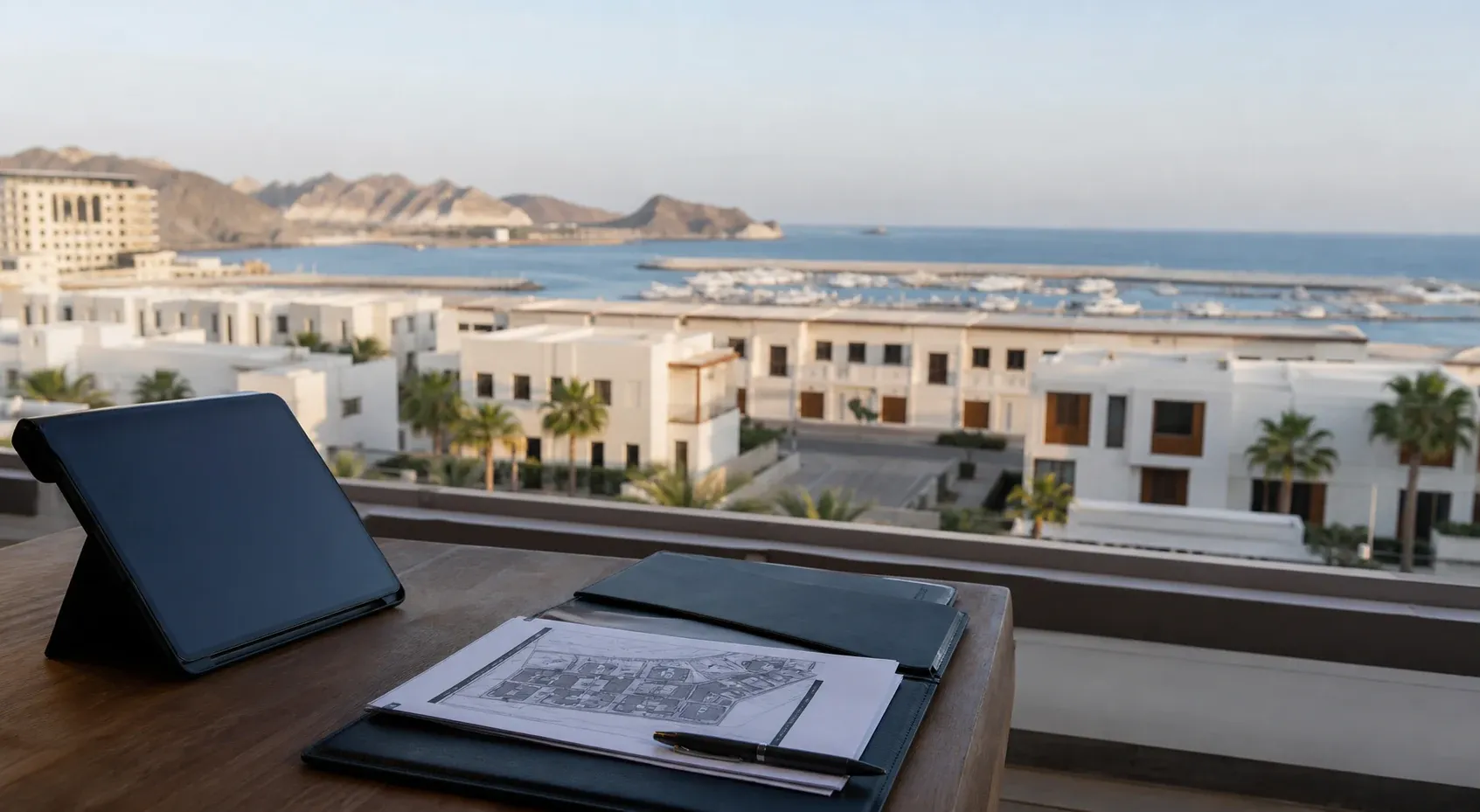
Real Estate Investment in Oman – 2026 Legal Guide
Purchasing real estate in Oman in 2026 requires much more precise due diligence than simply analyzing price, location, and a sales brochure. For an investor from Poland, three layers of control are key: the legal status of the project, the flow of funds, and the possibility of subsequent registration and use of the property in accordance with the investment objective. The biggest change is that the current article cannot rely on outdated mental shortcuts regarding escrow, off-plan, and foreign ownership. The benchmark for the market is Royal Decree 79/2025, which issued the Law Regulating Real Estate, and Royal Decree 56/2026, which issued the Law of the Real Estate Registry. The older RD 30/2018 concerning the System of Escrow Account for Real Estate Development Projects is marked as repealed by RD 79/2025; therefore, it should not be treated as an independent, current legal basis for new transactions. For the investor, this means one thing: before a reservation fee appears, you must see the documents, not just the project presentation. Items to be checked include, among others: SPA or PSPA, confirmation of Integrated Tourism Complex (ITC) status or other grounds for acquisition by a foreigner, Mulkia/title deed, land registry documents, building permit, approval or license for off-plan sales, an escrow account assigned to a specific project, payment schedule, Service Charge rules, finishing standards, and the method of calculating floor area.


Article summary
The most important conclusions from the article in 30 seconds.
Purchasing real estate in Oman in 2026 requires much more precise due diligence than simply analyzing price, location, and a sales brochure. For an investor from Poland, three layers of control are key: the legal status of the project, the flow of funds, and the possibility of subsequent registration and use of the property in accordance with the investment objective. The biggest change is that the current article cannot rely on outdated mental shortcuts regarding escrow, off-plan, and foreign ownership. The benchmark for the market is Royal Decree 79/2025, which issued the Law Regulating Real Estate, and Royal Decree 56/2026, which issued the Law of the Real Estate Registry. The older RD 30/2018 concerning the System of Escrow Account for Real Estate Development Projects is marked as repealed by RD 79/2025; therefore, it should not be treated as an independent, current legal basis for new transactions. For the investor, this means one thing: before a reservation fee appears, you must see the documents, not just the project presentation. Items to be checked include, among others: SPA or PSPA, confirmation of Integrated Tourism Complex (ITC) status or other grounds for acquisition by a foreigner, Mulkia/title deed, land registry documents, building permit, approval or license for off-plan sales, an escrow account assigned to a specific project, payment schedule, Service Charge rules, finishing standards, and the method of calculating floor area.
What has changed in Oman's real estate law in 2025-2026?
In 2025-2026, the focus of legal due diligence for real estate in Oman shifted. Royal Decree 79/2025 issued the Law Regulating Real Estate. The decree was published in Official Gazette 1613 on September 14, 2025, and provides for entry into force 180 days after publication.
From a foreign investor's perspective, there are three important consequences. First, the new law organizes real estate market regulation and strengthens the role of the MoHUP, i.e., the Ministry of Housing and Urban Planning. Second, RD 79/2025 repeals previous regulations concerning real estate brokers, apartment and floor ownership, and the System of Escrow Account for Real Estate Development Projects. Third, existing decisions and regulations may only operate to the extent that they do not conflict with the new law, until new implementing acts are issued.
For purchasing practice, this third element is the most important. If a developer is selling an off-plan project, the investor should ask what the current basis for the sale of the project is, which authority issued it, whether the documentation has been adapted to RD 79/2025, and whether a transitional regime is in effect. A general assurance that a project is well-known in the market does not replace the decisions, licenses, or documents assigned to a specific plot and stage of investment.
The second pillar of change is Royal Decree 56/2026, which issued the Law of the Real Estate Registry and repealed the previous Real Estate Registry Statute RD 2/98. For the buyer, this means a greater emphasis on registry documents: plot identification, Mulkia/title deed, encumbrances, mortgages, restrictions, entries, and documents required for the transfer of rights. It is not enough to know that the project is in a recognized location. One must link the unit, building, and land to the documents that allow for registration.
In the background remains RD 58/2026 regarding the Urban Planning Law. It is not the primary basis for the sale of a unit, but it is significant for the project's compliance with urban planning, the masterplan, and permits. For projects in Muscat, it is worth asking about compliance with the Greater Muscat Structure Plan (GMSP), especially when the seller builds a narrative around the development of infrastructure, tourism, roads, marinas, golf courses, or new waterfront construction.
Also still relevant are RD 12/2006 regarding real estate ownership by non-Omanis in Integrated Tourism Complexes and RD 29/2018 regarding ownership restrictions in specific locations. ITC status may be important for acquisition by a foreigner, but it should not be simplified to the slogan: "you buy and everything is automatic." One must check the document confirming the status of the project or stage and the conditions for residency procedures via the Royal Oman Police eVisa.
—
Why is a sales brochure not the same as a contract?
Sales materials are meant to tell the story of a project. A contract is meant to define the rights and obligations of the parties. In real estate investments, this difference is crucial because a render, CGI, promotional video, table with projected ROI, or an agent's declaration do not necessarily have the same evidentiary value as an SPA, PSPA, and technical annexes.
In practice, an investor should separate three groups of information. The first is marketing: visualizations, photos of the area, lifestyle narrative, slogans about future value, projected yield, and sample rental models. The second is contractual documents: draft SPA or PSPA, payment schedule, unit plan, Schedule of Finishes, handover rules, Service Charge regulations, resale conditions, and withdrawal rules. The third is the project's legal documents: Mulkia/title deed, building permit, ITC status, off-plan approval, escrow account, and registry documents.
If a swimming pool, golf course, marina, standard of equipment, hotel operator, view from the window, or the scope of rental management services do not appear in the SPA/PSPA or an annex, the investor should treat them as a marketing risk. This does not mean that the element will not be built. It means that one must check if and where it has been legally described.
In off-plan projects, the legal audit trail is of particular importance. An investor should be able to answer simple questions: who is selling, on what basis are they selling, which land is covered by the project, does the developer have the right to dispose of the land, which unit is the subject of the contract, where do the funds go, and which documents confirm the project's status. If this path cannot be traced, the risk has not yet been measured.
Binding documents - investor checklist
Before paying a reservation fee, an investor should ask for at least: a draft SPA or PSPA, unit plan, standard of finishes, payment plan, conditions for developer delay, rules for buyer delay, Service Charge regulations, resale conditions before handover, withdrawal conditions, rules for transfer of rights, and a document confirming the developer's right to the land.
If the project is part of a mixed-use development, one must also check the scope of common areas, management model, projected maintenance costs, parking rights, rules for using amenities, and any division into stages. In waterfront, golf, or hotel projects, it is important whether access to infrastructure is an owner's right, a paid service, an element managed by an operator, or solely an element of sales communication.
—
How to check a developer in Oman?
Verification of a developer in Oman should not start with the question of whether the brand is recognizable. It should start with the question of whether the entity has a current basis to offer this specific project. After RD 79/2025, compliance of the developer's activities, off-plan sales, and project documentation with MoHUP requirements takes on particular importance.
Due diligence should be divided into three levels: developer, project, and unit. At the developer level, the investor checks the company registration, license or approval, implementation history, financing structure, disputes, contractor reputation, and experience in projects of a similar scale. At the project level, they check the land status, masterplan, building permit, escrow account, ITC status, off-plan approval, and stage of implementation. At the unit level, they check the unit number, net and gross area, share in common areas, price, payment plan, handover conditions, and resale conditions.
The participation of public institutions, a recognizable hotel operator, or a well-known brand may increase the project's credibility, but it does not replace legal verification. In practice, a partnership, an operator's logo, or the presence of a large entity in a project are only one signal. The investor should still see documents related to the land, project, escrow, and the ability to sell the specific unit.
Step by step: developer due diligence
Step 1: ask for the full name of the entity that will be a party to the SPA/PSPA. The project's marketing name is not always the name of the selling company.
Step 2: ask for a document confirming the current right to offer the specific project. A general business license is not enough if an off-plan unit is being sold.
Step 3: check if the developer has the right to dispose of the land. Here, the Mulkia/title deed, registry documents, and contracts or decisions that link the entity to the project are significant.
Step 4: ask for the building permit, masterplan, and documents confirming compliance with the investment stage. If the project refers to the GMSP, waterfront development, or public infrastructure, separate the planning documents from sales forecasts.
Step 5: compare the developer's history with the new project's schedule. Useful questions are: how many projects have been completed, how many are under construction, were there delays, who is the main contractor, and how is the investment financed?
—
What should a secure escrow account contain?
An escrow account in a real estate project is not a decoration for documentation. It is a mechanism for controlling the flow of funds. In simple terms, it is meant to separate buyers' money from the seller's regular operating account and link payments to the project. However, it does not mean that escrow removes all investment risks.
In 2026, the escrow section must be written carefully. It should not be based on RD 64/2014 if there is no confirmation that it is the proper basis for an Omani project escrow. Nor should the current article be based solely on RD 30/2018, because Decree.om marks this act as repealed by RD 79/2025. The proper approach is to treat escrow as an element of the current regulatory regime and check the implementing documents, MoHUP practice, and the document confirming escrow for the specific project.
The investor should ask for the name of the bank in Oman, account name, account number, beneficiary, the link between the account and the project, rules for releasing funds, the procedure for confirming milestones, a receipt template, and information on whether all payments go directly to the project account. The receipt should indicate the project, the buyer, the amount, the purpose of the payment, and the party receiving the funds.
If the seller asks for a transfer to a marketing account, a foreign account, an intermediary's account, a parent company's account, or an account whose name does not match the project documentation, the investor should withhold payment. First, a written explanation and verification by a local lawyer in Oman are needed.
What does escrow not guarantee?
Escrow can limit the risk of improper money flow, but it does not guarantee project completion, quality of workmanship, lack of delays, lack of disputes, future tenant demand, yield level, resale possibility, or obtaining residency. Therefore, escrow must be analyzed together with the developer, land, building permit, payment schedule, SPA/PSPA, and registration rules.
For projects started before the full entry of RD 79/2025, it must additionally be determined whether a transitional regime is in effect. This is a question for a local lawyer: which regulations and implementing decisions apply, whether the project documentation has been adapted to the new law, and whether the bank escrow mechanism is described in a verifiable manner.
—
How to read a payment schedule so as not to overpay?
A payment plan is not just a table of installments. It is one of the most important risk documents in an off-plan project. It shows when the investor loses liquidity, when the developer receives funds, and whether payments are linked to real construction progress.
In Oman, investors often compare projects by entry price and the amount of the first installment. That is not enough. The schedule must be read together with the escrow account, SPA/PSPA, milestone conditions, handover date, delay rules, and the total cost of ownership. An installment in a brochure is not enough if it is not known who confirms the construction stage and when the bank can release funds from the project account.
Purely time-based schedules carry the greatest risk. If an installment is due every three or six months regardless of construction progress, the investor may be financing a delayed project without real control over delivery risk. Milestone-based payments have a better risk profile, but only if the milestones are measurable, described in the contract, and linked to construction documents or progress certification.
Step by step: payment plan analysis
Step 1: compare payment dates with the planned handover date. If the majority of the price is paid long before handover, the investor's risk increases.
Step 2: check the definition of a milestone. A stage like "construction progress" is too general if it is not known who confirms it and on the basis of which document.
Step 3: ask if the escrow release is linked to a progress certificate, engineer's report, MoHUP decision, bank document, or other formal confirmation.
Step 4: check the consequences of developer delay. Important factors are the grace period, duty to inform, right of withdrawal, possibility of postponing installments, interest, and any penalties.
Step 5: calculate the total cost of acquisition. Add registration fees, Service Charge, utility and infrastructure fees, equipment, rental management, maintenance costs, financing, and any legal costs to the unit price.
The final installment should be significant enough to create an incentive for timely handover and the unit's compliance with the contract. However, it is impossible to indicate one correct value for every project. The level of the final payment depends on the project's standard, local practice, negotiations, and the structure of the entire contract.
—
Which documents must you see before booking?
A reservation fee is sometimes presented as a formality. In practice, it is the moment when the investor often enters into a legal, payment, and negotiation relationship with the developer or intermediary. Therefore, a minimum set of documents should appear before payment, not after it.
The basic package includes the Mulkia/title deed, current land registry documents, documents confirming the developer's right to dispose of the land, building permit, masterplan or approved project plan, SPA/PSPA, fee regulations, unit plan, Schedule of Finishes, and area measurement documents. For an off-plan project, one must add the off-plan sales approval or license, confirmation of escrow for the specific project, bank and account details, payment rules, and fund release rules.
ITC status requires separate control. The investor should see a document confirming that the project or stage is an Integrated Tourism Complex or that there is another legally permissible basis for acquisition by a foreigner. One should not assume that the project's name, its location, or sales language confirm legal status. It is worth comparing this topic with the article ITC in Oman, which discusses the significance of ITC for foreigners in more detail.
After RD 56/2026, registry-related documents are of particular importance. One must check plot identification, restrictions, mortgages, encumbrances, the right to transfer rights, and documents required for entry after purchase. If the seller cannot indicate what documents will be needed for registration, the investor does not yet have a full picture of the transaction.
Net area, gross area, and saleable area
In premium investments, the difference between usable area, balcony, terrace, parking, share in common areas, and saleable area can have a significant impact on the price per meter. The investor should ask what area they are paying for, how the price is calculated, whether there is a tolerance for area differences in the SPA/PSPA, and what the price adjustment looks like if the area after handover differs from the plan.
It is worth comparing the unit layout with the floor plan, share in common areas, and Service Charge rules. Sometimes a unit with a lower entry price may have higher maintenance costs, lower area efficiency, or limited liquidity upon resale.
Residency and visa documents
Residency and a visa should not be promised as an automatic result of a purchase. One should check the current program basis, minimum investment value, project stage, documents required by the Royal Oman Police eVisa, family documents, deadlines, fees, and the dependency between the project's status and the ability to submit an application. For off-plan, it may matter whether the investor will receive the documents required in the procedure before handover.
—
When should you categorically not pay a reservation fee?
The most important rule is: the absence of a document is information. If an agent or developer expects payment but does not provide legal documents, the investor should not treat this as a minor administrative delay. It may be a signal that the project is not yet ready for safe analysis.
Payment should be withheld if there is no confirmation of a current license or developer approval, an escrow document for the specific project, a clear land registry status, Mulkia/title deed, building permit, draft SPA/PSPA, or a document confirming ITC status. One must react similarly when the seller cannot link the land to the project or the selling entity to the legal documentation.
A red flag is also relying solely on older regulations without explaining how a given project functions after RD 79/2025 and RD 56/2026. If the seller cannot explain the transitional regime, refuses to indicate registry documents, or replaces MoHUP decisions with general assurances, the investor should stop the process.
Financial and visa red flags
On the financial side, particularly risky are: payment to an intermediary's account, a foreign account, a marketing company's account, a parent company's account without explanation, lack of a receipt with the project name, lack of consistency between the beneficiary's name and the documents, and pressure to pay before legal analysis.
On the visa side, the problem is promises of residency without indicating the current legal basis, Royal Oman Police eVisa requirements, minimum investment value, project status, and documents required for the application. An agent can help organize the process, but they should not replace official sources or local legal opinion.
Time pressure is not a legal argument. Slogans about the last unit, price changes, or short promotion deadlines are particularly risky if documents do not appear at the same time. In such a situation, the proper reaction is: withhold payment, send a list of deficiencies, ask for written confirmation, and consult the documents with a lawyer in Oman.
—
Off-plan or ready – what is safer in 2026?
There is no single answer for every investor. In 2026, the difference between off-plan and a ready unit depends on the project's status, documents, escrow, registry, delivery risk, liquidity, and the ability to use the property in accordance with the investment goal.
Off-plan can offer a lower entry threshold, spread payments, and the possibility of Capital Appreciation during construction. This potential only makes sense if the project has confirmed sales approval, a current escrow account, a credible developer, measurable milestones, clear investor rights in case of delay, and readable resale rules before handover. Without these elements, a lower entry price may only be a premium for higher risk.
A ready property usually limits delivery risk because the investor can view the unit, building, surroundings, and the real standard of workmanship. However, one must still check the Mulkia/title deed, registry, encumbrances, Service Charge, quality of building management, rental rules, the right to transfer ownership or rights to a foreigner, and technical documents. A ready unit does not automatically mean lower legal risk.
Liquidity looks different in both models. In off-plan, resale may be limited by project regulations, developer approval, the level of the price paid, transfer fees, or SPA/PSPA conditions. In a ready unit, liquidity depends on location, ITC status, tenant demand, quality of building maintenance, real comparable transactions, and operating costs.
Oman's market context supports interest in real estate, tourism, and strategic projects under Vision 2040. Invest Oman shows active opportunities in sectors such as tourism and real estate. However, one should not translate this into promises of price growth. Macroeconomics is the background, and a purchase decision requires an analysis of supply, demand, location, competing projects, maintenance costs, and an exit scenario.
—
What to ask an agent before a transfer?
A good conversation with an agent is not about asking if the project is interesting. It is about checking if the agent can document the most important claims. A lack of an answer by document is an answer. If the agent answers only orally, the investor should treat it as marketing, not as legal proof.
5 control questions
- What is the current legal basis for the sale of this specific project: approval or license number, issuing authority, and expiration date?
- Does the project have an escrow account assigned to the specific project, and can I get written confirmation from the bank, account number, beneficiary name, and rules for releasing funds?
- Can I receive the Mulkia/title deed, land registry documents, building permit, and a document confirming that the developer has the right to dispose of the land for this project?
- Does the project or stage have ITC status or another basis allowing a foreigner to acquire rights to the property, and which documents confirm this?
- What specific documents will be needed for the registration of the transfer of rights and any residency procedure, and which elements are only marketing promises?
Follow-up questions before signing
Before a transfer, it is also worth asking: who is a party to the SPA/PSPA, who signs the receipt, what are the withdrawal conditions, is the payment plan milestone-based, is there a restriction on resale before handover, how is net and gross area calculated, does the Service Charge have a limit or mechanism for changes, who will manage the property after handover, and what documents confirm the possibility of renting?
It is worth comparing the agent's answers with the article how a Pole can buy real estate in Oman and with the text about differences between the primary and secondary market in Oman. These materials help separate the purchasing process, market model analysis, and legal questions.
—
How can PlanoGroup help with buying real estate in Oman?
If you are planning to buy real estate in Oman, PlanoGroup can help organize documents, identify risks, and prepare a list of questions for the developer, agent, and local lawyer. The goal is not to promise a certain result, but to reduce the number of unknowns before a purchase decision.
In practice, we analyze the SPA/PSPA, project status, land and registry documents, escrow account, payment plan, risks of off-plan and ready property, documents regarding ITC, Service Charge, standard of finishes, and elements requiring local legal opinion. For investment projects, we also check whether the rental model, yield, and Capital Appreciation scenario result from comparable assumptions, and not just from a sales table.
A good starting point is contacting PlanoGroup and reviewing current real estate offers, including Omani projects available on the website. For an investor comparing Oman with other markets, case studies regarding real estate diversification Oman - Costa del Sol and portfolio Oman - Montenegro - Spain may also be useful.
FAQ
Can a foreigner buy real estate in Oman?
Yes, but not in every place and not always on the same terms. The project's status, ITC regime or other legally permissible basis, restrictions on non-Omani ownership, and current registration rules are of key importance. The investor should check not only the location and price but also the document confirming the possibility of acquisition by a foreigner in a given project or stage.
The biggest mistake is assuming that every offer directed at a foreign client automatically gives the same scope of rights. Before payment, one must ask for project documents, Mulkia/title deed, confirmation of ITC status, and information on what documents will be needed for the registration of rights after purchase.
Does ITC status mean automatic ownership and a visa?
This should not be simplified. Integrated Tourism Complex is an important regime for real estate acquisition by foreigners, but the investor should check the document confirming the status of the specific project or stage. One must also verify exactly what type of right is being transferred, what restrictions result from the project documentation, and what the registration procedure looks like.
A visa or residency requires separate control. Conditions should be checked in the current Royal Oman Police eVisa path and in the project documents. One should not base a decision on an agent's general statement that a purchase grants residency. The investment value, stage of implementation, type of documents, and current official practice may be significant.
Does an escrow account completely eliminate risk?
No. An escrow account can limit the risk of improper flow of funds, but it does not replace the analysis of the developer, land, building permit, schedule, SPA/PSPA, quality of workmanship, market demand, or registration procedure. Escrow answers the question of where and on what terms the money goes. It does not independently answer the question of whether the project will be completed in accordance with the investor's expectations.
After RD 79/2025, one must additionally check the current escrow basis for the specific project. It is worth asking for a bank document, account number, beneficiary name, rules for releasing funds, and a receipt template.
Can one still refer to RD 30/2018 for escrow?
It can be mentioned cautiously as a historical or transitional point, but not as the main current basis for new transactions. Decree.om marks RD 30/2018 as repealed by RD 79/2025, and RD 79/2025 repeals the System of Escrow Account for Real Estate Development Projects.
In practice, the investor should ask about the current project regime, implementing decisions, MoHUP practice, and bank documents assigned to the specific account. If the seller shows only an older basis and does not explain how the project functions after RD 79/2025, payment must be withheld until clarification.
What should a good SPA/PSPA contract in Oman contain?
The contract should specify the parties, unit, area, price, payment plan, escrow, standard of finishes, deadlines, grace period, consequences of delays, withdrawal conditions, resale rules, Service Charge, handover procedure, and documents required for registration. For off-plan, milestones, escrow release, developer delay, and investor rights when the project does not go according to schedule are particularly important.
It is worth reading the contract together with the annexes. Often, it is the annexes that show the unit plan, standard of finishes, area, parking, common areas, and obligations after handover. The name SPA or PSPA is not enough. What matters is exactly what is in the content and annexes.
When is it better to withhold a reservation fee?
Payment should be withheld when there are no documents confirming project status, license or sales approval, escrow, Mulkia/title deed, building permit, ITC status, draft SPA/PSPA, or the basis for visa promises. One must react the same way when funds are to go to an account other than the confirmed project account.
Pressure for a quick transfer should not replace documents. If an agent or developer does not provide information in a verifiable form, the investor should send a list of deficiencies and return to the conversation only after receiving the materials.
Is Oman a market for an investor looking for ROI?
It can be analyzed in terms of ROI, yield, and Capital Appreciation, but only on the basis of comparable assumptions. The investor should check the location, rental seasonality, competition, Service Charge costs, rental management, taxes and fees, resale liquidity, and exit scenario. In a condohotel model, one must additionally evaluate the operator, revenue sharing rules, and operating costs.
It is worth reading the article about ROI, taxes, and the condohotel model in Oman, but forecasts should be treated as material for verification, not as a guarantee of results.

Author
Mariusz Cieślukowski
CEO / FOUNDER
Co-founder of PlanoGroup and the person responsible for the development of the entire group. He built a brand based on quality, trust, and effectiveness, developing it in the Spanish market and subsequently expanding operations to further investment destinations. Today, he is developing PlanoGroup - a project that responds to the needs of clients who are looking not only for real estate but also for new opportunities for living, investment, and relocation. He specializes in trend analysis and building investment strategies in foreign markets - including Spain, Oman, and emerging locations such as Montenegro.

Related articles
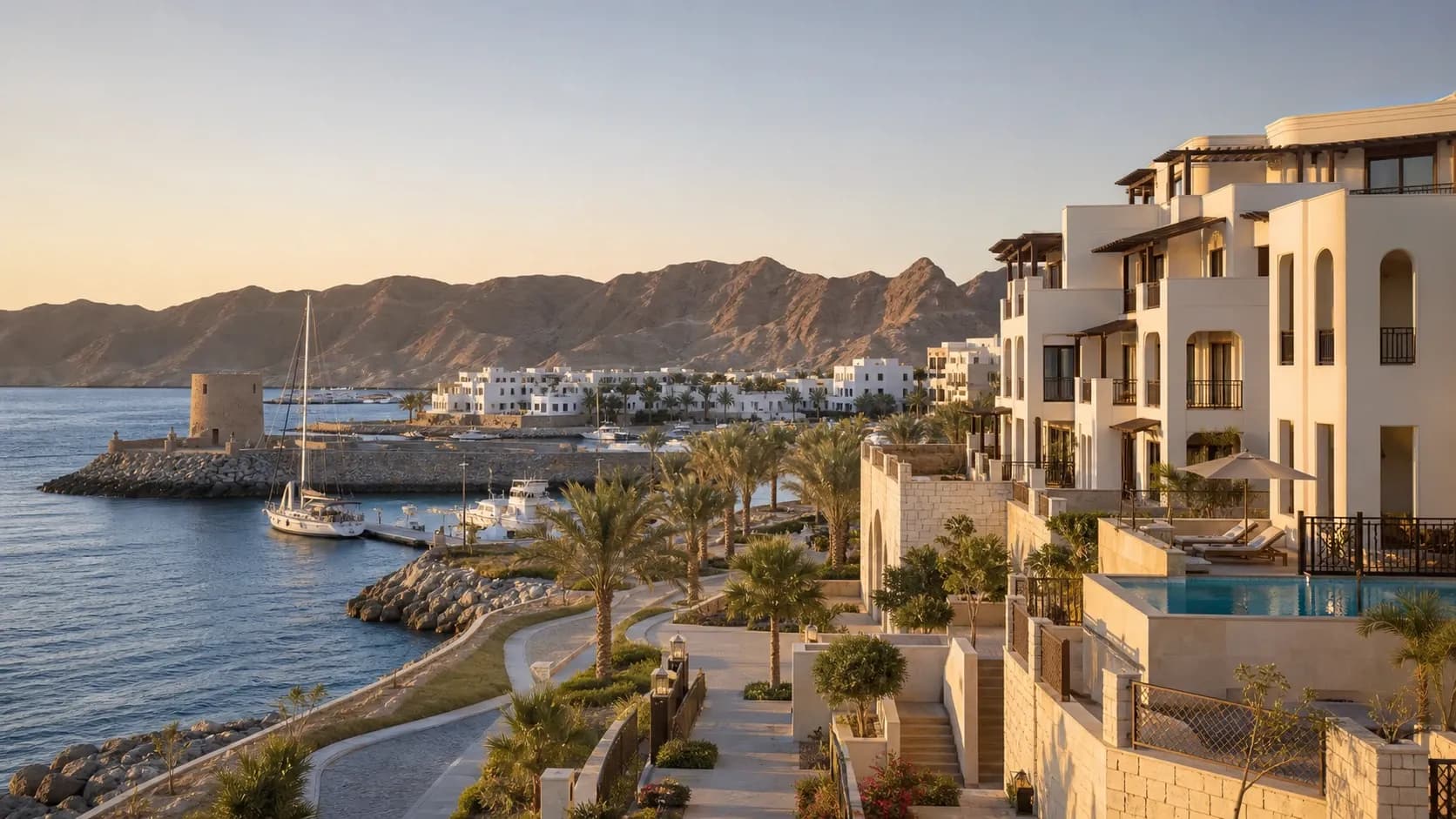
Real estate in Oman: ROI, taxes, and the condohotel model for an investor from Poland

Differences between the primary and secondary market in Oman – what to choose?
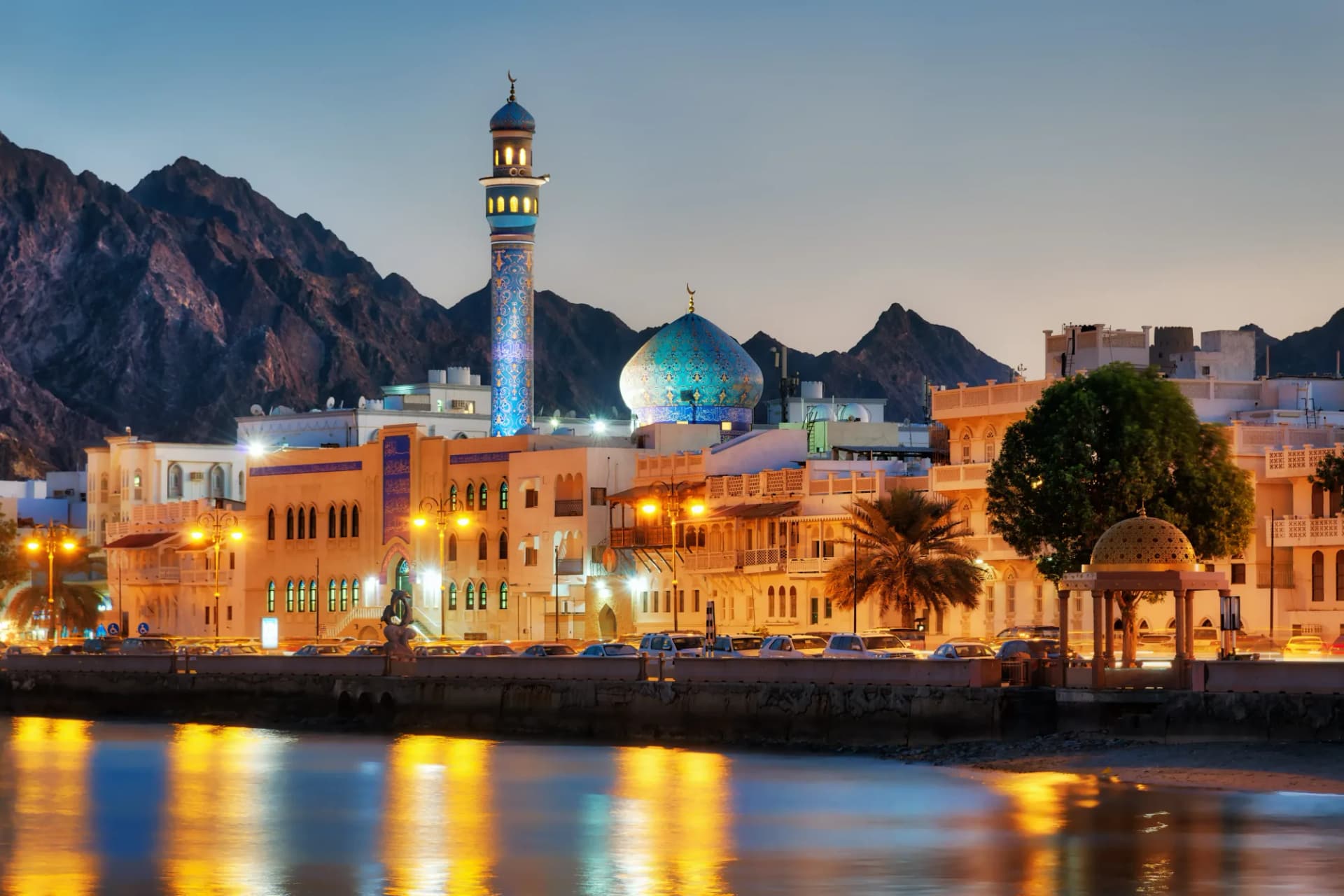
Can a Polish citizen buy property in Oman, and if so, how?