


Investments in Salalah: A Real Estate Market Guide
Salalah is worth analyzing not only during the green Khareef season, but also outside of it, when the daily operation of infrastructure, beaches, roads, services, and rental operators is visible. For an investor planning a second home, the most important factors are: real flight availability, the technical condition of the project, the management model, Service Charge costs, owner usage rules, ITC documents, and the net ROI calculation after costs. A reconnaissance trip should be a field audit, not sightseeing. One must compare Hawana Salalah, Taqah, Mirbat, and the city center, check demand outside of Khareef, and take into account Oman's tax changes starting in 2028. A well-prepared decision also requires talking to the operator, reviewing contracts, and clearly dividing private use from rental.


Article summary
The most important conclusions from the article in 30 seconds.
Salalah is worth analyzing not only during the green Khareef season, but also outside of it, when the daily operation of infrastructure, beaches, roads, services, and rental operators is visible. For an investor planning a second home, the most important factors are: real flight availability, the technical condition of the project, the management model, Service Charge costs, owner usage rules, ITC documents, and the net ROI calculation after costs. A reconnaissance trip should be a field audit, not sightseeing. One must compare Hawana Salalah, Taqah, Mirbat, and the city center, check demand outside of Khareef, and take into account Oman's tax changes starting in 2028. A well-prepared decision also requires talking to the operator, reviewing contracts, and clearly dividing private use from rental.
Salalah is worth assessing differently than a typical holiday destination. The Dhofar region has two faces: the green, misty Khareef season and the longer period from October to May, when an investor can see the true operation of infrastructure, beaches, roads, services, and rental operators. It is outside the monsoon peak that one can truly see whether a project works well as a second home with a real usage and rental model.
For a buyer from Poland, a trip to Salalah should be treated like a field due diligence. It is not about spontaneously viewing apartments, but rather checking flight availability, the guest profile, the standard of technical service, the quality of common areas, the distance to services, and the documents confirming the project's status. In Integrated Tourism Complex zones, or ITCs, what matters is not just the view and apartment layout, but also the title deed, freehold rules for foreigners, the management agreement, the Service Charge, the repair reserve, and the revenue reporting method.
This guide shows how to plan a professional exploratory trip to Salalah, especially if you are analyzing Hawana Salalah, Taqah, Mirbat, or resort projects in the Dhofar region. The perspective is that of an investor: less sales brochure, more questions for the developer, operator, and advisor.
—
Why is it worth seeing Salalah outside of Khareef?
Analysis of climatic and logistical conditions
Khareef builds the recognition of Dhofar, but it is not the only factor that determines the quality of an investment. During the monsoon, the region changes visually: greenery, fog, lower temperatures, and tourist traffic from Oman and GCC countries appear. This is a good period to assess seasonal demand, but weaker for analyzing how the property will function for the rest of the year. A buyer who wants to use an apartment in the winter or make it available to European tourists should also see Salalah in the period from October to May.
Outside of Khareef, a different set of advantages and limitations becomes visible. The ocean is clearer, beaches are easier to evaluate in terms of cleanliness, width, and access, and coastal roads are not congested with seasonal traffic to the same extent. This makes it possible to check real travel times from the airport to Hawana Salalah, Taqah, Mirbat, and the city center. It is worth driving these routes yourself or with an advisor, on a weekday and a weekend, rather than relying solely on a map or the time stated in an offer sheet.
The first test concerns flights. An investor should check the official schedules of Oman Air and SalamAir, rather than just aggregator results. Three questions are important: do the connections operate on dates when the owner actually wants to use the property, is the layover in Muscat predictable, and does the return to Europe create a costly overnight gap? Flight repeatability is also crucial for the rental model, because winter guests often plan longer stays and are less tolerant of logistical risk than tourists arriving for a short peak season.
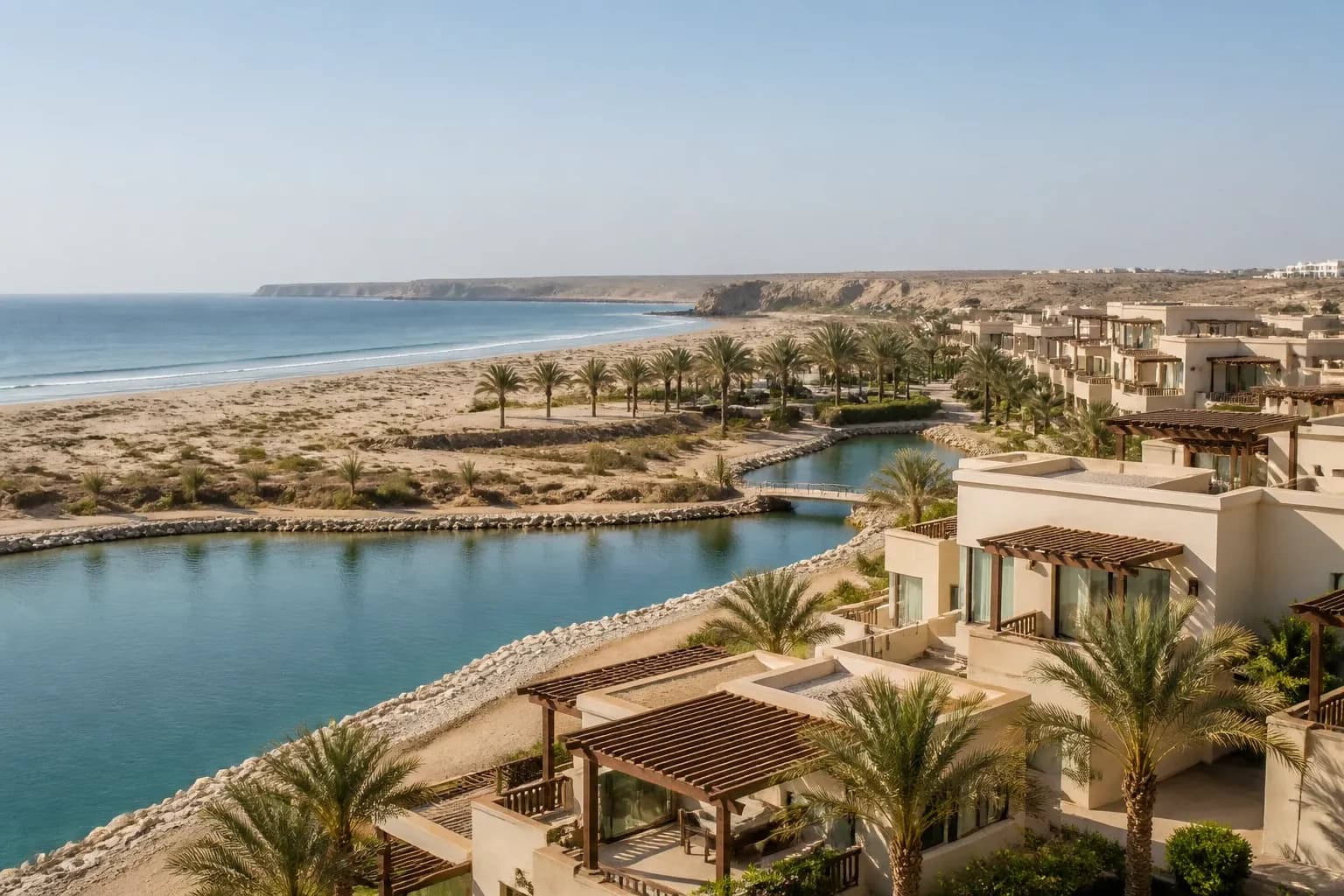
The second test concerns the landscape. Salalah outside the monsoon is more rugged: less greenery, more sand, rocks, low vegetation, and open space by the ocean. This is not a flaw, but a different promise of the place. The buyer must answer whether such a desert-ocean rhythm aligns with their way of using a second home. If the purchase is intended for private stays, golf trips, remote work, or longer winter stays, accepting this aesthetics is just as important as calculating the ROI.
The third test concerns services. During the visit, you should check which restaurants, shops, pharmacies, medical points, transport services, and beach services operate outside the main peak. It is worth comparing Hawana Salalah with the city center and locations east of Salalah. A property in a resort project may provide more control over the surroundings, but also greater dependence on the operator, the Service Charge, and the quality of common area maintenance.
The fourth test is mobility. It is best to rent a car and drive the routes to Taqah, Mirbat, beaches, viewpoints, the airport, and the service center. In your trip notes, it is worth recording not only travel time, but also road quality, lighting, access to gas stations, parking spaces, signage legibility, and the sense of comfort after dark. These are minor observations that later influence the decision of whether a given property is suitable for the owner, for rental, or for both models simultaneously.
—
Verification of standards in Hawana Salalah and ITC projects
Technical service, common area maintenance, and service infrastructure
In coastal projects, the building standard should be analyzed through the climate, not through photographs. Salt, moisture, wind, sun exposure, and intensive air conditioning use create a different wear profile than in an urban apartment. During an inspection in Hawana Salalah, the investor should check the facades, woodwork, balustrades, pergolas, joints, signs of corrosion, terrace drains, moisture near windows, the condition of HVAC units, and the quality of landscaping. If the project is to operate as a short-term rental, these elements affect not only aesthetics, but also CAPEX and repair frequency.
For ITC projects, three orders must be separated: the right to purchase, the quality of the design, and the quality of management after purchase. ITC status may open the door for a foreigner to acquire real estate on a freehold basis, but this status alone does not answer questions about profitability or owner comfort. Therefore, before discussing the price, it is worth reading the ITC guide in Oman and asking the developer for documents confirming the project status, rights registration rules, payment schedule, the template Sale and Purchase Agreement, owner usage regulations, and the method of settling Service Charges.
On-site, you should observe the work of the technical service. The point is not whether the area looks good on the day of the presentation, but whether a repeatable maintenance system is visible. It is worth asking who is responsible for maintaining common areas, how quickly defects are removed, what the air conditioning inspection schedule is, how repairs in the owner's unit are settled, and whether there is a reserve fund for major work. If a rental operator operates within the project, you need to check whether they report revenues, cleaning costs, commission, repairs, and owner usage in a way that is understandable to an owner from Poland.
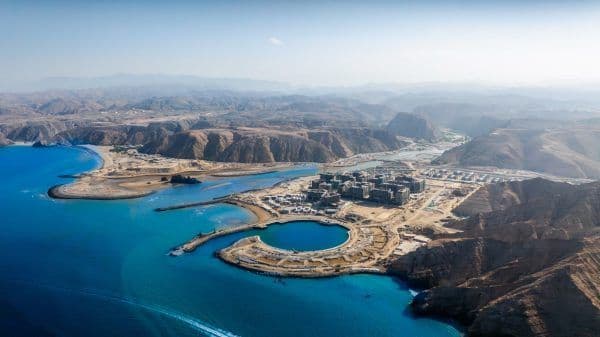
Hawana Salalah is worth comparing with locations outside the main complex, especially Taqah and Mirbat. Taqah Long Beach shows a different product logic: hotel-like, more operational, tied to a management model and entry cost. Lubana Island in Hawana Salalah is closer to the second home formula in a resort setting, featuring lagoons, a beach, a marina, and shared infrastructure. Comparing such projects should not end at the price per square meter. The more important question is which model better suits the goal: rental income, private stays, exposure to regional development, or simpler operational handling.
The context of public investments also matters, but it must be read carefully. Invest Oman describes Salalah Future City as a multi-functional coastal project connected with housing, hotels, services, education, healthcare, and recreational space. This is a signal that Dhofar is being analyzed as an area for year-round living and tourism, not just the Khareef season. However, this is not a guarantee of price growth for a specific apartment. For an investor, it rather means the need to check where a given property is located relative to planned roads, services, beaches, protected zones, and future supply competition.
In practice, a good exploratory visit should end with a decision matrix. In one column, it is worth writing down the advantages of the location, in the second the costs and limitations, in the third documents to be sent, and in the fourth questions for the operator. Without such notes, it is easy to confuse the emotion of a place with the quality of an investment. Salalah can be a good direction for an investor who understands seasonality, service costs, and the role of management. It is a weaker choice for someone expecting a simple calculation without document control.
—
Business model: short-term rentals vs. owner needs
Operator checklist and PlanoGroup investment advisory
Purchasing a second home in Salalah should begin by separating two goals. The first is a property for the owner: a winter base, a place for family stays, remote work, golf trips, contact with nature, and a break from the European winter. The second is a property working in rentals: an asset that must have a calendar, a pricing policy, an operator, cost control, and reporting. These goals can coexist, but only if the owner understands the cost of private dates.
In conversation with the operator, you must ask about occupancy rates in high, low, and shoulder seasons, average length of stay for winter guests, the European guest profile, the share of local and regional demand, average daily rate (ADR), RevPAR, the operator's commission, and owner block-out rules. If the owner wants to use the apartment during the best weeks, the ROI model will be different than in a variant where the unit is available for rent for most of the calendar.
The second group of questions concerns costs. In Salalah, you need to calculate air conditioning, water, internet, guest cleaning, laundry, minor repairs, insurance, Service Charges, a renovation fund, FF&E replacement, and periodic unit refreshing. In a humid and saline climate, service costs can matter more than in a drier urban environment. Therefore, the result should be calculated as net ROI after costs, rather than as a gross declaration from a presentation.
The third group of questions concerns documents. It is worth checking whether short-term rentals are part of the project model, whether they require a separate permit, who signs the agreement with the guest, who is responsible for local taxes and fees, what the revenue settlement looks like, whether the owner can change the operator, and what happens to the equipment when selling the unit. In off-plan projects, one must additionally verify the payment schedule, escrow account, delay conditions, finishing specifications, and technical handover rules.
The tax thread requires updating. It is not enough to repeat that Oman has no personal income tax. The Oman Tax Authority announced a PIT law intended to take effect in early 2028, covering individuals exceeding the threshold of 42,000 OMR annually at a 5 percent rate on taxable income. For an investor, this means the necessity of checking their tax residency, income sources, rental rules, and settlements in Poland and Oman with a tax advisor before purchasing.
PlanoGroup's role in such a process should not consist of cutting decisions short. A good Polish real estate agency in Oman organizes the analysis: it helps compare locations, gather documents, ask the developer the right questions, check real estate offers in Oman, and understand how the purchase fits into the investor's portfolio. The team's dozen-plus years of experience in selecting foreign projects makes sense when it translates into due diligence discipline: what to check, what not to assume, and when to pause a decision.
It is also worth comparing Salalah with competing markets. Dubai offers different liquidity, greater supply, and a more developed operator market, but also a different cost structure and competitive pressure. Oman is less saturated, but requires a more thorough reading of locations, flight availability, the ITC model, and the quality of management after purchase. Therefore, the article Second home as an investment – how to manage rentals and ROI? is a good complement to this analysis, and the Dubai vs. Oman comparison helps set realistic expectations regarding costs, taxes, and the rental model.
—
Key conclusions for the investor
Salalah should not be assessed solely through the lens of Khareef. According to the Ministry of Heritage and Tourism, the monsoon season in Dhofar typically falls between June 21 and September 21. This is a period of strong regional demand, but for a property owner, how the market operates outside of this window is equally important.
MHT/NCSI data for the 2024 Khareef season show over one million visitors to Dhofar between June 21 and September 21, including significant road traffic from Oman and the GCC, as well as air traffic. Such a result confirms the weight of the season, but does not solve the question of the annual rental model. The investor must check whether winter demand, European long stays, digital nomads, and owner usage can supplement the summer peak.
For this reason, a trip outside of Khareef has high analytical value. It reveals the landscape without seasonal fog, the actual condition of beaches, restaurant and hotel occupancy, the availability of services, and whether the project lives on weekdays, not just during promotional events. In practice, this is a test of the market, the operator, and one's own expectations.
—
What next before the exploratory trip?
If you are planning to diversify your portfolio with the Omani market, it is worth starting with a conversation about the purpose of the purchase. An apartment for private winter stays is chosen differently than a unit in a hotel model, and differently than a property intended for a hybrid rental. Before the trip, it is good to prepare a short list of projects, a budget, expected private stay frequency, the asset holding horizon, and questions for the operator.
PlanoGroup can help arrange such a trip as an investment process: project selection, conversations with the developer, preliminary document analysis, comparison of maintenance costs, operator evaluation, and a plan for next steps upon return. The goal is not pressure for a quick decision, but gathering information that allows you to distinguish a good stay from a good investment.
—
FAQ
Why does the timing of the trip to Salalah matter?
The timing of the trip outside the Khareef season allows for a reliable assessment of permanent infrastructure, the actual rhythm of city life, and tourist demand in the winter months.
Do Hawana Salalah and the city center share the same stay profile?
These locations differ in guest profile, access to services, and operating costs, which results from the different nature of coastal and urban projects.
What should I ask the rental operator in Salalah?
During the conversation, you should verify data concerning occupancy in different seasons, utility and cleaning costs, the renovation fund, and profit reporting rules.
Is Salalah solely a holiday destination?
Salalah has a strong tourist profile, but should not be reduced exclusively to holidays. For an investor, three layers are important: the Khareef season, winter sun demand and longer stays, and the development of residential and service projects in Dhofar. It remains a market that requires selection. You must check flight availability, operator quality, real maintenance costs, and whether a given property makes sense outside the most publicized season.
How to combine sightseeing with real estate analysis?
It is best to treat the trip like a field audit. Each day, it is worth recording the route, travel time, road conditions, functioning services, beach quality, noise level, access to shops, distance to the airport, condition of buildings, and staff reactions to technical questions. Photographs should document not only views, but also facades, drains, air conditioning, parking, facilities, and common areas. Upon return, these notes should be compared with documents and the net ROI calculation.

Author
Beata Cieślukowska
COO / FOUNDER
For over 17 years, she has been supporting clients in investing in premium real estate, with a particular focus on investment apartments and condo-style projects. Over the years, she has built her position in the Costa del Sol market, where she helped clients select properties that combine lifestyle with investment potential. Today, she is developing PlanoGroup, expanding operations into international markets – including Oman and other investment destinations. She combines experience, market intuition, and an individual approach, which allows her to match a property not only to a budget but, above all, to the client's goal.

Related articles
ITC in Oman: what does it mean for a foreigner buying property?
Second home as an investment – how to manage rentals and ROI?
Dubai vs. Oman: where to buy a luxury property to earn more and pay less?